Garhwa Fort: 1,500-Year-Old Gupta Temple Inside a Fort
Garhwa Fort: A 1,500-year-old Gupta period temple hidden inside the Garhwa Fort in Prayagraj. Learn about its history, architecture, and why it is in the news. Recently the CBI arrested the last accused in the 2002 idol theft and murder case related to the fort.
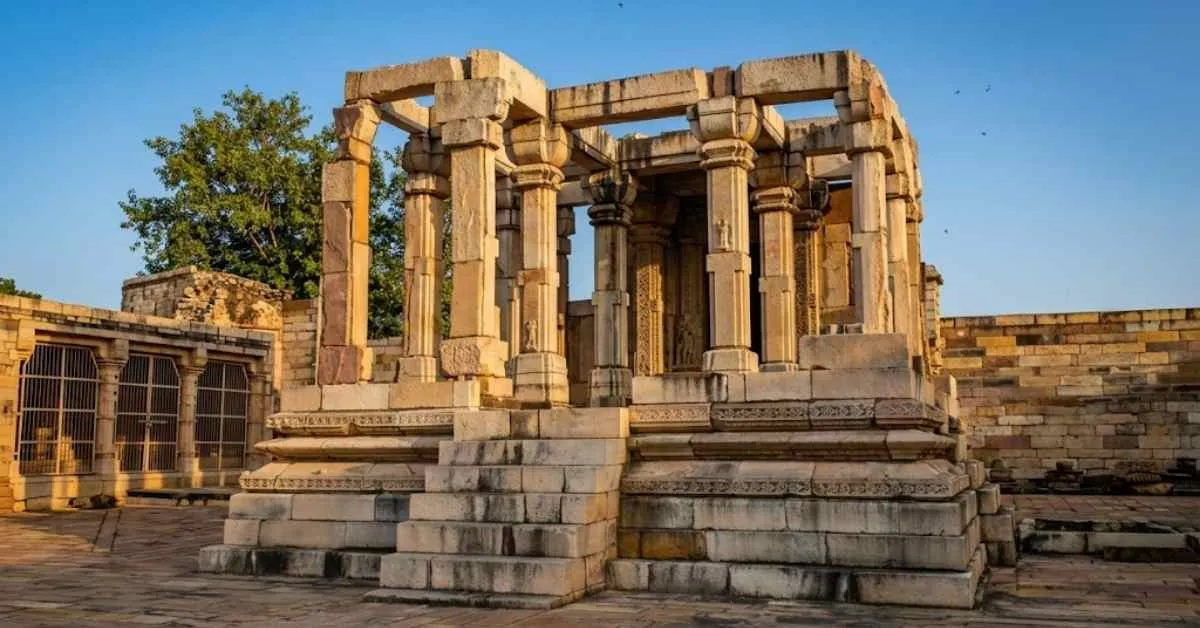
The Garhwa Fort is located near Shankargarh in the Prayagraj district of Uttar Pradesh. It is a remarkable architectural example of the ancient Gupta Dynasty of India. It combines the serenity of a 1500-year-old temple with the defensive security of an 18th-century fortress. This site gives insight into the Golden Age of the Gupta Empire.
The Central Bureau of Investigation (CBI) successfully arrested the final absconding accused involved in the infamous 2002 Garhwa Fort idol theft and murder case.
In 2002, an armed gang raided the Archaeological Survey of India (ASI) protected fort and stole an ancient stone idol of a headless standing Lord Buddha dating back to the Gupta period.
History of the Garhwa Fort and Gupta Connection
Initially, the site originated as a religious centre during the 5th-6th Century Gupta period, but later in the 18th century it was converted into a fort.
Garhwa Fort's ancient roots trace back to the Gupta reign. During the Gupta period the site is known as Bhattagram or Bhattapraya. It functioned as a major seat of learning, art and architecture.
Archaeologists have recovered at least seven Sanskrit stone inscriptions belonging to the reigns of prominent Gupta emperors including Chandragupta II who is known as Vikramaditya, Kumaragupta I and Skandagupta.
In 1750 CE, the temple was converted into defensive stone walls that give the site its present name Garhwa Fort. The name was given much later after the construction by the Baghel Rajput ruler Raja Vikramaditya of Bara.
Raja Vikramaditya enclosed the ancient temple ruins with a square defensive wall and corner bastions to protect the relics from invaders and regional instability.
Key Facts about the Garhwa Fort’s Architecture and Relics
The features of the Garhwa Fort reflect the architectural style of the Gupta Empire such as
Material and Architecture Styles
The artifacts at Garhwa Fort reflect the story of two distinct eras. The Gupta period sculptures are carved using pink sandstone and exhibit fine, graceful features. However, the structure and modifications made during the medieval period use a coarser grey sandstone.
Structures and Temples
Under the Garhwa Fort the oldest shrine within the complex is a Shiva temple built in a unique Panchakona(pentagonal) style. The temple is also called Panchakona temple.
The temple features a square sanctum(Garbhagriha) and a pillared assembly hall(mandapa).
The primary Shiva Linga of the temple was looted during the British colonial era but the ancient Shakti Peetham remains preserved.
The most significant relic recovered from the temple is a 6- to 7-foot-high stone slab depicting the Dashavatara ( the ten incarnations of Lord Vishnu) which dates back to the 11th or 12th century.
The temple also has two stepwells that historical records state never ran dry reflecting the advanced hydraulic engineering of the era.
The ASI has relocated several sculptures to the State Museum in Lucknow due to their safety and preservation.
| Feature | Details |
| Location | Garhwa Village, Shankargarh (near Prayagraj), Uttar Pradesh |
| Original Builders | The Gupta Dynasty (5th–6th Century CE) |
| Fortified By | Baghel King Raja Vikramaditya of Bara (1750 CE) |
| Ancient Name | Bhattagram / Bhattapraya |
| Key Inscriptions | Chandragupta II, Kumaragupta I and Skandagupta |
| Primary Material | Pink Sandstone (Gupta era) and Grey Sandstone (Medieval era) |
| Managing Body | Archaeological Survey of India (ASI) |

Manisha Waldia is a distinguished content strategist with 5 years of experience crafting premium educational content for UPSC and State PCS, with a focus on deep conceptual analysis across Polity, Geography, History, and Environment. She currently brings this expertise to Jagran Josh, where she covers major national and international events, current affairs, and static general knowledge. Over her career, Manisha's specialized insights have led her to curate high-impact materials and serve as a UPSC Mains answer-evaluator for India’s top institutes—including Drishti IAS, Shubhra Ranjan IAS, Study IQ, GS Score, and PWonlyIAS. She has also worked alongside leading NGOs like Oxfam India and Avani Kumaon.
Contact: manisha.waldia@jagrannewmedia.com