‘Refuse That Role’: Delhi Police Get SOP To Stay Calm And Avoid Provocation During Protests


The guidelines further advise male personnel to avoid touching women protesters and allow women officers to handle such situations wherever possible.
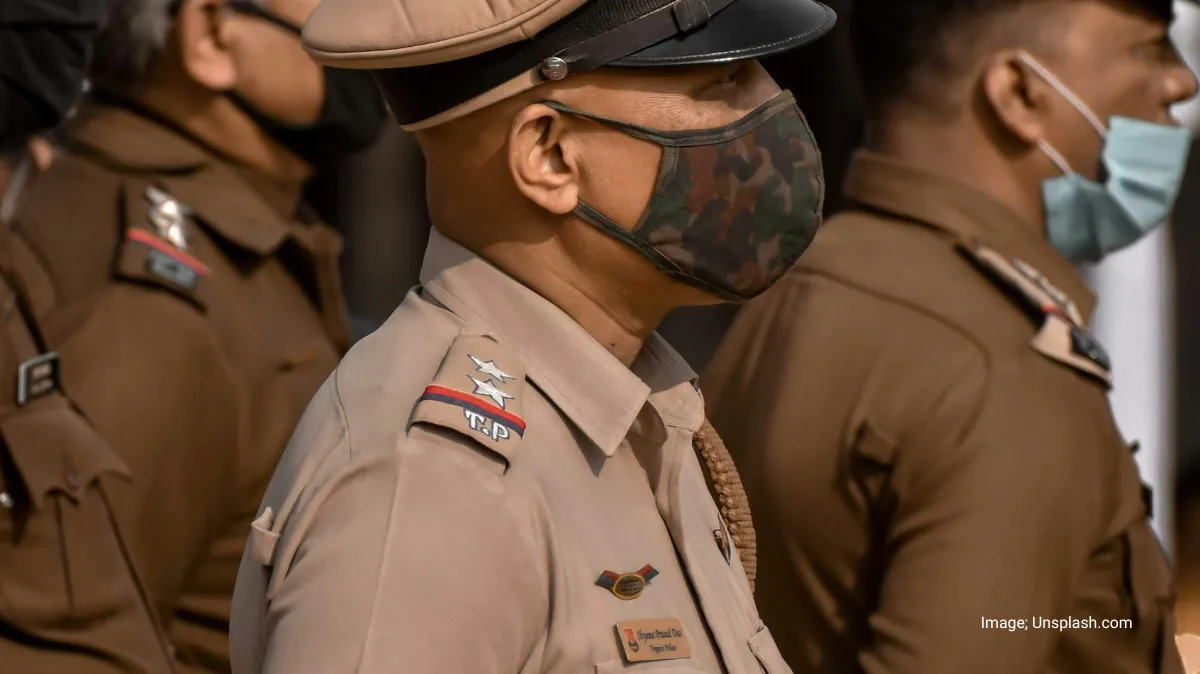
Central agencies have issued a detailed advisory and Standard Operating Procedure (SOP) to the Delhi Police on handling protests, with a particular focus on de-escalation, maintaining professional conduct and avoiding confrontations that could be amplified on social media.
“Your angry face is their content. They are not fighting you. They are making a film in which they want you to play the villain. Refuse that role,” it mentioned in the SOP.
The advisory has been circulated across all 15 districts of the Delhi Police, as well as its Railway and Metro units. The guidelines assume that interactions between police personnel and protesters may be recorded on mobile phones and subsequently shared as reels, memes or other social media content.
The SOP comes in the aftermath of clashes during a protest at Jantar Mantar on July 20. During the demonstration, protesters attempted to march towards Parliament over allegations related to examination irregularities. Security personnel used lathis and tear gas, while a pellet gun was also fired once. More than 118 police personnel and around 60 protesters were injured, according to the report. A subsequent CRPF inquiry found that a Rapid Action Force (RAF) personnel had fired the pellet rounds, the Pioneer reported.
Focus On De-escalation
The advisory asks police personnel to remain calm even when protesters attempt to provoke a reaction. Officers have been told not to argue with demonstrators or respond emotionally to jokes, slogans, mock salutes, songs, dances or other forms of provocation.
“Protesters may cry loudly, fall at the feet of personnel, or ask questions intended to create sympathy or anger, such as references to family background or salary issues. In such situations, personnel have been advised not to engage in debate or show agreement, and to use only a brief line if necessary: ‘Please cooperate, we are doing our duty’. Then, maintain silence.”
The guidelines also advise personnel against pushing away mobile phones, grabbing objects, throwing items or shouting in anger. Officers have been told to politely accept or refuse gestures such as flowers, sweets, water or tea rather than react aggressively.
The advisory emphasises that officers should assume their interactions are being recorded. It urges them to ensure that their conduct does not escalate a confrontation or create footage that could subsequently circulate widely online.
Police Asked To Prioritise Assistance
The SOP also lays down instructions for dealing with protesters who are injured or require assistance. If a demonstrator faints, falls or is injured, police personnel have been asked to provide immediate help, call an ambulance and clear the route for emergency vehicles.
Barricades should also be moved when necessary to allow ambulances, schoolchildren and patients to pass. Officers have been instructed to ensure that children separated from their parents during demonstrations are looked after until their parents are located.
The guidelines further advise male personnel to avoid touching women protesters and allow women officers to handle such situations wherever possible.
The broader objective of the SOP is to maintain law and order while reducing unnecessary confrontations and ensuring that police conduct remains professional, particularly in an environment where almost every interaction can be recorded and shared online.
Section 163 of the Bharatiya Nagarik Suraksha Sanhita (BNSS), which allows authorities to issue orders restricting unauthorised assemblies, also remains applicable in parts of New Delhi. The new SOP, however, focuses primarily on how personnel should conduct themselves during interactions with protesters.
Sahil Behl is an education journalist at Jagran with over a year of experience in journalism. Prior to joining Jagran, he worked as a Sub-Editor in NDTV's Education department, where he was responsible for writing and editing education-related content as well as managing the department's social media presence. At Jagran, he covers a wide range of education topics, including board examinations, school updates, admissions, and job notifications, while leveraging his editorial expertise and strong understanding of digital content strategy.
Sahil holds a Bachelor's degree in Business Administration and has also completed an eight-month certification program in Data Science. Passionate about emerging technologies, particularly artificial intelligence, he closely tracks their growing role in journalism and explores how they are transforming shaping the future of the media industry.