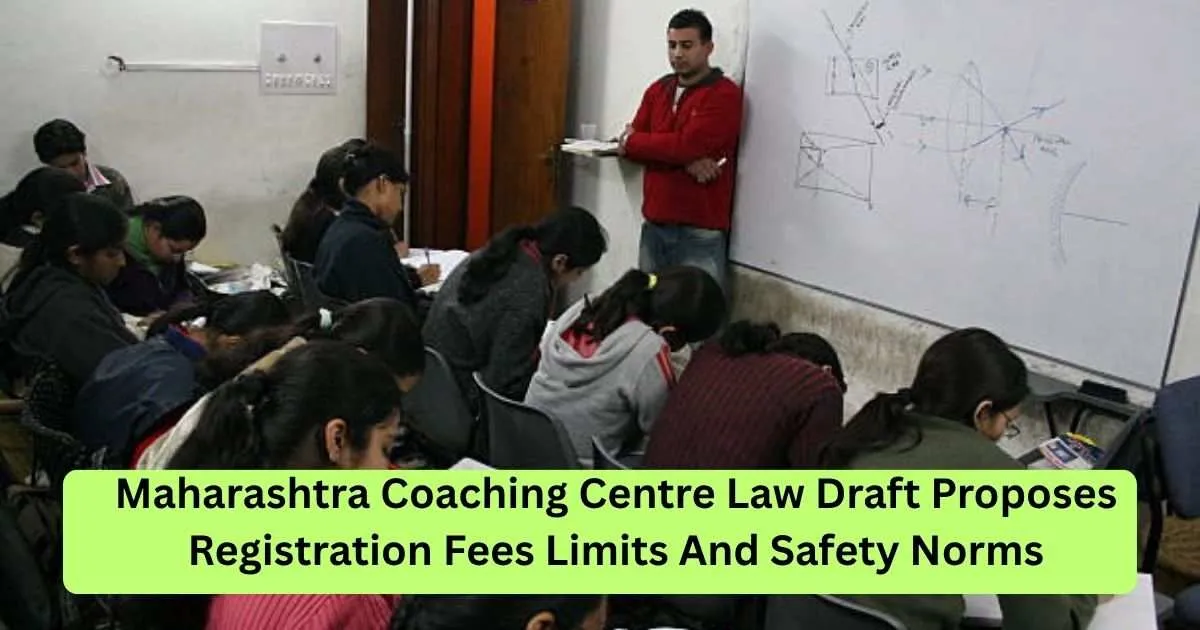
Maharashtra Coaching Centre Law Draft Proposes Registration Fees Limits And Safety Norms


The Maharashtra coaching centre proposes a law draft regarding registration fee, five hour classes, no enrollment below 13 years of age, fee protection and mental health support. Read the article to get further information.
The Maharashtra government has proposed a new law to regulate private coaching centres in the state. The draft Maharashtra Private Coaching centres (registration and regulation) act 2026 covers registration class hours fees, student safety, counselling and mental health. It also bans coaching centres from enrolling children below 13 years of age and from making misleading promises about ranks or marks. The draft is open to objections and suggestions and has not yet come into force. This new Maharashtra coaching centre law is a big step for students welfare and fair education practices. Read the article to know more details.
10 Key Rules in the Maharashtra Coaching Centre Law
- Registration for bigger centres: Coaching centres with more than 25 students must register. Existing centres get 6 months to complete registration and each brand needs separate registration valid for three years.
- Five Hour Class Limit: Classes cannot exceed five hours a day. Classes cannot be held too early or too late and students and tutors get one weekly day off. Tests on the day after the weekly off discouraged.
- No Children Below 13: Centres cannot enrol under 13 or promise ranks or marks. Exam difficulty and intensity must be disclosed before admission.
- Fee Protection: Receipts are compulsory and fees cannot rise during a course. Midway exits get a pro-rata refund within 10 days including hostel and mess charges.
- Safety and Infrastructure norms: One square metre of space per student is required with ventilation lighting, drinking water, separate toilets, first aid and parking. Fire and building safety certificates are needed and basement operations are banned. CCTV footage must be preserved for one month.
- Mental Health Support: Centres must build a counselling system, promote life skills and give immediate help to students in distress. Counsellor and psychologist details must be shared with students and parents.
- No performance Segregation: Students cannot be divided into batches based on marks as this raises pressure and harms mental health. Aptitude tests and alternative career options should be encouraged.
- Separate from schools: Coaching centres cannot operate from school premises or employ teachers from recognised schools or junior colleges.
- Quick grievance handling: Complaints under POSCO or workplace sexual harassment laws need action within 24 hours. Suspected offenses under the Bharatiya Nyaya Sanhita must go to local police.
- Heavy fines for violations: Minor offences attract fines of Rs 1 lakh to Rs 5 Lakh. Major violations draw Rs 10 lakh to Rs 50 lakh with suspension or closure of registration possible.
Status of the Maharashtra Coaching Centre Law
The draft rules are not yet in force. The school education and sports department has published the draft and invited objections and suggestions. Officials said the government would consider it in September. The Maharashtra coaching centre law if approved will apply across Maharashtra from a date notified by the state government. This law comes amid growing concerns over the coaching sector including the NEET paper leak and alleged role of coaching centres.
Faham is an education specialist and has over three years of experience in the education and edtech industry, specializing in digital and educational content creation. He holds an MBA in Marketing and Human Resources from Swami Vivekanand University. Throughout his career, Faham has developed expertise in creating engaging and informative content across diverse educational domains.
In addition to his edtech experience, he worked for two years as a Public Speaking and Creative Writing Expert, helping learners enhance their communication and writing skills. He has also been associated with Testbook and Adda Education as a Content Writer, where he created high-quality content for K–12 education, Management Entrance Examinations, UPSC, Law, and State Defence examinations. His strong understanding of educational content and exam preparation enables him to simplify complex topics and deliver valuable learning resources to students.