CBSE 3-Language Policy Confusion Persists? Here’s All You Need To Know


The Union Education Minister has clarified that students will not be required to drop any of the language subjects that they are studying under the 3-language curriculum introduced recently by the Central Board of Secondary Education (CBSE). Students will continue to study the same two subjects even if both the options were foreign languages until Class 10 as the new curriculum will be applied with a gradual approach over the years.
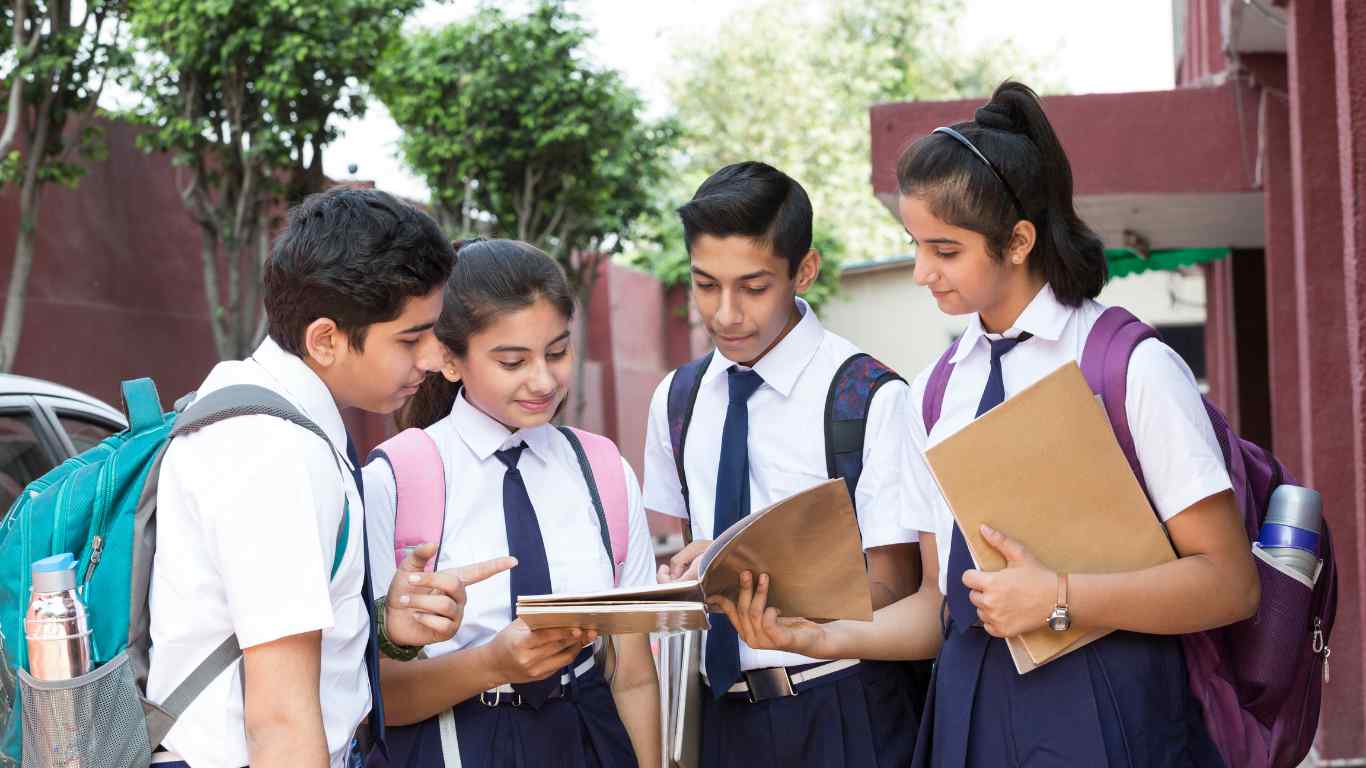
CBSE 3-Language Policy: The Central Board of Secondary Education (CBSE) had implemented a three-language policy formula for students of Class 6 to 10 which mandated the study of three languages from the 2026-2027 session onwards. Students and parents raised concerns especially for Classes 9 and 10 by saying that students who had been studying a language since Class 6 would now have to drop it and all the work will go to waste under the new system. The three-language policy mandates the study of two native languages such as Hindi, Sanskrit and a third language which could be foreign like German, Spanish etc.
Union Education Minister Dharmendra Pradhan while talking to the media has clarified that “CBSE could not give a clear order”. He clarified that students with two foreign languages will be able to continue studying the same subjects until their Class 10 board examination and will not be required to drop them.
The three-language policy will be applied with a gradual approach starting from Class 6 and reaching Class 10 over the next few years. Starting 2026-2027 academic session, the policy has been implemented for Class 6. Grade 7 will follow starting 2027-2028 academic year and so on for other Classes.
The Education Minister further said that of the 25 crore school students in India, 90 per cent study three languages. He also ensured that 22 language books for each Classes will be made available to students and schools on time.
Compulsory To Select Different Languages
The 3-language curriculum follows a systematic approach, which states that the first language R1 must be any language offered by CBSE. Second language R2 should be a language other than R1 while R3 should be different from the previous two.
3-Language Policy Implementation Years For Classes 6 to 10
| Academic Session | Class In Which R3 Is Compulsory |
| 2026-2027 | Class 6 |
| 2027-2028 | Class 6, 7 |
| 2028-2029 | Class 6, 7, 8 |
| 2029-2030 | Class 6, 7, 8, 9 |
| 2030-2031 | Class 6, 7, 8, 9, 10 |
The Union Minister’s clarification has eased students who had worried about dropping language subjects after studying for an year or more. Students can expect to have an amended notification issued by the CBSE which will detail the implementation years of the 3-language policy for each Class.
CBSE 3-Language Policy: The Central Board of Secondary Education (CBSE) had implemented a three-language policy formula for students of Class 6 to 10 which mandated the study of three languages from the 2026-2027 session onwards. Students and parents raised concerns especially for Classes 9 and 10 by saying that students who had been studying a language since Class 6 would now have to drop it and all the work will go to waste under the new system. The three-language policy mandates the study of two native languages such as Hindi, Sanskrit and a third language which could be foreign like German, Spanish etc. Union Education Minister Dharmendra Pradhan while talking to the media has clarified that “CBSE could not give a clear order”. He clarified that students with two foreign languages will be able to continue studying the same subjects until their Class 10 board examination and will not be required to drop them.The three-language policy will be applied with a gradual approach starting from Class 6 and reaching Class 10 over the next few years. Starting 2026-2027 academic session, the policy has been implemented for Class 6. Grade 7 will follow starting 2027-2028 academic year and so on for other Classes.The Education Minister further said that of the 25 crore school students in India, 90 per cent study three languages. He also ensured that 22 language books for each Classes will be made available to students and schools on time.

Sahil Behl is an education journalist at Jagran with over a year of experience in journalism. Prior to joining Jagran, he worked as a Sub-Editor in NDTV's Education department, where he was responsible for writing and editing education-related content as well as managing the department's social media presence. At Jagran, he covers a wide range of education topics, including board examinations, school updates, admissions, and job notifications, while leveraging his editorial expertise and strong understanding of digital content strategy.
Sahil holds a Bachelor's degree in Business Administration and has also completed an eight-month certification program in Data Science. Passionate about emerging technologies, particularly artificial intelligence, he closely tracks their growing role in journalism and explores how they are transforming shaping the future of the media industry.



Comments
All Comments (0)
Join the conversation