Top 5 Major Capitals of Mughal Empire
The Mughal Empire had various capitals that showed the strength and culture of the empire. Some of its famous capitals include Agra, Delhi, Fatehpur Sikri, Lahore, and Shahjahanabad. Each capital was chosen for specific reasons such as political significance, resources, etc. All these capitals depict how the Mughal Empire progressed and contributed to India’s history.
The Mughal Empire is one of the greatest empires in Indian History. They ruled for more than three centuries from 1526 to 1857, covering extensive areas of India.
Throughout their reign, there have been many changes in their capital for various reasons. Every capital played an important role and was endowed with its unique significance and grandeur.
It is obvious that all these capitals were not merely political and military centers; rather, they were the centers of arts and architecture as well.
Various emperors preferred various cities to be their capital during different periods of time. Such cities turned into important centers of culture, economy, and politics.
This article aims to highlight the five most important capitals of the Mughal dynasty.
Check Out: Which Language is Known as the Language of the Gods?
Top 5 Major Capitals of the Mughal Empire
Here is a list of the top 5 major capitals of the Mughal Empire, as follows:
| S.No | Capital City | Main Ruler | Years as capital |
| 1. | Agra | Babur, Akbar, Shah Jahan | 1526-1658 |
| 2. | Delhi (Shahjahanabad) | Shah Jahan, Aurangzeb | 1648-1857 |
| 3. | Fatehpur Sikri | Akbar | 1578-1585 |
| 4. | Lahore | Akbar, Jahangir | 1585-1598 |
| 5. | Dhaka (Jahanirnagar) | Jahangir | 1610-1704 |
Agra
Agra is considered one of the most significant cities during the Mughal era.
It became the base for Babur upon conquering the Battle of Panipat in 1526.
Later, it was developed when Akbar constructed the impressive Agra Fort.
The construction of the Taj Mahal in Agra by Shah Jahan made it synonymous with Mughal magnificence.
Delhi (Shahjahanabad)
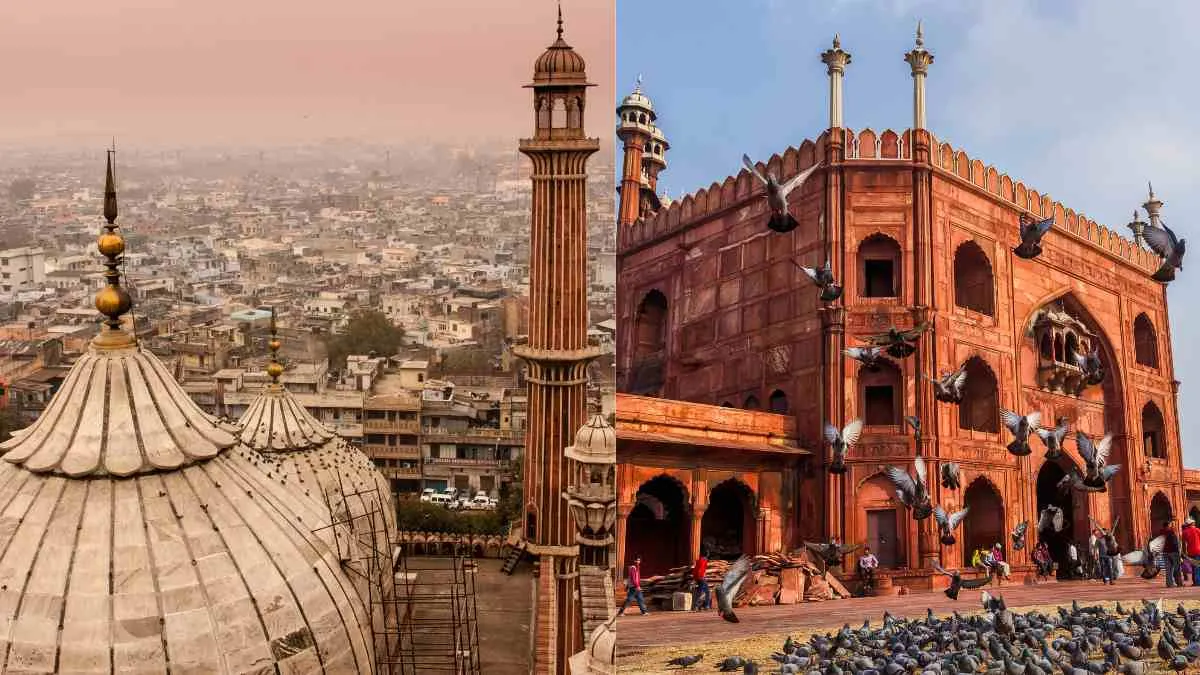
The walled city of Shahjahanabad was made by Shah Jahan in 1648, and the capital, replacing Agra, was moved to Delhi.
The majestic Red Fort and Jama Masjid were also erected by Shah Jahan in Shahjahanabad. That’s why Delhi served as the capital of the Mughals until the dissolution of the empire in 1857.
Fatehpur Sikri
Fatehpur Sikri was constructed by Akbar as a completely new capital city in the year 1571, located close to Agra.
This city had well-planned architecture with magnificent palaces, courtyards, and mosques.
This place was also deserted after only fourteen years, that is, somewhere around 1585, perhaps because of water scarcity.
Lahore
In 1585, Akbar chose Lahore as his capital for the effective administration of the northwestern parts of his empire.
Lahore was greatly cherished by Jahangir, who resided in the city for much of his life.
It became the center of great architectural beauty as well as the culture of the Mughals.
Dhaka (Jahangirnagar)
The name Jahangirnagar was given to Dhaka in 1610 when the Mughal subedar Islam Khan declared it the capital of Bengal province.
It acted as a crucial hub for administration and commerce in East India.
For almost one hundred years, Dhaka maintained its importance as a Mughal capital.
Conclusion
The Mughal Empire has always left a mark on the history of India, and its capitals narrate this very tale. Every capital, including Agra, Delhi, Fatehpur Sikri, Lahore, and Dhaka, was not just a center of power but centers of art, architecture, commerce, and culture as well.
These monuments and heritage sites from the era of the Mughals can be visited even today to know about the glory of the Mughal Empire. A study of these capitals gives one an idea of just how huge and mighty this empire actually was.

Ayukta Zisha is an education journalist with over three years of experience in digital media. A graduate of St. Xavier’s College, she holds a Master’s degree in English along with a certification in Digital Marketing from IIT Delhi. Backed by a strong academic foundation in the humanities, she specializes in creating educational and general knowledge content across history, geography, literature, and current affairs. During her tenure at Jagran Josh, she worked extensively on U.S. news and global developments, curating informative and engaging content for a diverse readership. Her subject expertise and ability to simplify complex topics enable her to make complex information accessible to a wide audience. Beyond journalism, Ayukta is an avid reader and a published author.