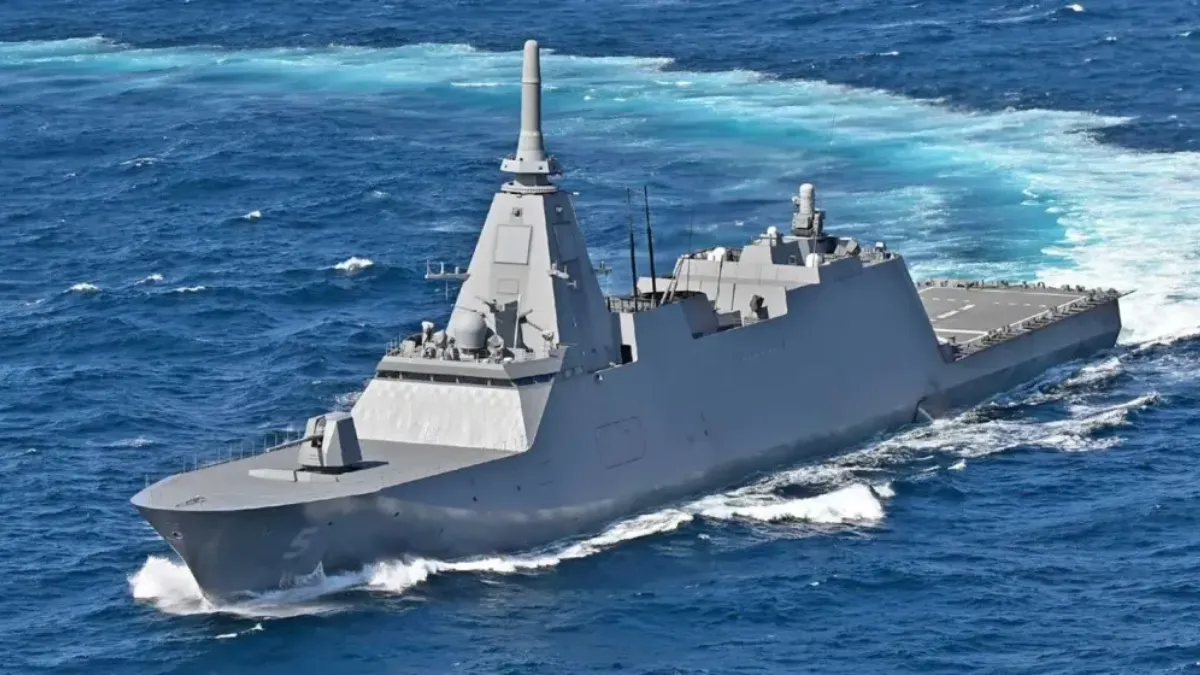
In what is being described as a landmark defence deal, Australia and Japan have signed contracts to roll out an initial defence deal estimated at A$10 billion (about USD 7 billion) to supply advanced stealth warships to the Royal Australian Navy, one of the biggest military export deals Tokyo has made since it raised its long-standing defence export ban in 2014.
The agreement greatly enhances bilateral defence industrial cooperation and maritime deterrence in the Indo-Pacific in the face of increasing strategic competition and worries about the growing Chinese naval presence.
What is the Deal About?
According to the agreement, Japan will provide the initial three upgraded Mogami-class frigates (also called 30FFM design) to Australia in 2029. They are multiple role stealth warships with sophisticated sensors, radar, and long-range missiles, which are used in the anti-submarine war missions, air defence, and maritime surveillance missions.
There will also be eight other warships of the same type built in Australia, local shipyards and industries will be involved in the construction, but the design and technology will be incorporated with the Japanese. It is to be used to sustain the long-term trajectory of modernisation of the Royal Australian Navy, aimed at increasing and hardening the surface fleet to patrol major sea routes and strengthen the security in the region.
Signing and Official information
On 18 April 2026, Saturday, the contracts were signed in Tokyo, with the presence of the deputy prime minister and defence minister of Australia Richard Marles, and the defence minister of Japan Shinjiro Koizumi. Both ministers also signed a memorandum of renewed commitment to the delivery of the fleet of frigates and modernization of bilateral defence cooperation.
The project has been reported to be worth A$10 billion (approximately USD 7 billion) and was the largest military export transaction in Japan since the 2014 amendment of its defence export policy, which had placed strict limits on the sale of arms to foreign countries. The Australian authorities have termed the Mogami-class frigates as the next generation ships that have high long-range missile potential, which can be used in high-end naval operations.
Strategic and Regional Implications
Both governments frame the deal as part of a larger initiative to discourage unilateral moves to alter the status quo by force or coercion in the Indo-Pacific especially in the light of the growing naval strength of China and aggressive behavior in the South China Sea and the East China Sea.
The modernized frigates will improve the capability of Australia to carry out maritime patrol, joint operations and coalition operations with Japan and other like-minded partners like the United States, India, and Quad members.
In the case of Japan, the agreement strengthens its defence-export sector, and supports its transition to a more proactive security stance, such as with higher interoperability with allied navies.
The project is also compliant with the Japan-Australia Reciprocal Access Agreement (RAA) that came into effect in 2022 and offers a legal framework within which the defence forces of the two countries can work more harmoniously on the territory of each other.
Defence analysts refer to the project as a model of technology-and-capability transfer whereby Australia will have access to advanced Japanese naval weaponry and Japan will have a reliable long-term export and industrial relationship. The agreement also expedites the intention to increase the level of interoperability between the Australian Defence Force and the Japan Self-Defense Forces including shared standards of communications, logistics, and combined at-sea operations.