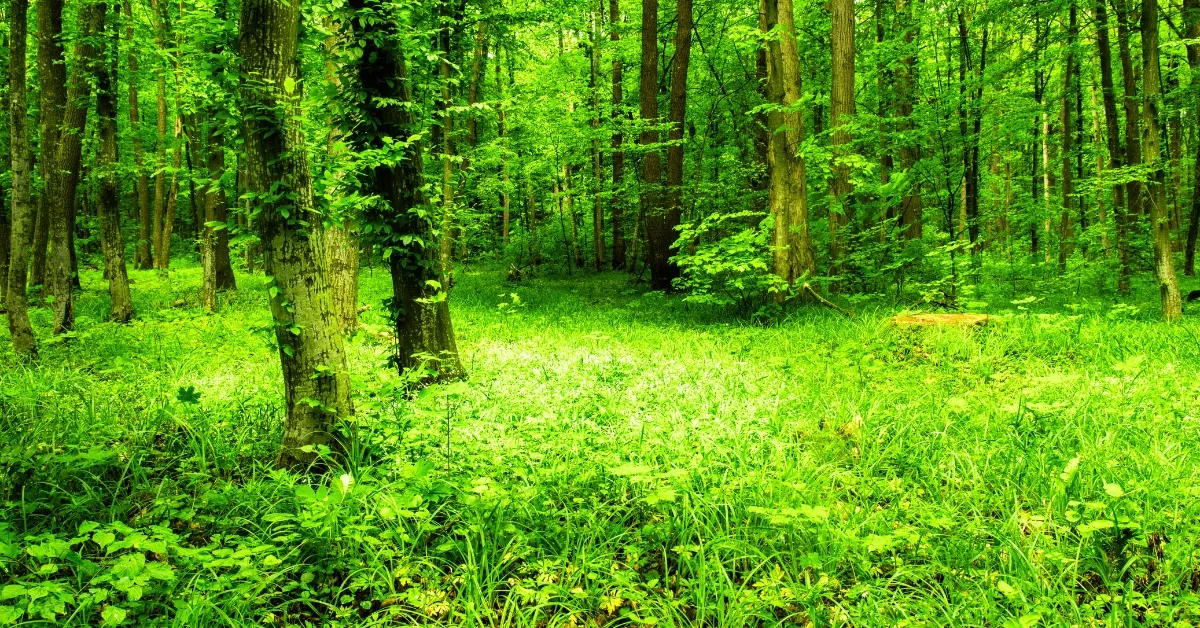
Did you know that forests cover nearly one-third of all land on Earth? These incredible ecosystems are the lungs of our planet, but they are far from identical. Some forests have earned famous nicknames because of their unique traits. For instance, the Amazon is often called the "Lungs of the Planet", while Japan's Sagano is known as the "Whispering Bamboo Forest". But do you know which forest is known as the Forest of Knives? In this article, we’ll take a look at this jagged wonder, its strange wildlife, and why it is one of the most difficult places on Earth to explore.
ALSO READ| List of 10 Oldest Forests in the World
Which Forest Is Known As The Forest Of Knives?

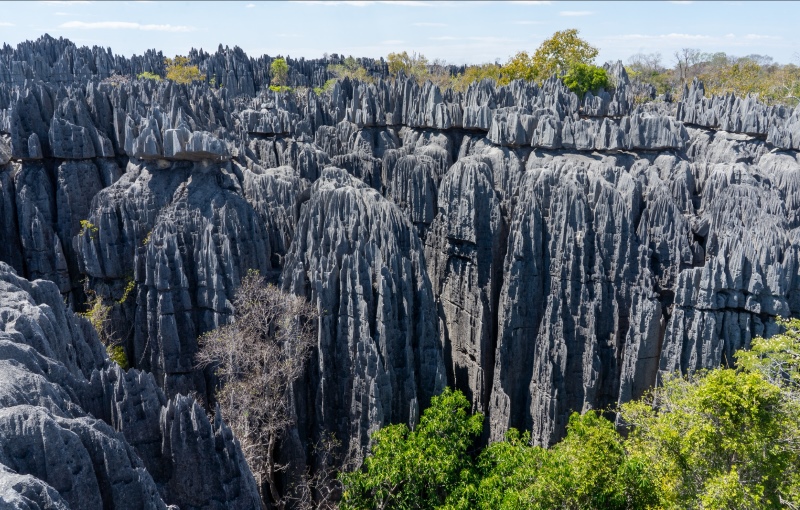
The "Forest of Knives" refers to the Tsingy de Bemaraha in Madagascar. This surreal landscape is not made of wood, but of massive limestone formations eroded into razor-sharp needles. The word "Tsingy" means "where one cannot walk barefoot", which perfectly describes the jagged terrain. Located in a remote National Park, these "knives" were formed over millions of years by heavy rainfall carving the soft rock. Despite the harsh environment, it is a vital biodiversity hotspot. It provides a protected fortress for rare lemurs and birds that navigate the peaks with ease. It is a UNESCO World Heritage site, recognised for its unique geology and the specialised life forms that call these limestone cathedrals home.
10+ Lesser-Known Facts About the Forest of Knives
- The limestone began as a bed of corals and shells under the sea 200 million years ago.
- Different species live at the base, middle, and tips of the needles due to varying levels of sunlight.
- The White "Sifaka" lemurs here can leap between sharp rocks without getting a single scratch.
- It became a UNESCO World Heritage site in 1990.
- The tall stones act as a wall, creating different microclimates on either side.
- Over 85% of the plants and animals found here exist nowhere else on Earth.
- Beneath the "knives" lies a massive network of unexplored caves and underground rivers.
- Early Malagasy people used the caves as shelters and sacred burial sites.
- The terrain is so sharp that it was historically impossible for invaders to cross.
- The sharp points are formed by "karst" erosion, in which acidic rain dissolves the limestone.
- Tsingy de Namoroka is a second, smaller "Forest of Knives" in another part of Madagascar.
- Due to its difficulty, new species of reptiles are still being discovered there today.
IN CASE YOU MISSED| Which Forest Is Known As The Lungs Of North India?
History of Tsingy de Bemaraha: How Was It Formed?
The history of the Tsingy de Bemaraha is a fascinating journey that spans millions of years. To understand how a forest of rock was built, we have to look back to the age of dinosaurs. Here is the step-by-step history of its formation:
- The Ancient Seabed: About 200 million years ago, during the Jurassic period, this entire area was submerged under the ocean. Over millions of years, layers of shells, coral, and calcium-rich debris settled on the ocean floor.
- Creating Limestone: Under immense pressure, these layers compressed into a thick block of limestone.
- The Big Lift: Tectonic plate movements eventually pushed the seabed upward. The limestone rose above the water level, forming a high plateau.
- Tropical Weathering: Madagascar's heavy tropical rains began to fall on the exposed rock. Because limestone is porous, the slightly acidic rainwater dissolved the softer parts of the stone.
- Vertical Erosion: The water carved deep vertical fissures and narrow canyons. Over time, this "karst" erosion sharpened the remaining rock into the needle-like towers we see today.
- Groundwater Action: While rain carved the top, groundwater ate away at the bottom, creating a hidden world of caves and tunnels beneath the surface.
Now, this process has created a landscape that looks like a city made of stone. It shows how water and time can transform an ancient sea into a rugged work of art.
WHAT'S NEXT| Which Forest is known as the Evergreen Forest?