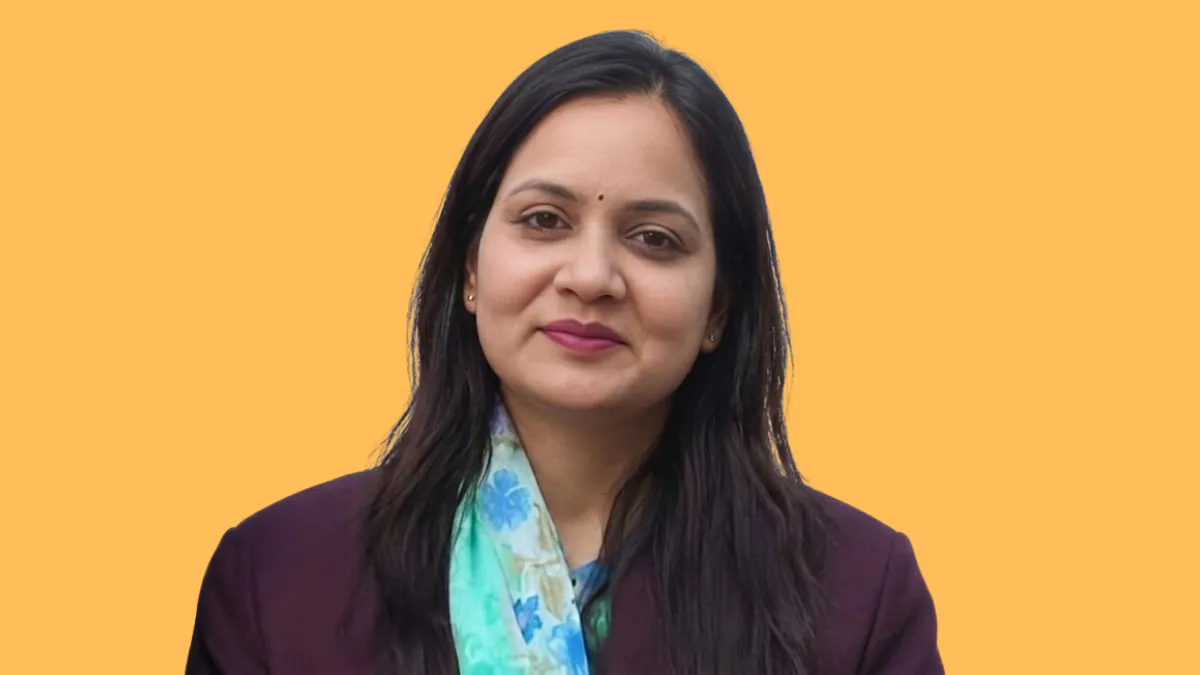
Nisha Mehta, a nursing professional and an alumna of AIIMS Delhi, was sworn in as the new Minister for Health and Population of Nepal on March 27, 2026.
This appointment comes after the landslide victory of the Rastriya Swatantra Party (RSP) in the recently concluded parliamentary elections, winning a majority of the seats in the 275-member lower house of parliament, the House of Representatives.
Nisha Mehta’s Education
Nisha Mehta completed her Bachelor of Science in Nursing from the College of Nursing, AIIMS New Delhi, from 2006 to 2010. She excelled in academics, leadership, and co-curricular activities.
She then completed a master's in nursing from a university in Gwalior, India, before joining Birat Teaching Hospital in Biratnagar, Nepal. She also worked as the administrative secretary of the Nepal Police Wives Association in Koshi province, organizing health camps and community welfare activities.
Entry in Politics
Nisha Mehta, a domain expert, has been associated with the Rastriya Swatantra Party since its early days.
She was part of the party's list of candidates in the proportional representation category in previous elections but this time won a seat in the new team of Prime Minister Balendra Shah. She was born on August 12, 1987, in Pokhara, but currently resides in Inaruwa, Sunsari. She is a 38-year-old domain expert.
Election Context
The RSP swept the March 2026 election, with early leads in over 110 constituencies, leading to 182 total victories, driven by the youth-led protests on issues of corruption, nepotism, and the social media ban, which led to the ouster of the previous coalition government.
Key Challenges Ahead
Mehta faces a healthcare system with funding issues, with the insurance scheme having dues of Rs 11 billion, despite an allocation of Rs 10 billion, which could collapse if reforms such as mandatory participation in the insurance scheme of the organized sector are not undertaken.
Hospitals are also facing issues of staff shortages, which have remained unchanged since 1991 due to an increase in the population.
Procurement issues, a 4% budget allocation instead of the 10% needed, and local-level service issues are also affecting the healthcare system.
Non-communicable diseases are on the rise, with issues such as the dilapidated condition of the Ministry of Health building requiring urgent attention.
Policy Priorities and Significance
The RSP election manifesto promises to improve the insurance scheme, focus on prevention, include mental health, and build rehabilitation centers in the provinces, which aligns with Mehta’s area of expertise.
Her transition from nursing to politics is in line with the global trend of healthcare leadership, which could strengthen relations with Nepal through her affiliation with AIIMS.



Comments
All Comments (0)
Join the conversation