Which Indian Valley Is Known As The Valley Of Shepherds?
Do you know which Indian valley is famously called the "Valley of Shepherds"? Known for its lush meadows, nomadic traditions, and ancient glacial rivers, this valley is a treasure trove of geography. Let’s uncover the place.

Key Points
- Pahalgam, in Kashmir's Anantnag district, is known as the "Valley of Shepherds."
- Tourism thrives in Pahalgam, drawing visitors for cool summers and the Amarnath Yatra.
- Shepherds use Pahalgam's meadows traditionally, sustaining their families and flocks.
There's something about valleys, you know? Maybe it's the fact that they're cut through ancient rivers or glaciers, creating these perfect little pockets between the massive peaks. You've got the big ones, like the Yarlung Tsangpo, which seems like it stretches on forever, and then you've got these tiny hidden places that don't even seem to be on a map. People have been drawn to these places for centuries, settling in the shadow of the mountains. They aren't just scenery, though valleys pick up nicknames that tell their own stories. Ever heard of the "Valley of Shepherds"? We're going to dig into why that title sticks and what makes this place so special.
Which Valley Is Known As The Valley Of Shepherds?

Pahalgam really earns its nickname, the "Valley of Shepherds". Tucked away in the Anantnag district of Kashmir, it's that rare kind of place that actually feels like a proper escape from the city's constant noise.
Interestingly, the name itself tells the whole story: in the local Kashmiri language, "Pahal" translates to "shepherd", while "Gam" means "village".
If you head out there today, you'll still see those same shepherds trekking through the high meadows with their sheep. And it's not merely for show, it's a way of life that has kept families fed and housed for generations.
Those lush, sprawling pastures are more than just a pretty backdrop for a photo; they're the literal lifeline for the people who have called this valley home for as long as anyone can remember.
But Pahalgam is more than just a quiet mountain village; it's a massive player in India's tourism scene. People flock here by the thousands every year, mostly to dodge the brutal heat; even in the middle of summer, you're looking at a refreshing 25°C or lower.
5 Fun Facts about Pahalgam
- It's home to one of the highest 18-hole golf courses in the world, sitting at 2,400 meters.
- The famous "Betaab Valley" got its name from the 1983 hit movie Betaab, which was filmed there.
- It serves as the primary base for treks leading to the massive Kolahoi Glacier.
- The town sits at an elevation of about 2,130 meters above sea level.
- The town is built exactly where the Aru and Sheshnag rivers meet to form the Lidder River.
Where Is Pahalgam Valley Located?
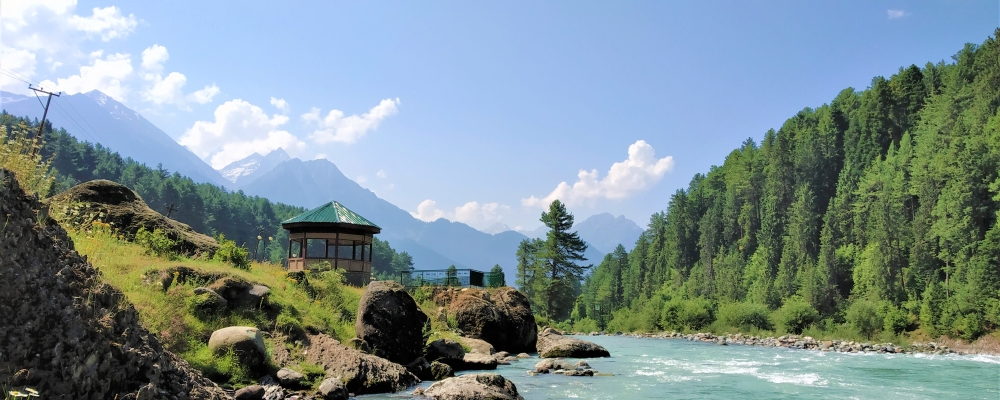
Pahalgam sits tucked away in the northeast corner of Anantnag district, Jammu and Kashmir. Most folks get there by flying into Srinagar—about a 95 km drive—or by hitting the road from Jammu if you're up for a longer adventure. The place is pure mountain magic: thick evergreen forests, jagged peaks, and that feeling you've left the regular world behind the second you start winding up those roads.
Why Does Pahalgam Matter So Much To India's Economy?
Pahalgam isn't just another pretty spot on the map. Every summer, it turns into a buzzing hub as thousands of pilgrims pour in for the Amarnath Yatra. The streets are packed with people, taxis weaving through the crowds, guesthouses booked solid, and every restaurant doing brisk business. And that's just the pilgrimage season.
The rest of the year, you've got travellers chasing those famous mountain views and cool breezes, all hoping to get a taste of the so-called Switzerland of India. For locals, this steady stream of visitors means work—driving, cooking, guiding, or running shops—and it keeps the whole place ticking.
How Do Shepherds Actually Use The Land In Pahalgam?
For the shepherds who actually live here, those high-up meadows aren't just pretty—they're everything. When the snow melts and the grass turns green, they pack up their flocks and head uphill, just like their parents and grandparents did. This isn't some quaint tradition for tourists; it's how they keep their animals strong, and their families fed.
How Do The Mountains In Pahalgam Actually Change Our Weather?
You've probably noticed that the second you cross into a place like Pahalgam, the air just hits different. It's crisp and cool, with that faint, damp scent of pine. That isn't just some mountain magic; it's basically a geography lesson playing out in real-time.
See, when you have massive mountains standing in the way, they act like a giant speed bump for the air moving in from the plains. As that air gets forced upward to clear the peaks, it cools down fast.
That's why you get those sudden, refreshing bursts of rain or that low-hanging mist that clings to the hillsides. Scientists have a fancy name for it—the "orographic effect"—but it's really just the mountains acting like a wall that traps moisture.
That's exactly why one side of a range can be this lush, vibrant green, while the other stays bone-dry. It's a great reminder for any student that mountains aren't just there for the view.
They're basically the Earth's natural plumbing system, acting like a giant pump that dictates how wind and rain move across the entire country. They're the reason our weather patterns do what they do, shaping everything from the forests we hike through to the water that eventually feeds our rivers.
Why Do Rivers in Pahalgam Look So Clean?
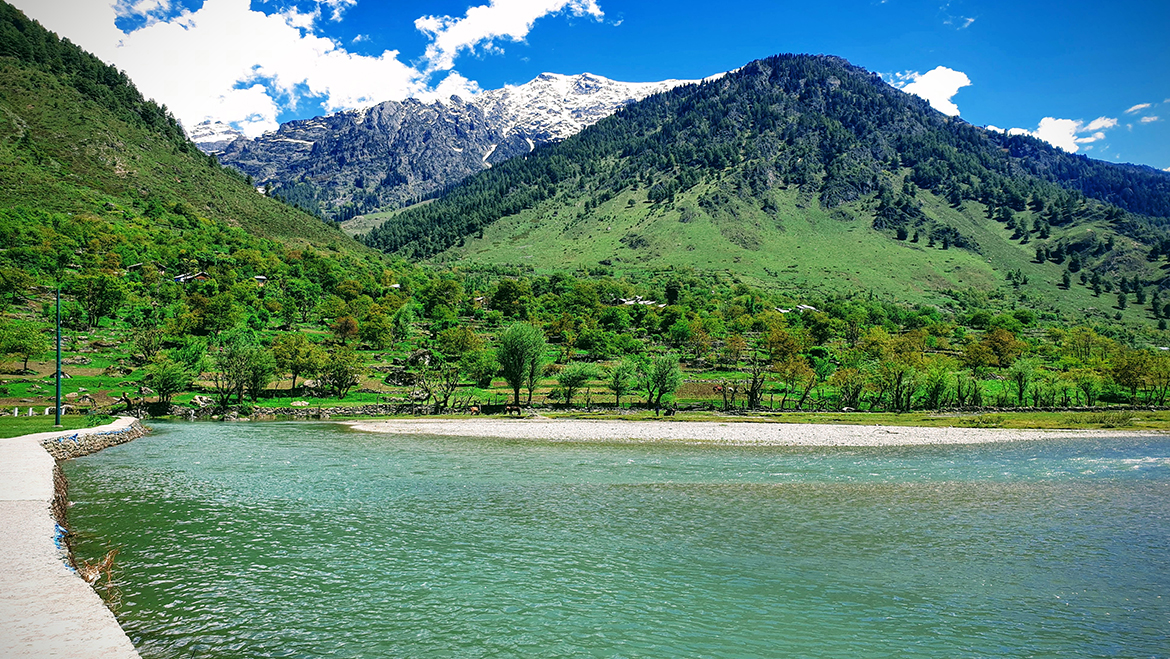
Ever notice how the water in a mountain river looks like glass, while the water flowing through a city usually looks… well, not so great? It's no accident that the water is so pure – it all comes down to the wild ride the river takes.
Rivers like the Lidder get their start high up on a mountain, fed by ancient glaciers and high-altitude springs.
As that ice starts to melt, the water begins to descend, trickling down the mountainside through layers of rock and soil that act kinda like a massive filter, slowly stripping away the impurities even before it reaches the valley below.
The good news is that at this stage, the water hasn't been polluted by industrial runoff or city waste because it's yet to trickle through an urban landscape.
On top of that, because mountain rivers are so fast-moving and get churned over by all the rocks, they smash into the water, which gets a constant dose of oxygen and stays fresh and bubbly. It's a quite cool to see how the environment handles its own housekeeping.

Kriti Barua is a skilled content writer with 4+ years of experience in creating clear, engaging, and informative content. She began her writing journey as a Creative Writer Intern at Wordloom Ventures. She holds a BA degree from Delhi University and has completed a one-year diploma in TV Production and Journalism, which adds depth to her research and reporting style.
Kriti has worked across brand writing, marketing content, and digital media, building strong expertise in articles that connect with readers and perform well online. At Jagran New Media, she writes for the GK section, covering national news, international stories, and query-based articles that answer what people actively search for. Her work focuses on easy language, reliable information, strong keywords, and reader-friendly storytelling, making her content both helpful and search-friendly.


