-1780220089232.webp)
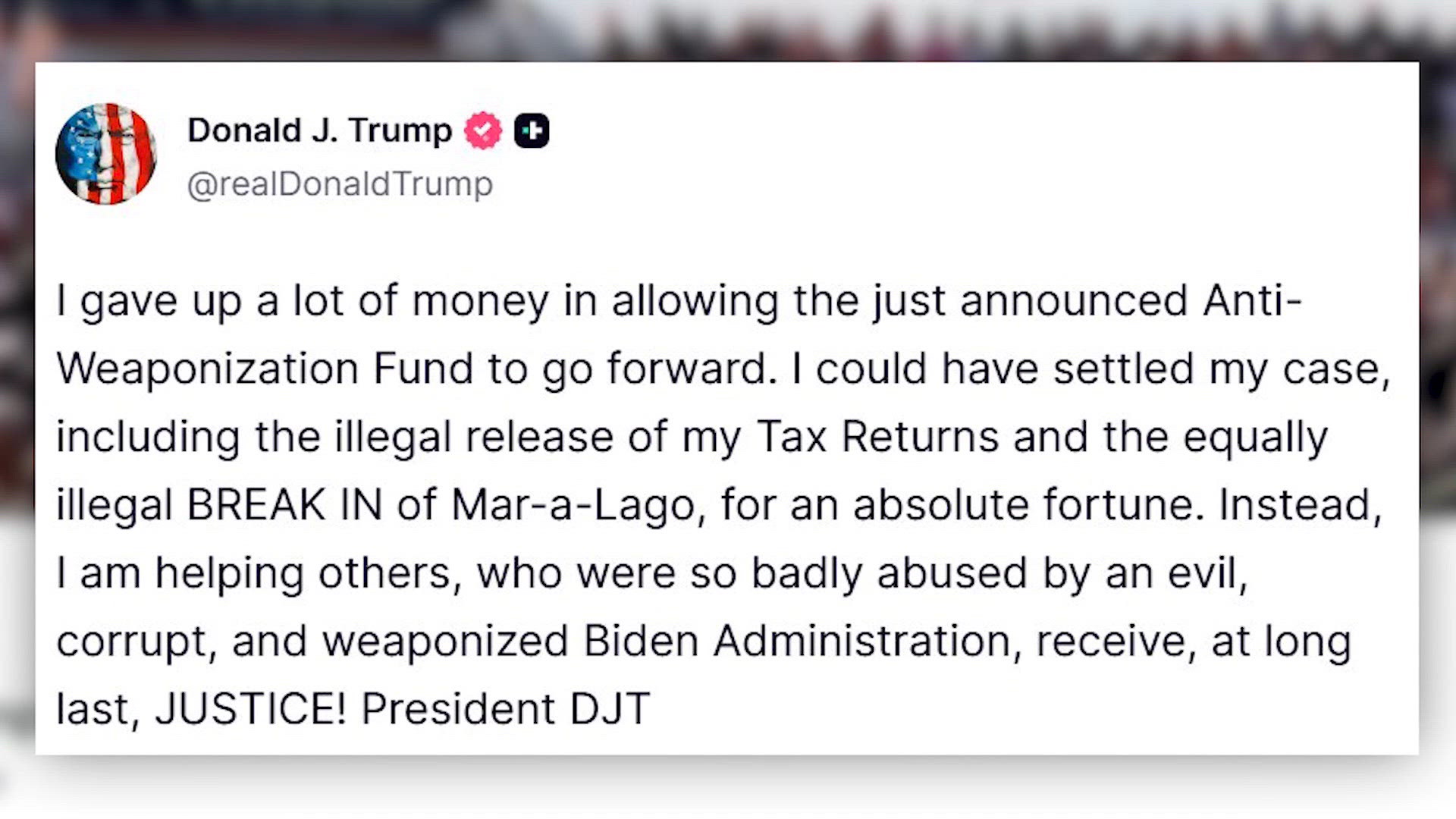
Donald Trump has been mentioned in reported news articles and discussed in policy circles around a proposed “$1.8 billion anti-weaponization fund,” which is based on calling out those who are accused of abusing the use of federal agencies for political purposes.
As expected, this idea has become a controversial topic for many as it relates to issues of government transparency, executive powers, and the legal nature of the federal government allocating funds. On the other side of the coin is the fact that a federal court recently blocked the clearance of Trump's anti-weaponization fund and has implied that it may or may not have a legal basis, raising questions about whether the fund could exist without specific legislative approval.
Additionally, the recent ruling also demonstrates the continuing challenges that exist between claims of “weaponization” of institutions as defined by congressional and executive branches and constitutional limitations on the use of federal funding.
What is an Anti-Weaponization Fund?
A fund for addressing the alleged weaponization of federal agencies against individuals due to selective investigations, enforcement, regulations etc. is the proposed solution for the alleged politicization of federal agencies like the FBI.
The intent of the fund would be to be dedicated to support the legal defense, investigation or compensation of those who allege that there was overreach by the government. This fund has been described as being able to address both the political accountability and the follow-up accountability.
Some support the proposal stating that it would provide resources to prevent federal agencies from politically targeting someone because they are associated with a particular political party or group.
Other opponents to the proposal indicate that the fund raises concerns regarding politicizing accountability mechanisms themselves, as well as potentially creating a blurred line regarding how entities or individuals can be held accountable.
Since the relationship between the fund and a variety of other entities like existing legal precedents, congressional appropriations, independent judicial review, this proposal would not always provide a solution for individuals seeking to hold a government entity or individual accountable for weaponization.
Why Did the Federal Judge Bar It?
Here are key reasons why the federal judge decided to bar it:
Absence of Congressional Authorization
The judge determined that there was no Congressional authority to establish the fund proposed by the executive branch. The United States Constitution generally prohibits the spending of federal funds on new programs without a specific congressional appropriation approved by law.
Violates the Appropriations Clause
The judge emphasized that the executive branch of government cannot create and disburse substantial funding projects without congressional approval. The Appropriations Clause gives Congress sole power over the expenditures of federal funds. Therefore, whether or not the executive branch has the right to unilaterally allocate $1.8 billion to this fund, without an appropriation from Congress, is legally questionable.
Separation of Power
According to the judge, if the executive branch were allowed to create this fund it would erode the separation of powers and violate the constitutionally established checks on the distribution of powers among the three branches of government like executive, legislative, and judicial. Congress has the legal authority to pass legislation & allocate funds; the executive branch administers or develops laws.
No Statutory Authority
The judge found that the executive branch of the government has failed to identify a specific federal law providing any statutory authority for the establishment & administration of the fund, so it appears that the establishment or operation of the fund was beyond the power of the executive branch of the government because lack of authoritative legal basis for establishing or operating fund indicates excessive use of the executive's authority.
Potential for Executive Excess
The judge expressed concerns that the fund has the potential to expand presidential powers beyond constitutional limits. Establishing a large compensation or investigatory program without congressional approval sets a precedent for executive excess in the future.
Conclusion
The decision by the courts to intervene reinforces that major Federal spending programs must be based on clear legislative authority, not solely executive action. The notion of creating an anti-weaponization fund is suggestive of larger political issues surrounding justice and trust in institutions but the judiciary is required to maintain that responses to those issues are still consistent with current law.