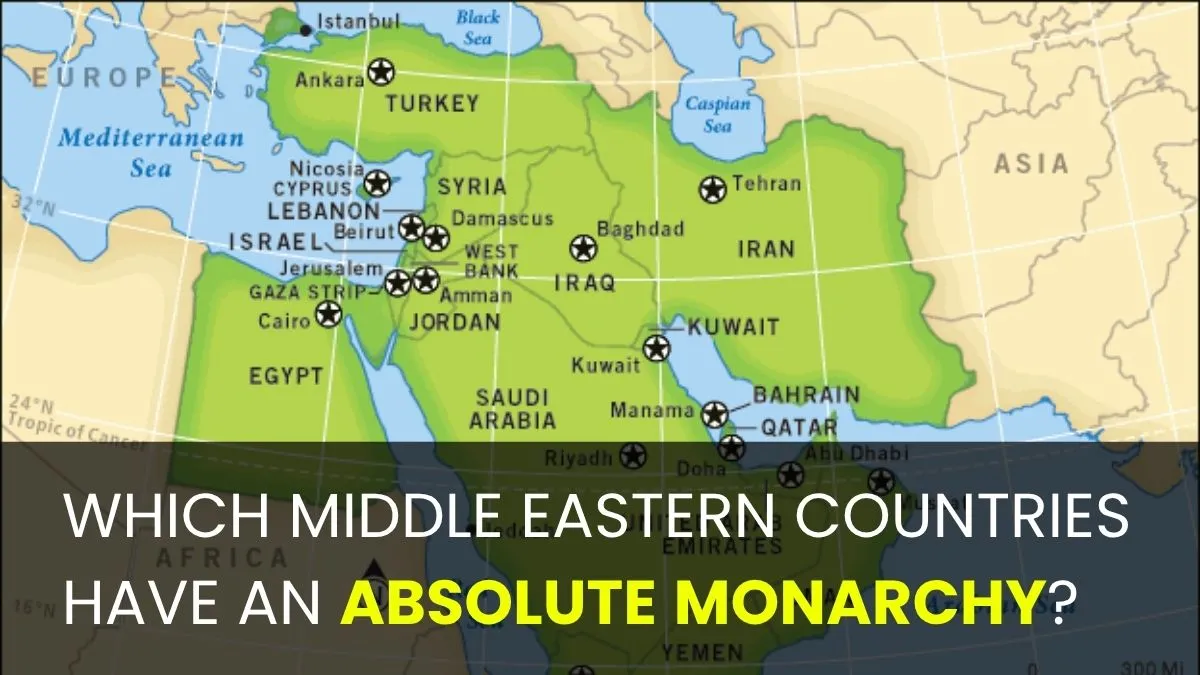
Governments in the Middle East range from absolute monarchy and constitutional monarchy to parliamentary republic to presidential republic. A monarchy is a form of government where supreme authority is vested in a single individual, a monarch such as a king, queen, or emperor, who acts as head of state. Monarchies in the Middle East primarily include absolute monarchy and constitutional/semi-constitutional monarchies.
An absolute monarch is a form of monarch in which one ruler has supreme authority that is often not restricted by any written laws, legislature, or customs. These rulers are often hereditary monarchies. In contrast, constitutional monarchies feature a monarch as head of state whose powers are restricted by a constitution or parliament. Though the kings retain significant executive authority.
Which Middle Eastern Countries Have An Absolute Monarchy?
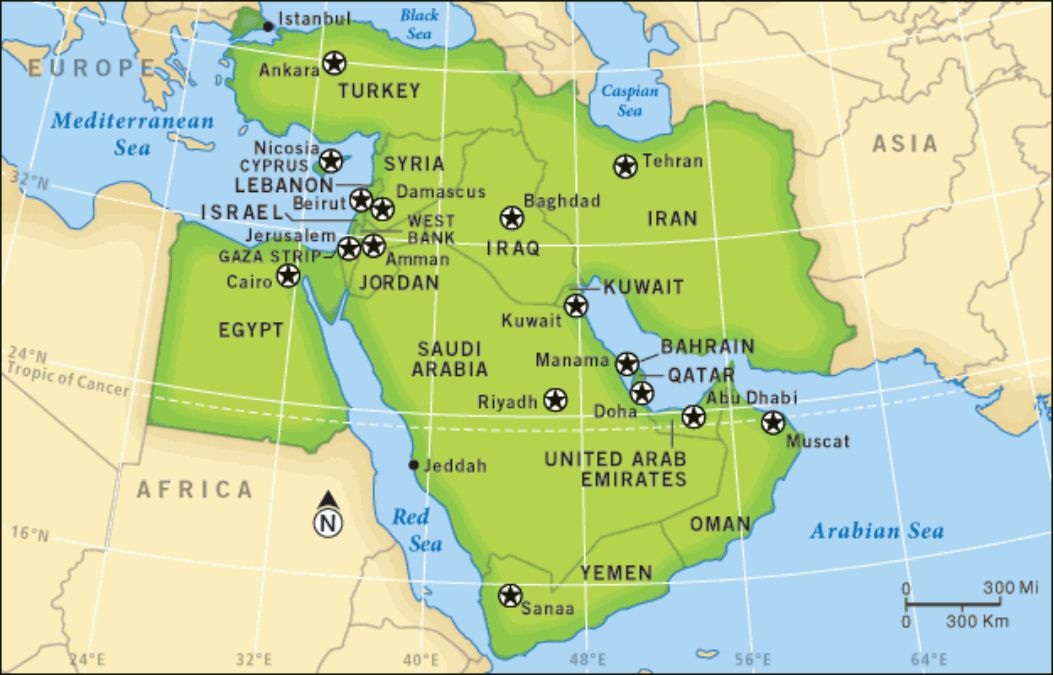
Saudi Arabia and Oman are the only absolute monarchies in the Middle East. Saudi Arabia, officially known as the Kingdom of Saudi Arabia, is an Arab state in Western Asia constituting the bulk of the Arabian Peninsula.
Saudi Arabia is an absolute monarchy
The Kingdom of Saudi Arabia was founded in 1932 by the first King Ibn Saud. He united the four regions, Hejaz, Najd, and parts of Eastern Arabia and Southern Arabia, through a series of conquests. Since then Saudi Arabia has been an absolute monarchy ruled by the House of Saud. The current King of Saudi Arabia is Salman bin Abdulaziz Al Saud.
Saudi Arabia is an absolute monarchy, which means the king acts as both head of state and government, with supreme authority. The King holds absolute legislative, executive, and judicial powers. The monarchy passes through the sons of the King. The monarch, as in the King, appoints a Council of Ministers (cabinet) and a Consultative Council (Shura Council) to advise him.
While the King wields the supreme power, however, according to the Basic Law of Saudi Arabia adopted by Royal Decree in 1992, the King must comply with Sharia (Islamic law) and the Quran. The Quran and the body of the Sunnah (traditions of the Islamic prophet, Muhammad) are declared to be the Kingdom's constitution. No political parties or national elections are permitted in the Kingdom.
Did you know? Saudi Arabia is the only Arab nation where no national elections have ever taken place since its founding in 1932.
Oman is an absolute monarchy
Oman is an absolute monarchy. The sultans of Oman are members of the Al Bu Said dynasty. The Sultan of Oman acts as both the head of state and head of government. He holds complete authority over all military, legislative, and political matters. The monarchy is hereditary. The Sultan appoints a cabinet, acts as Prime Minister and the Supreme Commander of the Armed Forces. The Sultan issues laws through royal decree, and the legal system is based on Sharia. Political parties are banned in Oman. The current sultan of Oman is Haitham bin Tariq, since 11 January 2020.



Comments
All Comments (0)
Join the conversation