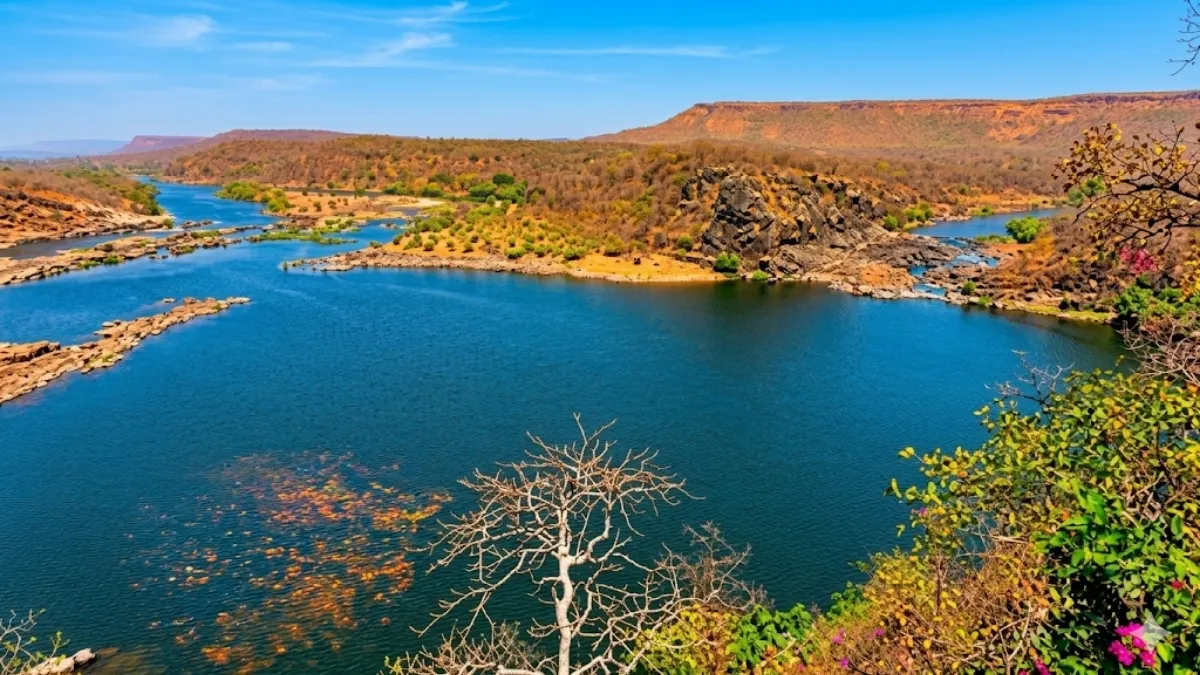
The Ken-Betwa Link Project stands as a landmark in India’s water management history, being the first project under the National Perspective Plan for the interlinking Ken-Betwa rivers.
It is aimed at transforming the perennially parched Bundelkhand region. The project is a collaborative effort between the Central Government and the states of Madhya Pradesh and Uttar Pradesh. Currently the project is under construction but it has become a flashpoint for social and environmental conflict. Tribal communities in the Bundelkhand region of Madhya Pradesh have intensified their protests by highlighting their concerns of the project at the cost of indigenous rights and ecological impact on Panna Tiger Region.
Ken-Betwa Link Project
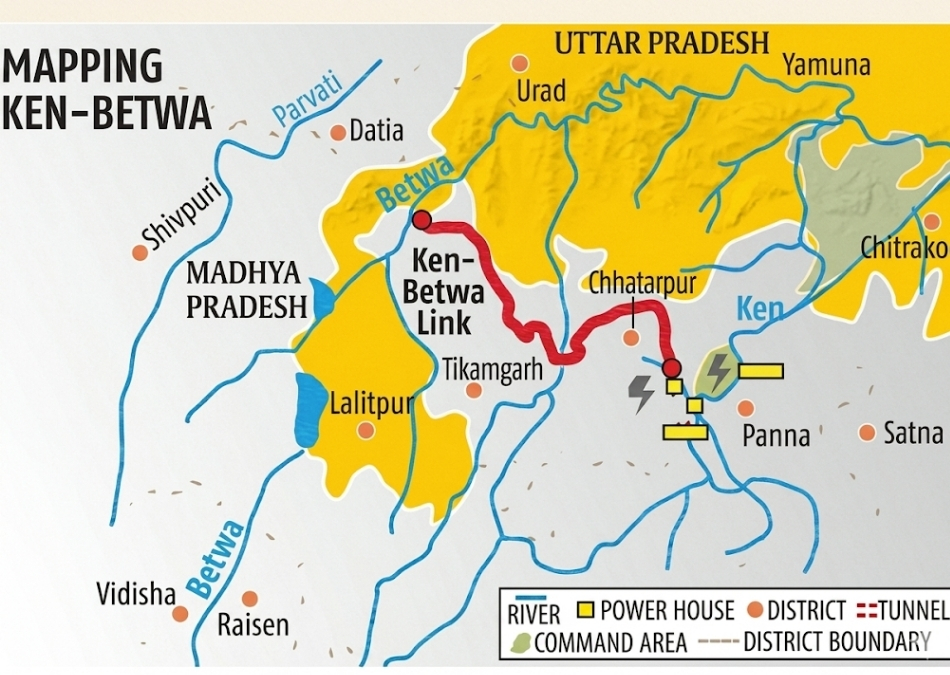
Ken-Betwa Link Project involves transferring "surplus" water from the Ken River in Madhya Pradesh to the Betwa River in Uttar Pradesh and Madhya Pradesh. The main objective is to provide irrigation, drinking water, and hydropower to the drought-prone Bundelkhand region.
Features and Benefits of the Project
-
Objectives: It is to provide irrigation, drinking water, and hydropower to the drought-prone Bundelkhand region
-
Infrastructure: The project centers on construction of the Daudhan Dam and a 221-km canal.
-
Irrigation and Water: It aims to provide annual irrigation to approximately 10.62 lakh hectares and drinking water to over 62 lakh people.
-
Power Generation: The project is designed to generate 103 MW of hydropower and 27 MW of solar power.
-
Economic Impact: It is expected to boost agricultural productivity and mitigate the high rate of farmer distress in the region.
Why Tribal Communities are Protesting in Bundelkhand
Although despite huge benefits, the ground reality in districts like Panna and Chhatarpur is one of unrest. Tribal groups of this region including the Gond and Saur communities, have launched significant movements like the "Chita Andolan" (Pyre Protest).
Forced Displacement and Loss of Identity
The project will submerge roughly 22 villages, completely uprooting over 7,000 families. For these tribal communities, land is not just an economic asset but a cultural and spiritual anchor. They argue that the "land for land" and "village for village" rehabilitation policies have not been honored.
Inadequate Compensation and Survey Errors
Protesters allege that the government’s compensation packages are inconsistent and insufficient.
-
The "Package Gap": Directly displaced families are eligible for ₹12.5 lakh, while those affected by auxiliary state projects are reportedly offered only ₹7.5 lakh, leading to a sense of discrimination.
-
Flawed Surveys: Many residents claim that adult family members (who should be counted as separate units for compensation) were ignored in official surveys, and their properties were undervalued.
Violation of Forest Rights
A significant portion of the project falls within the Panna Tiger Reserve (PTR). Tribals people have lived in these forest peripheries for generations, yet many claim their rights under the Forest Rights Act (FRA), 2006, which have not been recognized before the initiation of displacement.
Environmental and Wildlife Concerns
The construction of the Daudhan Dam will submerge nearly 98 sq. km of the Panna Tiger Reserve, a critical habitat for tigers, vultures, and gharials. Environmentalists and locals alike fear that the felling of over 2.3 million trees will lead to micro-climatic changes, potentially worsening the very droughts the project seeks to solve.
In April 2026, the Supreme Court of India reiterated that environmental governance must be "eco-centric," emphasizing that the natural interests of all species and the legal rights of forest dwellers must be protected before proceeding with large-scale projects.
As of April 2026, the situation remains tense. While the local administration has promised fresh surveys to address compensation grievances, tribal leaders continue to demand a halt to "repressive measures," such as house demolition notices. The conflict underscores the delicate balance India must strike between large-scale infrastructure needs and the protection of its most vulnerable citizens and biodiverse landscapes
Also Read: Which is the Newest Ramsar Site of India?


-1777190103493_t.webp)

