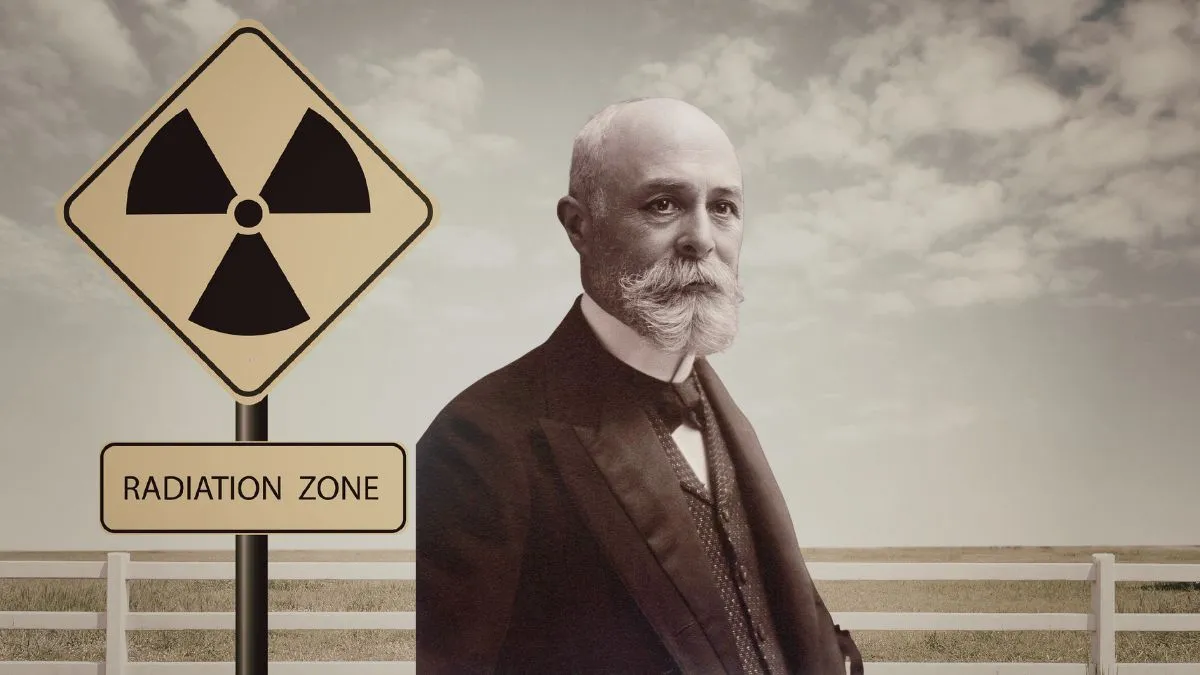
Radioactivity is defined as the release of energy by means of radiation in atoms. It was first discovered in the year 1896 by Henri Becquerel, who carried out further experiments in conjunction with Marie and Pierre Curie. Its discovery made a significant contribution to the development of science, leading to the discovery of atomic structure. As a result, it finds wide applications in various fields like medicine, energy production, and industries.
The discovery of radioactivity can be considered one of the greatest achievements of science, particularly in the areas of physics and chemistry. It refers to the phenomenon whereby invisible rays or radiation emanate from atoms. This achievement transformed the entire scientific theory and gave rise to many inventions, such as nuclear energy, medicines, and further scientific research.
Radioactivity was discovered by a French physicist named Henri Becquerel in 1896. In his experimentation with uranium salts, he found out that they emit invisible radiation without receiving any energy from an external source. This discovery was also made by Marie and Pierre Curie later when they discovered polonium and radium.
Who discovered Radioactivity?
Radioactivity was discovered for the first time by Henri Becquerel in 1896. While studying the characteristics of uranium salt, he found that the uranium salt could radiate invisible rays, and that the invisible rays had such potential as to expose photographic plates even without being exposed to sunlight. This very fact marked the onset of the discovery of radioactivity. Later on, Marie and Pierre Curie continued the work on radioactivity.
Relevance of Radioactivity Today
Radioactivity still plays a relevant role in today’s generation, by contributing to a variety of uses in various sectors, as follows: In the medical industry, it is used in the treatment of cancer using radiation and detection of diseases using X-ray imaging and PET scan procedures. In the energy industry, nuclear power stations generate electrical energy by using radioactive substances as an alternative to non-renewable sources of energy generation. In science, the use of radioactivity helps to identify the atomic structure of substances and date fossils and rocks using the carbon dating technique. In industries, the use of radioactivity includes testing product quality, identifying pipeline leakages, and analyzing material thickness. Radioactivity can also be applied in the field of space technology as an energy source for space shuttles.
Interesting Facts About Radioactivity
There are many interesting facts about radioactivity as follows:
-
In 1896, the discovery of radioactivity took place when Henri Becquerel found that uranium salts could produce rays without any outside energy.
-
Further exploration of this phenomenon was done by Marie and Pierre Curie. They discovered more elements such as polonium and radium, and coined the term 'radioactivity.'
-
Henri Becquerel, along with Marie and Pierre Curie, won the Nobel Prize in Physics in 1903 for their discovery of Radioactivity.
-
Radioactivity helped scientists to learn more about the atomic structure. It also led to the development of Nuclear Physics worldwide.
-
Today, radioactivity is widely used in medical practices, power plants, and scientific studies.
Radioactivity is perhaps the most remarkable discovery in science, which has revolutionized our understanding of things and energies. It is an essential element in the development of science from the discovery of it by Becquerel, right up to the work of Marie and Pierre Curie. The current applications of radioactivity in medical practice, power generation, and scientific studies demonstrate its crucial importance in today's times.
Check out some more interesting articles from the general knowledge section to boost your knowledge of national and international topics. Stay connected with Jagran Josh for more topics like this.
ALSO READ
What is Marie Curie Famous for? Know All about Her Life and Legacy