From 100,000 to 7,100: How the World's Fastest Animal Faced a 99% Population Collapse
Do you know which country is home to the world's largest cheetah population? This remarkable southern African nation hosts over 3,000 of these spotted speedsters, with many thriving outside protected reserves on commercial farmlands. Let’s take a look at the top global strongholds for cheetahs!

Key Points
- In 1900, over 100,000 cheetahs roamed; today, only about 7,100 remain globally.
- Cheetahs are classified as Vulnerable by IUCN, facing high extinction risk due to habitat loss.
- Namibia, home to 3,400 cheetahs, uses Livestock Guarding Dogs to reduce conflicts by 80%.
Did you know that cheetahs can't actually roar? Unlike big lions or tigers, they make a purr sound just like a normal house cat! These awesome animals are scientifically called Acinonyx jubatus. They mostly live in open dry grasslands, savannas and deserts. They do really well in these places because they can run so fast. But sadly, they are in big danger today. The International Union for Conservation of Nature, or IUCN, classifies them as Vulnerable. This basically means they are at a high risk of going extinct. Do you know which country has the biggest cheetah population in the world? Let's find out.
Which Country has the largest cheetah population in the world?
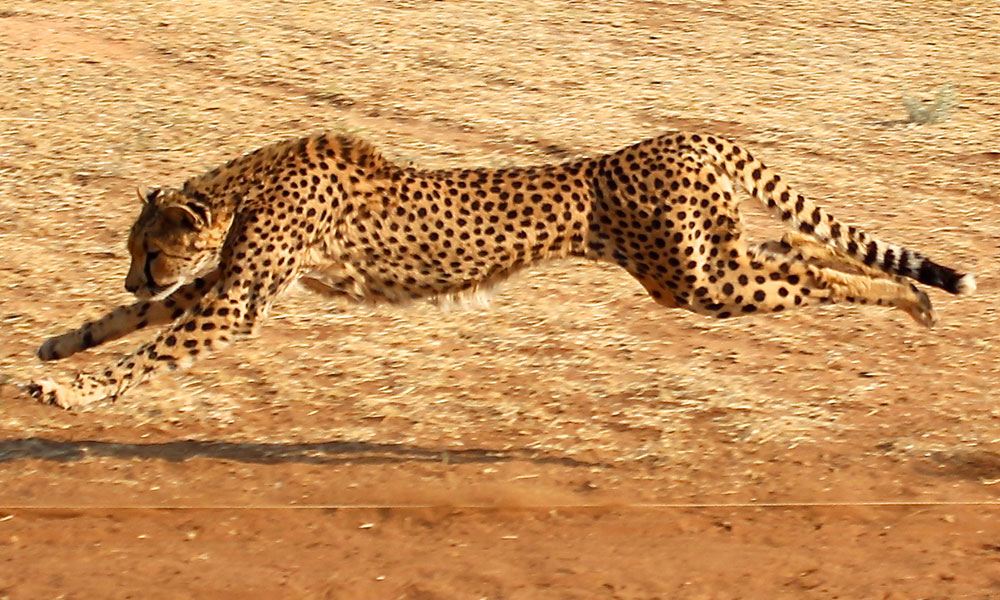
Namibia actually has the most wild cheetahs in the whole entire world. Right now, there are around 3400 of these super-fast cats living there. That's almost half of all the wild cheetahs left on the planet.
Namibia is even called the 'Capital of Cheetahs' because everyone there works so hard to save them. Most of these big cats don't even live in regular public parks; they actually live on huge private farms.
10 Countries With the Largest Cheetah Populations in the World
Other countries in the southern and eastern parts of Africa have the rest of them. Botswana is in second place with about 1700 cats. Places like Kenya, Tanzania and South Africa also have some pretty big groups of them too.
Outside of Africa, there's only a tiny group left. Like, only about 12 Asiatic cheetahs are still surviving in Iran.
| Country | Cheetah Population | How are they helping conserve this animal |
| Namibia | 3,400 | Working with farmers to use guard dogs instead of shooting cats. |
| Botswana | 1,700 | Created the massive Central Kalahari Game Reserve to protect habitats. |
| Kenya | 1,500 | Monitoring cats in the Masai Mara and teaching local communities. |
| Tanzania | 1,180 | Protecting wild spaces like Serengeti National Park from development. |
| South Africa | 1,100 | Relocating cheetahs to other parks and countries to keep genetics healthy. |
| Ethiopia | 500 | Stopping illegal wildlife trade and rescuing stolen cheetah cubs. |
| Mozambique | 478 | Reintroducing wild cheetahs into the Zambezi River Delta zones. |
| Sudan | 462 | Tracking populations in remote wild landscapes despite challenges. |
| Chad | 195 | Guarding national borders to prevent poachers from hunting wildlife. |
| Zimbabwe | 150 | Running localised community programmes to help humans and cats share land. |
How Did Cheetahs Collapse From 100,000 to 7,100?
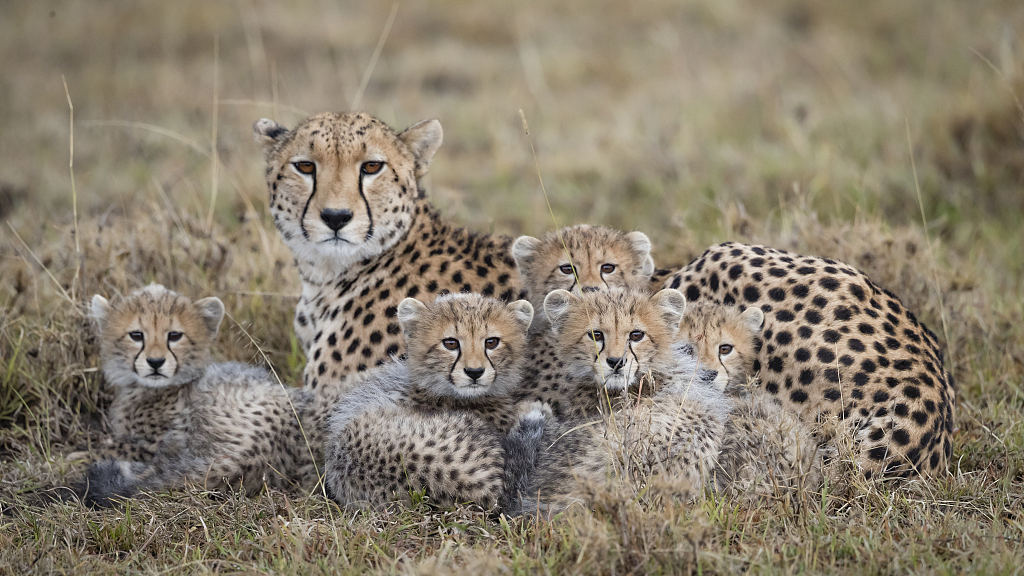
In the year 1900, there were more than 100,000 cheetahs roaming across Africa and Asia. Today, scientists think there are only about 7100 wild cheetahs left. That's a huge 93% drop! How did this tragedy happen?
First off, people have taken over 90% of the land where cheetahs used to live. Forests and grasslands got turned into towns, roads, and big farms. This is called habitat loss, and it leaves the cats with no place to run or hunt.
Second, there's a big problem with low genetic diversity. Around 12000 years ago, a historical event called a 'population bottleneck' happened. Almost all the cheetahs died out, and only a few survived.
Modern cheetahs share a close genetic link because they have a small number of ancestors. They are almost like identical twins. If a bad illness hits, it can quickly wipe out a whole group because their bodies fight diseases in the exact same way.
Finally, illegal hunting and poaching play a sad role too. People take cute cheetah cubs from the wild to sell them as illegal exotic pets, and a lot of the cubs die during the journey.
Why Do Namibian Farmers Kill Cheetahs?
You might think people only kill cheetahs for fun but the truth is way more complicated than that. In Namibia, about 90% of cheetahs live outside of protected reserves on big commercial farmlands. This brings them right into contact with humans and it causes a big human-wildlife conflict.
Farmers raise cows sheep and goats to feed their families and make a living. When a cheetah goes onto a farm it might hunt a young calf or a goat. To a poor farmer, losing even one animal is a huge financial loss so farmers often shoot or trap cheetahs. They do this to protect their income from actual or perceived livestock kills.
Luckily, conservation groups are finding clever ways for humans and cheetahs to coexist together. One amazing solution is the Livestock Guarding Dog Program. Organisations train special Anatolian Shepherd dogs and give them to local farmers. These big, loud dogs are great at scaring cheetahs away without even hurting them.
Since the dogs protect the livestock farmers don't feel the need to shoot the cheetahs anymore. This simple idea has cut livestock losses by more than 80% in some places and it shows that humans and big cats can safely share the same land.

Kriti Barua is a skilled digital journalist and communications professional with 4+ years of experience, currently writing for the General Knowledge section at Jagran New Media. She has established herself as a subject matter expert in History, Geography, Trending National and International News, Sports, Science, and Defence, producing clear, reliable, and search-optimised content that connects with readers worldwide.
Kriti holds a BA degree from Delhi University and a one-year diploma in TV Production and Journalism, an academic background that adds research depth and strong storytelling instincts to her writing. Her experience spans brand writing, content marketing, and digital media, giving her a sharp understanding of what makes content both helpful to readers and visible in search.
At Jagran New Media, she applies this expertise to national and international news coverage, query-based articles, and in-depth pieces across her specialist subject areas. Her content is defined by easy language, factual accuracy, strong keyword strategy, and reader-friendly storytelling.


