MBBS or BDS After NEET 2026: Which Course Is Better? Fees, Salary and Career Scope Compared
MBBS or BDS after NEET 2026? The UPSC Combined Medical Services notification specifies Level 10 of the Pay Matrix, Rs 56,100 to Rs 1,77,500, for Medical Officer posts, along with applicable allowances. Compare course duration, fees, salary, career opportunities and scope to decide which medical course is better for you.

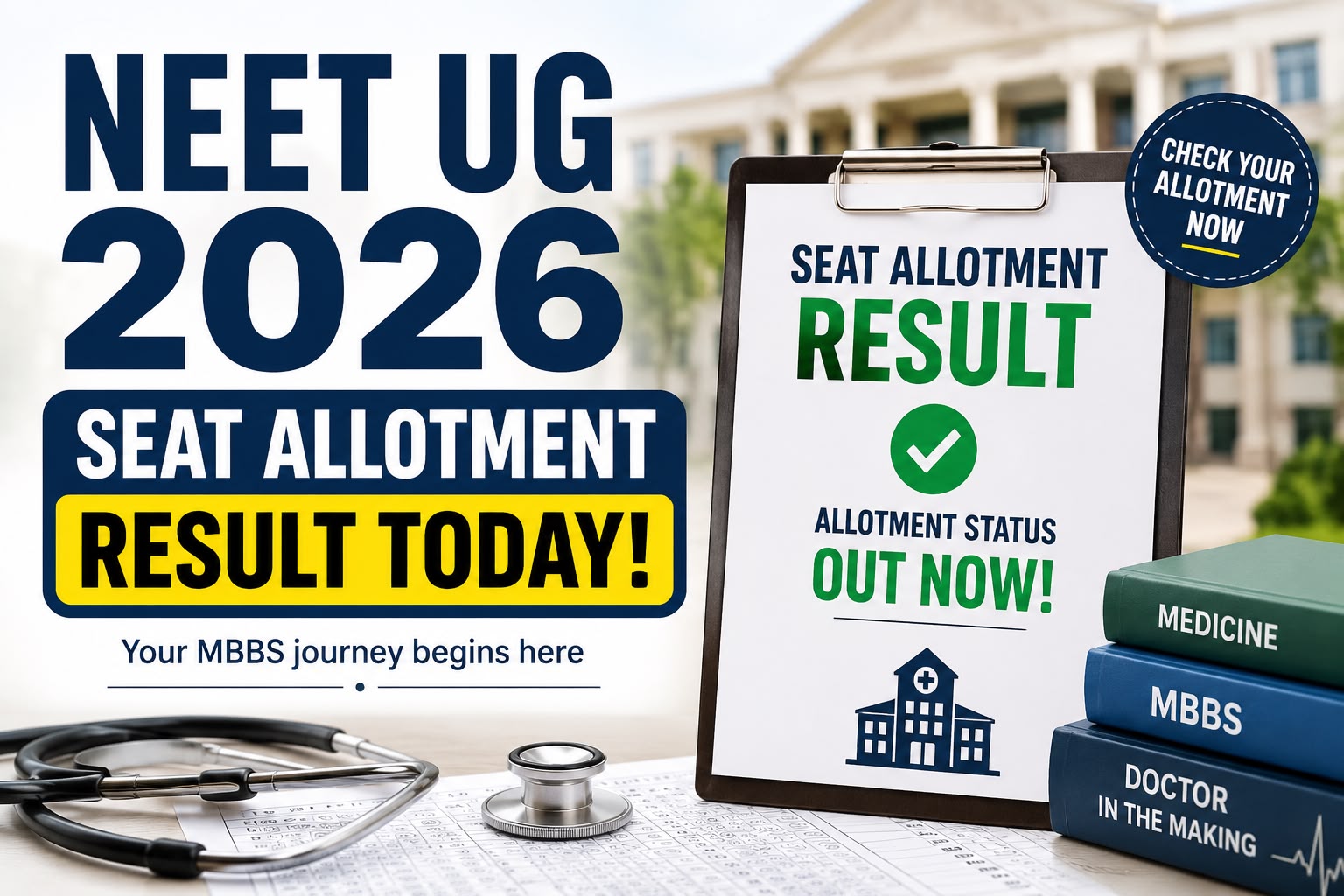
The NEET UG 2026 counselling process is currently underway for admission to undergraduate medical and dental courses, with the Medical Counselling Committee (MCC) conducting counselling for MBBS and BDS seats under its purview. The Round 1 provisional allotment has also been released. For students who have qualified NEET 2026 and are now deciding between MBBS and BDS, the choice should not be based only on the course title or expected salary. The duration, fees, nature of clinical work, postgraduate opportunities and long-term career plans are all important factors.
MBBS vs BDS: Which has higher fees?
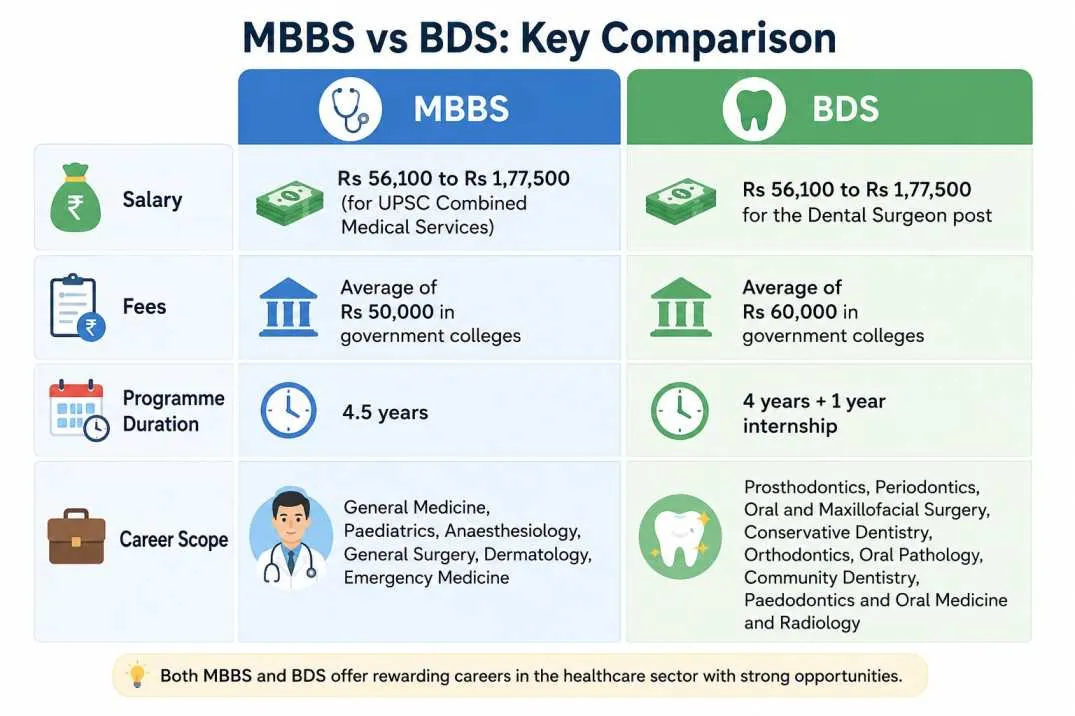
There is no single nationwide fee applicable to every MBBS or BDS college. Fees vary considerably depending on whether the college is government, private, deemed or otherwise governed by a particular state or institution. However, on average, government colleges may charge a fee of Rs 50,000 for MBBS Programmes and Rs 60,000 for BDS programmes.
For example, official fee documents from government institutions show that MBBS fees can be relatively low at some centrally funded colleges. AIIMS documentation lists tuition and other academic charges for its MBBS programme, while its hostel charges are separately specified.
The National Medical Commission also issued a public notice in April 2026 clarifying that MBBS colleges should not charge students for the entire 5 or 5.5-year period as though the internship were an academic teaching period. The MBBS academic component is 4.5 years, followed by one year of compulsory rotating internship.
Therefore, students should check the latest fee structure of the specific college allotted to them, rather than relying on a single national MBBS or BDS fee figure.
MBBS vs BDS: What about salary?
Salary is another area where students should be careful about comparing internet estimates.
There is no official nationwide “average salary” for every MBBS or BDS graduate. Earnings depend on the employer, location, experience, specialisation, government or private employment and whether the graduate eventually starts an independent practice.
However, official government recruitment documents demonstrate the earning potential available through government employment.
For example, the UPSC Combined Medical Services notification specifies Level 10 of the Pay Matrix, Rs 56,100 to Rs 1,77,500, for Medical Officer posts, along with applicable allowances.
BDS graduates can also enter government service. ESIC’s service regulations prescribe Level 10, Rs 56,100 to Rs 1,77,500, for the Dental Surgeon post. The Ministry of Health and Family Welfare has also listed Dental Surgeon posts in the Central Health Service at Level 10.
These are government pay scales, not guaranteed starting salaries for every graduate.
ALSO READ | NEET UG Cutoff 2026: Check Category-Wise Marks for MBBS and BDS Government and Private Colleges
Which course has better career scope?
MBBS generally offers a broader range of clinical career pathways because doctors can work across multiple areas of medicine and subsequently pursue postgraduate medical education.
NMC’s postgraduate framework includes a wide range of MD/MS specialities, including General Medicine, Paediatrics, Anaesthesiology, General Surgery, Dermatology, Emergency Medicine and several others.
BDS offers a more specialised career from the beginning, centred on oral and dental healthcare. Graduates can work in hospitals and dental clinics, join government services, pursue teaching and research or establish their own dental practice.
BDS graduates can also pursue MDS. Official dental regulations recognise specialities including Prosthodontics, Periodontics, Oral and Maxillofacial Surgery, Conservative Dentistry, Orthodontics, Oral Pathology, Community Dentistry, Paedodontics and Oral Medicine and Radiology.
MBBS vs BDS Difference
MBBS or BDS: Which should NEET 2026 students choose?
For students who are certain about becoming a doctor and want the widest possible range of medical specialisations, MBBS is generally the stronger choice.
BDS can be the better option for students who have a genuine interest in dentistry, oral healthcare and procedures involving the teeth, mouth and jaw. It should not be selected merely as a fallback without considering whether the student actually wants to build a career in dentistry.
Students comparing an MBBS seat with a BDS seat should therefore look beyond the NEET rank and consider college quality, total fees, clinical exposure, postgraduate opportunities, location and their own long-term career goals.
Ultimately, there is no universal answer to whether MBBS or BDS is “better”. MBBS offers broader medical career options, while BDS provides a specialised path in dentistry. The better choice after NEET 2026 depends on the student’s preferred area of healthcare and the quality and affordability of the specific seat being offered.

Sahil Behl is an education journalist at Jagran with over a year of experience in journalism. Prior to joining Jagran, he worked as a Sub-Editor in NDTV's Education department, where he was responsible for writing and editing education-related content as well as managing the department's social media presence. At Jagran, he covers a wide range of education topics, including board examinations, school updates, admissions, and job notifications, while leveraging his editorial expertise and strong understanding of digital content strategy.
Sahil holds a Bachelor's degree in Business Administration and has also completed an eight-month certification program in Data Science. Passionate about emerging technologies, particularly artificial intelligence, he closely tracks their growing role in journalism and explores how they are transforming shaping the future of the media industry.


-1787554708296_t.webp)