

Show Key Points
University of Delhi has rejected allegations made by Rahul Gandhi regarding the caste-based bias in admissions, stating that a large number of students from reserved categories were enrolled in the current academic session. The university has said that over 44,000 students from reserved categories were admitted during the 2025-26 academic year across undergraduate and postgraduate programs.
The clarification came after Gandhi alleged that universities sometimes use interviews to exclude students based on caste. His remarks triggered a response from the university, which said the claims were not supported by facts and that the admission process follows transparent guidelines.
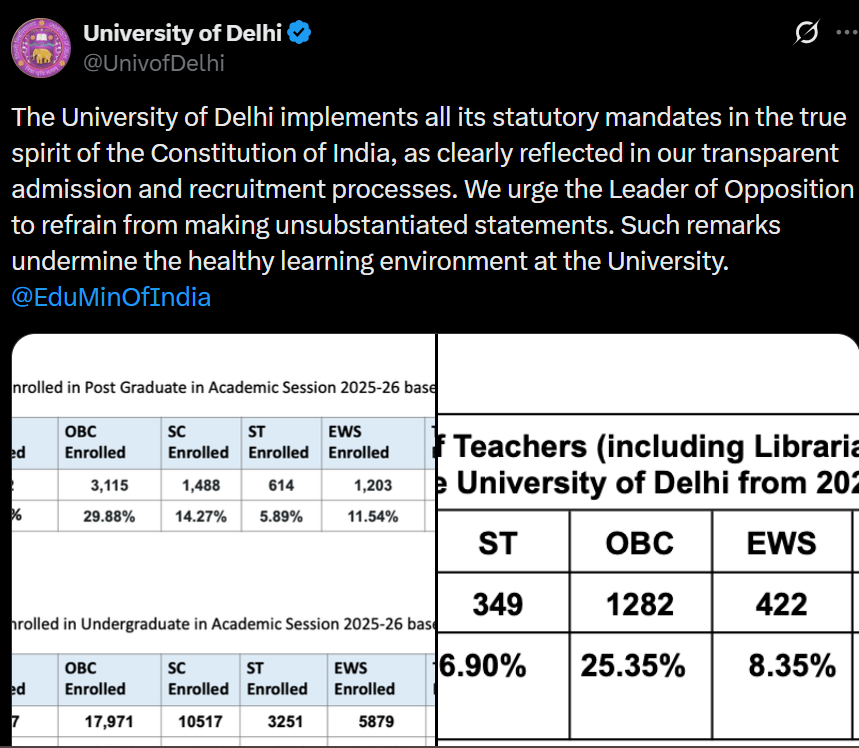
According to the university, admissions to most courses are conducted through the Common University Entrance Test, CUET system, which is designed to ensure fairness and uniformity in the admission process across central universities.
Delhi University Shares Data to Counter Allegations
To counter the allegations, Delhi University has released admission data highlighting the participation of students from reserved categories. The data show that more than 44,000 candidates from the Scheduled Caste (SC), the Scheduled Tribes (ST), Other Backwards Classes (OBC), and Economically Weaker Sections (EWS) were admitted in the 2025-26 academic session.
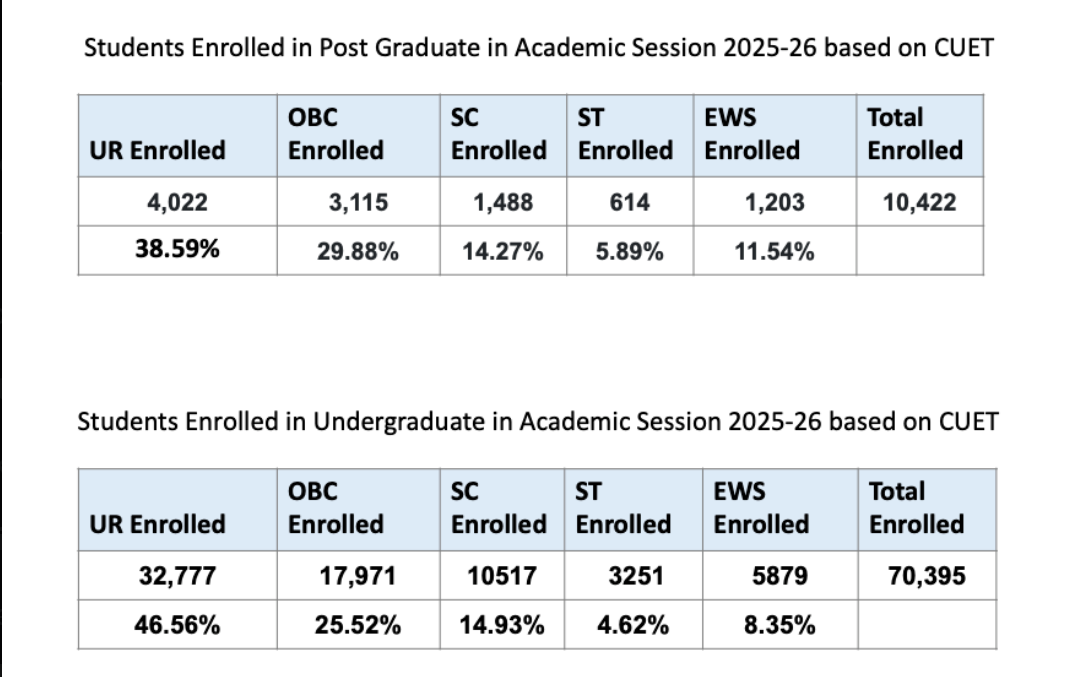
A significant portion of these admissions were recorded in undergraduate programs, while several thousand students from reserved categories also secured seats in postgraduate courses offered by the university. University officials have also emphasised that admissions are carried out strictly according to the reservation policies laid down by the government. They also pointed out that the adoption of CUET has streamlined the admission process and improved transparency.
The university further stated that it remains committed to providing equal opportunities to students from all backgrounds and ensuring that reservation norms are implemented effectively.



Comments
All Comments (0)
Join the conversation