Who Invented the Computer Mouse?
Discover who invented the computer mouse, when it was created, and how Douglas Engelbart's invention changed the way people interact with computers worldwide.
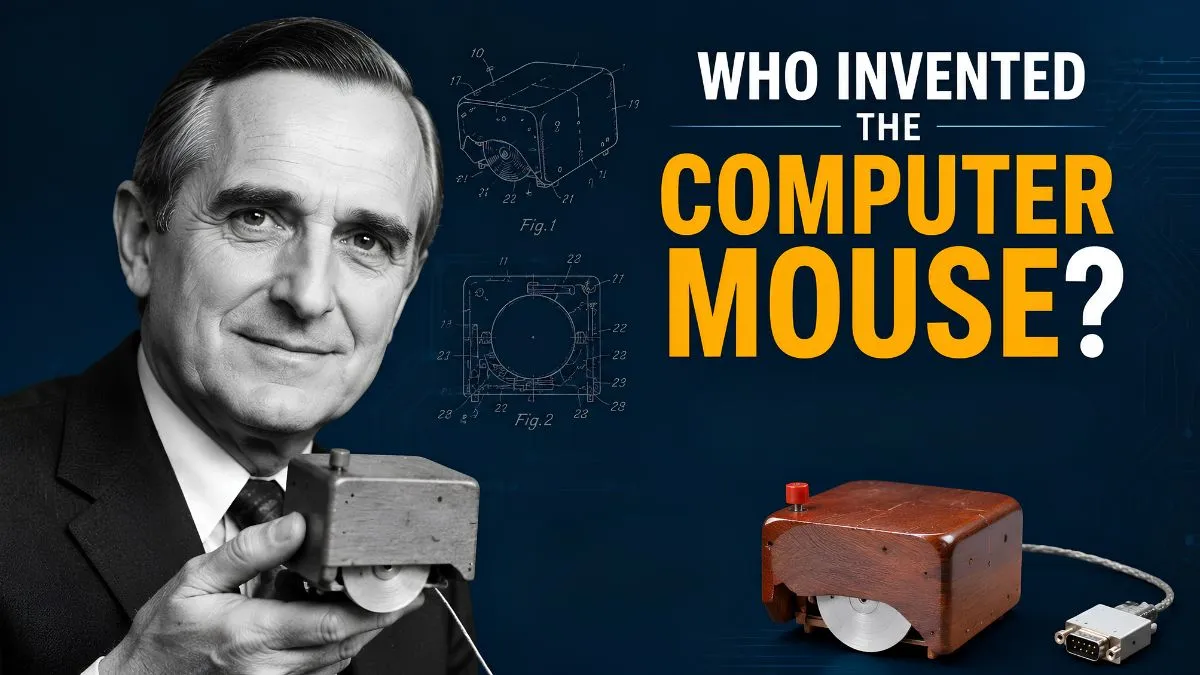
Who Invented the Computer Mouse?
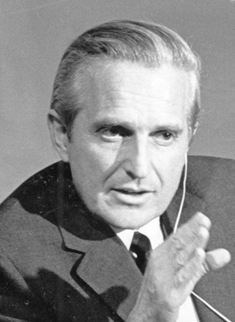
Douglas Engelbart invented the computer mouse in 1964 at the Stanford Research Institute (SRI), which is now called SRI International.
His one of the colleague Bill English, who was the chief engineer at SRI, built the first working model of this device im 1964 only.
Key Takeaways
-
While working at the Stanford Research Institute (SRI), Douglas Engelbart invented the computer mouse in 1964.
-
Bill English built the first wooden prototype using two small wheels.
-
The patent was filed in 1967 and granted in 1970 under the name "X-Y Position Indicator for a Display System."
-
Engelbart showed the mouse to the public for the first time on December 9, 1968, in a famous event now called "The Mother of All Demos."
-
The mouse did not become common in homes and offices until 1984, after companies like Apple started using it.
Source: diy
How did Douglas Engelbart invent the Computer Mouse?
Long before laptops and touchscreens, people had to type long strings of commands just to get a computer to do anything. There was no easy way to simply point at something on a screen. This problem stayed in the back of Douglas Engelbart's mind for years, and it eventually led him to build one of the most useful tools in computer history.
According to SRI International, Engelbart developed the computer mouse as part of a much bigger project.
He wanted to help the people to learn about the computer for better working. The mouse was just one small piece of this larger dream, but it turned out to be the piece that changed everyday life for billions of people.
What Was the First Computer Mouse Made Of?
Source: SRI
Engelbart began shaping his ideas for the mouse in the early 1960s. By 1964, his vision had turned into a real, physical object at SRI's labs in Menlo Park, California. He was not working alone. Bill English, who served as SRI's chief engineer at the time, took Engelbart's idea and built the very first prototype.
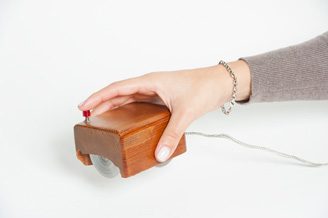
That first mouse looked nothing like the smooth plastic mice we use today. It was a small wooden box with a cord coming out of one end, and it sat on two perpendicular wheels that tracked movement across a table. As the wheels turned, the cursor moved on the screen. It was simple, but it worked, and it worked well enough to spark decades of improvement.
When was it officially accepted?
Engelbart did not call his invention a "mouse" in official paperwork. He filed a patent for it on June 27, 1967, describing it as an "X-Y Position Indicator for a Display System." The United States Patent and Trademark Office granted this patent on November 17, 1970, under patent number 3,541,541, and it listed Engelbart as the inventor.
Funny enough, even Engelbart himself was not entirely sure why everyone started calling it a mouse. He once admitted during a talk that the nickname just stuck around the lab because of its shape and the little tail-like cord, and nobody ever bothered to change it.
First Demostration for the Computer Mouse: The Mother of All Demos
Source: SRI
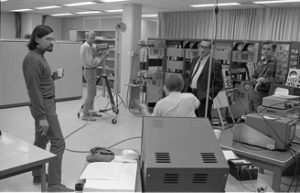
If there is one moment that put the computer mouse on the map, it happened on December 9, 1968. Engelbart led a 90-minute live demonstration at the Fall Joint Computer Conference in San Francisco. Alongside a team of young engineers from SRI's Augmentation Research Center, he showed off something the world had never seen before: a working mouse controlling a networked computer system on a big screen in front of a live audience.
This event later earned the nickname "The Mother of All Demos" because so many modern computing ideas, including the mouse, video conferencing, and on-screen windows, were shown together for the first time. It remains one of the most important moments in the history of technology.
From SRI's Lab to the Desk
Engelbart's mouse stayed mostly inside research labs for many years. SRI eventually licensed the mouse technology to companies including Apple and Xerox, who saw its potential for everyday computer users. It was only in 1984, three years before the original patent expired, that the mouse finally became commercially viable and started appearing alongside personal computers in homes and offices.
About Douglas Engelbart
Douglas Carl Engelbart was born on January 30, 1925, near Portland, Oregon, and grew up on a farm during the Great Depression. He served in the United States Navy as a radar technician during World War II, an experience that first exposed him to the idea of reading information off a screen. After the war, he completed his degree in electrical engineering at Oregon State University and later earned his Ph.D. from the University of California, Berkeley.
He joined SRI and went on to lead its Augmentation Research Center starting in 1968. Over his career, Engelbart earned 21 patents related to computer components. In 1997, he received the A.M. Turing Award, often called the highest honour in computer science, recognising his vision and his work on interactive computing. Engelbart passed away on July 2, 2013, at his home in Atherton, California, at the age of 88.
Quick Facts Table
| Detail | Information |
| Inventor | Douglas Engelbart |
| Built by | Bill English (first prototype) |
| Year invented | 1964 |
| Place | SRI (now SRI International), Menlo Park, California |
| Patent name | X-Y Position Indicator for a Display System |
| Patent filed | June 27, 1967 |
| Patent granted | November 17, 1970 |
| Public demo | December 9, 1968, "Mother of All Demos" |
| Became commercial | 1984 |

Prabhat Mishra is a Subject Matter Expert and digital journalist with an extensive background in the competitive exam landscape and over 4 years of experience in education, national and international news, and current affairs. Over his tenure with top knowledge platforms like Mentorship India, IAS BABA, IAS SARTHI, and now Jagran Josh, he has a deep understanding of government exams like UPSC and State PCS, including UP and Bihar, as he has already qualified for the UPPCS 2022 Mains and Bihar 68th Mains. With his core expertise in history, polity, geography & current affairs, he specialises in creating well-researched, aspirant-centric content and simplifying complex topics for competitive examinations.


