Bolivia Declares State of Emergency: Know Causes, Key Facts, and Impacts
Bolivian President Rodrigo Paz declared a nationwide State of Emergency after 50 days of anti-government protests and highway blockades, authorizing military deployment to clear roads and restore supplies. The crisis leading to severe supply shortages and political instability across the nation.
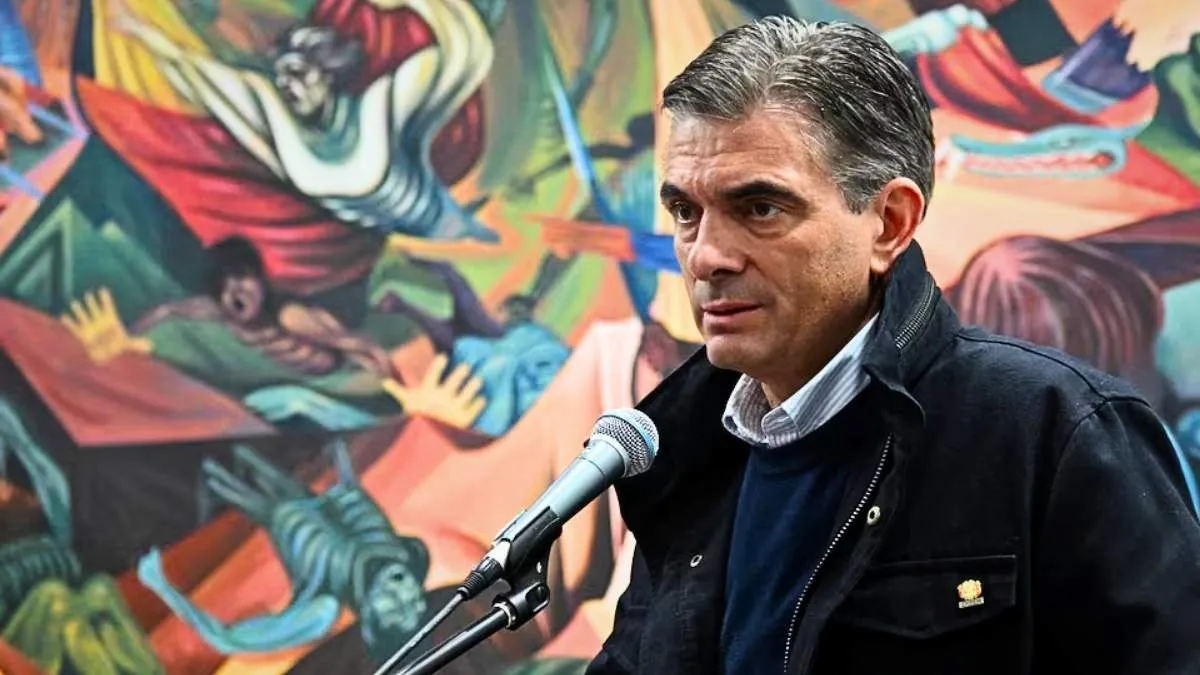
Bolivian President Rodrigo Paz officially declared a nationwide State of Emergency (State of Exception) after more than 50 days of paralyzing anti-government protests and highway blockades. The South American nation of Bolivia has plunged into a severe political and economic deadlock. \
The emergency decree authorizes the deployment of the armed forces to forcefully clear over 3,500 roadblocks that have left major cities completely isolated and a crisis of essential food, fuel and medical supplies for local people.
What is happening in Bolivia?
The current Bolivian government under the President Rodrigo Paz, a centrist leader who took office with promises of stabilizing the economy but the whole nation is currently experiencing a historic crisis that has triggered widespread street chaos.
The main conflict of the crisis lies between the central government and a massive coalition of indigenous groups, miners and rural farmers. These groups have used highway blockades to choke off the supply chains of major cities like La Paz, El Alto and Cochabamba for last two months.
Due the confict local economy losing almost $50 million every single day and cities running completely out of food and fuel. The government resorted to an emergency decree to restore public order by deploying military troops.
What are the main causes of the 2026 Bolivia protests?
The current unrest in Bolivia is an explosive culmination of regulatory friction, a decaying macroeconomic environment and intense political rivalries. Here are the main causes behind the recent crisis of
The new land mortgage Law also known as Law 1720
The direct spark for the mass demonstrations occurred in early May 2026, when the Paz administration introduced Law 1720 also known as the Land Mortgage Law.
It is considered as controversial legislation that permits small agricultural lands to be utilized as collateral for commercial bank loans. Indigenous farming communities including hundreds of Aymara farmers viewed this as a direct threat to their ancestral territories.
They feared it would lead to corporate land grabs if poor farmers defaulted on loans. Although President Paz annulled Law 1720 later on May 13 as a concession. However the protests did not stop even though it evolved into a much larger anti-government movement.
Reduction of Subsidy and Energy Crisis
Bolivia is facing its worst economic downturn in decades at its deep economic core. This is primarily fueled by rapidly declining natural gas production which was historically Bolivia's main revenue generator and a severe crunch in U.S. dollar reserves.
President Paz signed a decree abolishing long-standing national fuel subsidies in December 2025 to address increasing fiscal deficits while negotiating emergency credit lines with the International Monetary Fund (IMF).
The immediate termination of these subsidies caused domestic gasoline and diesel prices to skyrocket and led to huge inflation on everyday commodities like food and transport.
Mobilisation of the Miners and Labor Unions
The powerful Bolivian Workers' Confederation (COB) along with deep-seated miners' unions mobilized nationwide following the fuel price hikes and huge inflation in the state.
They armed with small sticks of commercial dynamite and miners clashed violently with the police force outside the presidential palace in La Paz throughout mid-May by demanding extensive labor reforms, wage hikes and the reinstatement of fuel price caps.
What is the Impact of the State of Emergency?
Local infrastructure has completely buckled with more than 5,000 supply trucks stranded on critical trade corridors. Local municipal bodies reported economic damages exceeding $6.5 million a day by forcing the government to airlift subsidised poultry to prevent starvation in the capital. The declaration of the State of Exception changes how the country operates legally and structurally.
President Paz delivers a live televised national address declaring the State of Exception, temporarily bypassing normal civil protocols to authorize joint military-police clearings of Route 9 and surrounding networks.
President Paz announces a State of Emergency, a temporary suspension of normal civil procedures in a live national broadcast. It will allow joint military-police clearings of Route 9 and associated networks.
Legislative ratification within 72 Hours the Congress has a strict three-day window to evaluate, debate and either formally approve or entirely reject the continuation of emergency military interventions.
Key Political and Geopolitical Impacts
The political landscape of Bolivia is now severely fractured, creating major friction points both domestically and across South American borders:
The executive exodus due to intense security concerns and protests surrounding the capital. President Paz temporarily fled the primary administrative capital of La Paz on May 25, setting up a temporary operational government in the constitutional capital of Sucre to signal austerity during the crisis. He slashed his own presidential salary and those of his cabinet ministers by half.
Amidst the escalating street violence the Cabinet collapsed. Three key members of the Bolivian cabinet such as the Minister of Labour, Minister of Defence and Minister of Education tendered their formal resignations and weakened the President's political control.
President Paz signed an emergency stabilization pact with the main COB union on June 19, and separate rural blockade factions remain unyielding which are backed by indigenous groups loyal to former leftist president Evo Morales, who is using the economic deadlock to explicitly demand Paz's outright resignation
On May 20, Bolivia took the drastic step of expelling the Colombian Ambassador, Elizabeth García. This happened after Colombian President Gustavo Petro publicly broadcasted solidarity statements defending the street protesters, a move Paz blasted as ‘reproachable domestic interference.’
History of states of Emergency in Bolivia
Bolivia has a long, turbulent history of civil unrest, military coups and emergency decrees. Bolivia has witnessed many emergencies since its independence, particularly during the mid-20th century military dictatorships and early 2000s resource conflicts.
| Year | President / Administration | Event & Context |
| 2000 | Hugo Banzer | The Cochabamba Water War: Declared a state of siege after violent mass protests erupted over the privatisation of municipal water supply. |
| 2003 | Gonzalo Sánchez de Lozada | The Bolivian Gas Conflict: Emergency declared during bloody protests over foreign natural gas export proposals, leading to the President's eventual resignation. |
| 2008 | Evo Morales | Autonomous Department Rebellion: Emergency declared in the eastern province of Pando. |
| 2019 | Jeanine Áñez (Interim) | Post-Election Crisis: A widespread state of exception and military deployment was ordered to quell deadly counter-protests. |
| 2020 | Jeanine Áñez | COVID-19 Pandemic: A health-related state of exception was enacted nationwide. |
| 2026 | Rodrigo Paz | The Blockade Crisis: Nationwide emergency declared on June 20 to deploy the military against a 50-day economic and supply chain blockade. |

Manisha Waldia is a distinguished content strategist with 5 years of experience crafting premium educational content for UPSC and State PCS, with a focus on deep conceptual analysis across Polity, Geography, History, and Environment. She currently brings this expertise to Jagran Josh, where she covers major national and international events, current affairs, and static general knowledge. Over her career, Manisha's specialized insights have led her to curate high-impact materials and serve as a UPSC Mains answer-evaluator for India’s top institutes—including Drishti IAS, Shubhra Ranjan IAS, Study IQ, GS Score, and PWonlyIAS. She has also worked alongside leading NGOs like Oxfam India and Avani Kumaon.
Contact: manisha.waldia@jagrannewmedia.com


