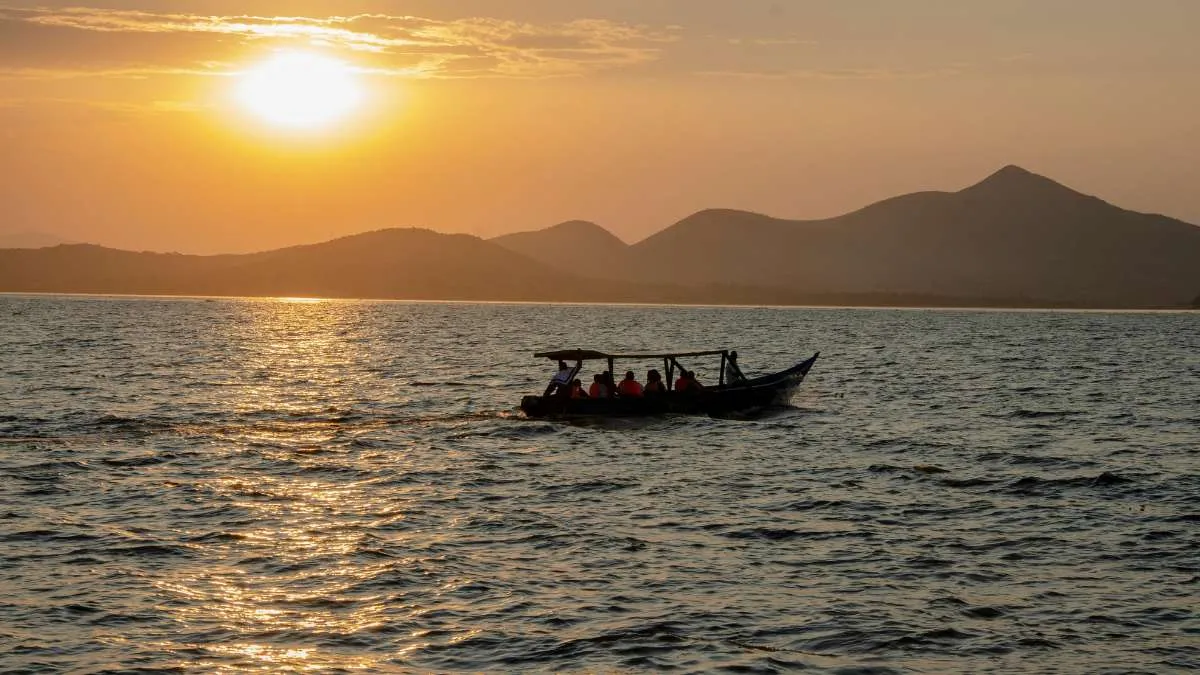
Lake Victoria is known as the Jewel of Africa. It is a colossal freshwater lake in East Africa and the largest lake in the African continent. It received this nickname because of its huge biodiversity, critical fisheries which are important economically, and the fact that it was the main reservoir of the White Nile.
What is the location of Lake Victoria?
The lake Victoria occupies the higher part of the river Nile basin in East Africa. It is situated in a shallow depression on the African plateau between the Eastern Rift Valley and the Western Rift Valley. Lake Victoria is situated at a height of around 1,134 metres (3,720 feet) above sea level.
Countries surrounding Lake Victoria
Lake Victoria has a surface area that is shared between three sovereign countries. Tanzania (the United Republic of Tanzania) is the highest shareholder at 49 percent. The water is owned by the Republic of Uganda (Uganda) who owns 45 percent and the Republic of Kenya (Kenya) which controls the other 6 percent of the lake.
Why is Lake Victoria referred to as the Jewel of Africa?
The Lake is blessed with the deep life giving qualities that are honored in the nickname Jewel of Africa. It houses the heart of the East African ecosystem and supplies drinking water, agricultural irrigation, and hydroelectric power to the regions. The name is also the tribute to the amazing biodiversity of life that is beneath its surface, especially its best-known colony of colorful cichlid fish. The lake is the most valuable geographic asset in the region since it serves as a crucial resource to various countries.
Important physical aspects of Lake Victoria
Lake Victoria serves a vast space of 68,800 square kilometres (26,560 square miles). Though it is very big in surface size, it is rather shallow as a lake of its size. The maximum depth of the lake is 81 metres (266 feet) and an average depth of 40 metres (131 feet). This lake has a coastline of over 7,142 kilometres (4,437 miles) including the shores of the many islands in the lake.
Records and rankings of Lake Victoria
There are a few geographic titles that Lake Victoria has acquired. It is the surface area largest lake in Africa. It is second-largest freshwater lake in the world with other countries like Lake Superior in North America being the only other lake larger than it. Moreover, the World Atlas, 2021, recognizes it as the biggest tropical lake on the planet.
Lake Victoria: Historical background
The lake is thousands of years old, and it has been familiar to the indigenous populations. In Luo language, it is referred to as Nam Lolwe. It is known as Nnalubaale in the language Luganda. The modern international maps were named so because of the colonial period. In 1858, British explorer John Hanning Speke wrote about the lake in his search to find the origin of the Nile River. He called it Lake Victoria after the name of Queen Victoria of the United Kingdom.
Lake Victoria: Ecological and Geopolitical importance
Lake Victoria is a major environmental and geopolitical nexus of East Africa. It acts as the main reservoir of the White Nile which is among the two major tributaries of the Nile River. The drainage out of the lake is vital to communities down the river in Republic of South Sudan, Republic of the Sudan and the Arab Republic of Egypt.
In addition to supplying water, the lake sustains the biggest inland fishery activity in the continent of Africa. Millions of individuals residing in the Lake Victoria Basin are directly employed in this industry and have food security. There are hundreds of endemic species in the waters ecologically.
This ecosystem changed using third world invasive species e.g. the Nile perch introduced in the twentieth century and conservation efforts are still being done globally to safeguard the existing native biodiversity.
Check out some more interesting articles from the general knowledge section to boost your knowledge of national and international topics. Stay connected with Jagran Josh for more topics like this.
ALSO READ:



Comments
All Comments (0)
Join the conversation