
Show Key Points
A Total Lunar Eclipse occurs when Earth moves directly between the Sun and the Moon, blocking sunlight and casting its shadow on the Moon. When the Moon completely enters Earth’s darkest shadow, called the umbra, it appears reddish in colour. This rare celestial event is popularly known as a Blood Moon and attracts global attention due to its dramatic appearance.
Regions with Full Visibility
The Total Lunar Eclipse on March 3 will be fully visible in regions where the Moon remains above the horizon during totality. North America and South America are expected to witness the complete Blood Moon from start to finish. Several parts of Europe and Africa may also experience substantial visibility depending on local timing. Areas positioned on the night side of Earth at the moment of maximum eclipse will have the clearest and longest viewing window.
Will the Blood Moon Be Visible in India?
The Blood Moon will not be fully visible in India. Most regions will miss totality because the Moon will either be below the horizon or set before the total phase begins. However, limited partial visibility may be observed in western parts of India depending on local sky conditions. Full red Moon totality will not be seen across most Indian states.
Viewing from India
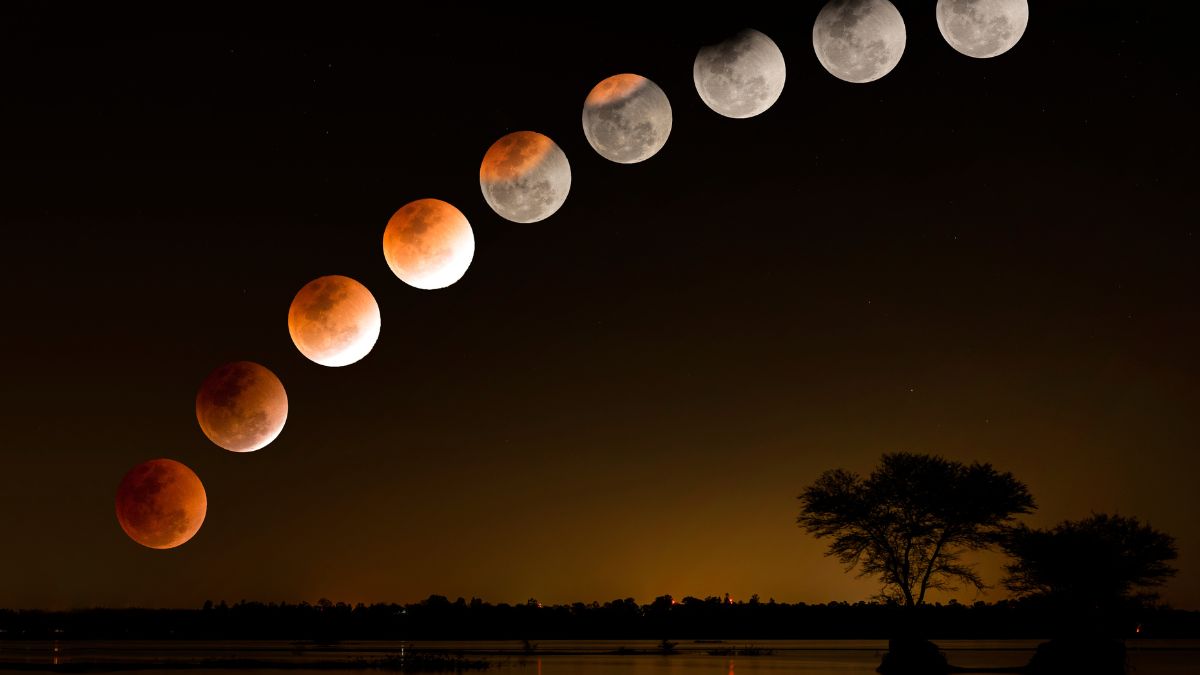
In India, particularly in Mumbai and western regions, the Moon will be seen with a late partial eclipse from 18:22 to 18:47 IST on March 3. Faint penumbral effects may continue until approximately 21:23 IST after global totality ends. The Moon will appear slightly dimmed on the eastern horizon. The event is completely safe to observe with the naked eye and does not require any protective equipment. Clear skies and an unobstructed eastern horizon will provide the best viewing opportunity in Maharashtra and nearby areas.
What Is the Timeline for Blood Moon?
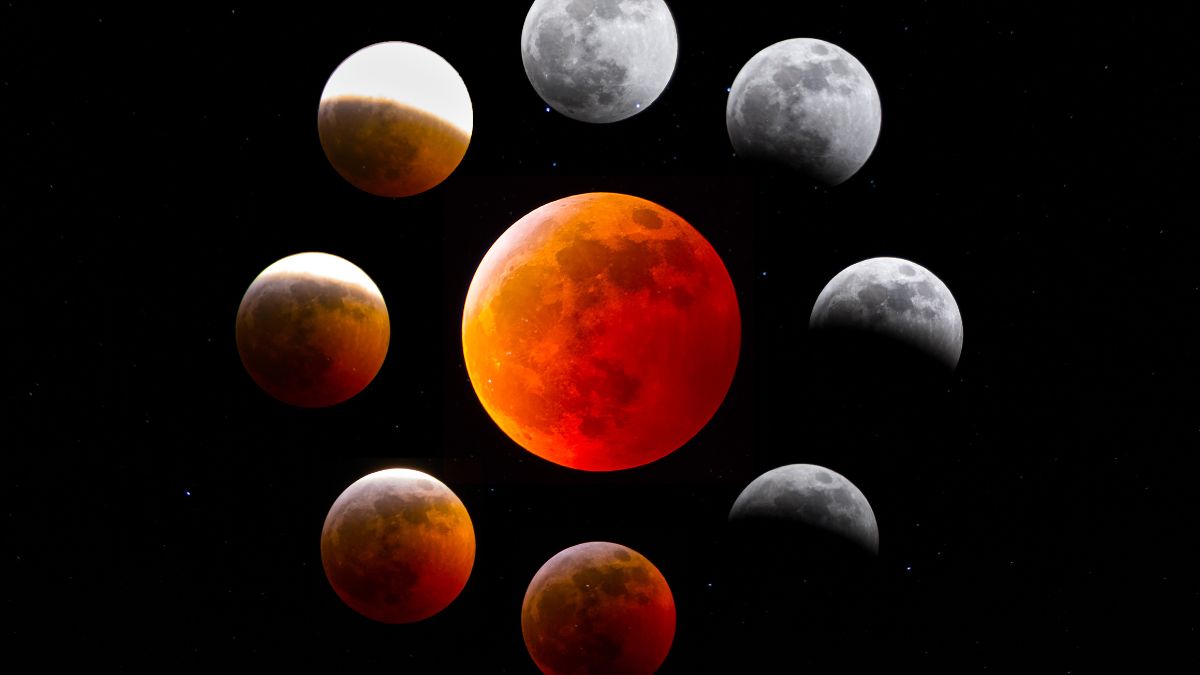
In Coordinated Universal Time (UTC), the eclipse begins with penumbral contact at 08:44 on March 3. The partial phase starts at 09:50 UTC, followed by totality between 11:04 and 12:03 UTC. The maximum eclipse will occur at 11:34 UTC. The eclipse returns to a partial phase at 13:17 UTC and ends with penumbral close at 14:23 UTC. The total partial phases will last approximately 2 hours and 29 minutes, while the penumbral phases will span around 2 hours and 12 minutes. For viewers on the US East Coast, totality will occur between 6:04 a.m. and 7:02 a.m. EST, with the Moon positioned low on the horizon during the event.
Why Does the Moon Turn Red?
The Moon turns red during totality because sunlight passes through Earth’s atmosphere before reaching the Moon. Shorter blue wavelengths scatter in different directions, while longer red wavelengths bend around Earth and illuminate the lunar surface. This atmospheric filtering effect gives the Moon its copper or blood-like colour. The exact shade of red can vary depending on dust, pollution, and atmospheric conditions at the time of the eclipse.
Is It Safe to Watch the Total Lunar Eclipse?
A Total Lunar Eclipse is completely safe to view with the naked eye. Unlike a solar eclipse, it does not require special glasses. Binoculars or telescopes can enhance the experience, but they are not necessary for safe observation.
Read more: Different Names of Holi in India
The Total Lunar Eclipse on March 3 will create a spectacular Blood Moon visible fully across the Americas and partially in select regions worldwide. India will experience limited partial visibility during evening hours, with no complete totality. Keep reading for more such topics.



Comments
All Comments (0)
Join the conversation