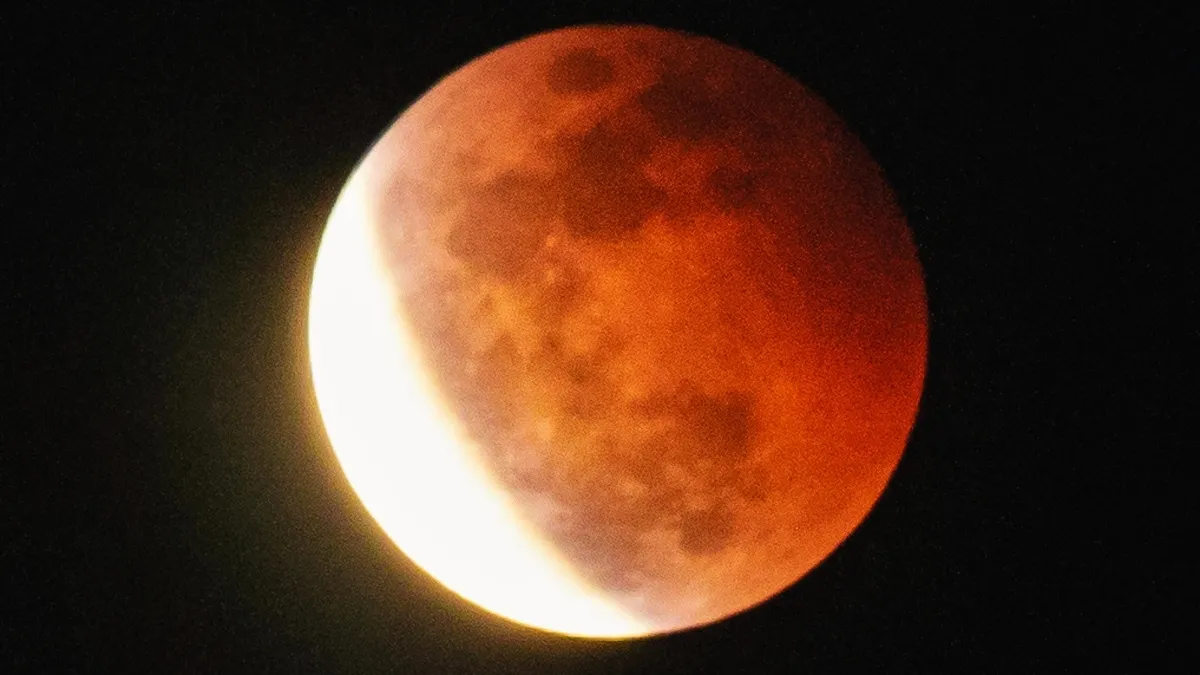
U.S. skywatchers can witness a spectacular total lunar eclipse, known as the Blood Moon, on March 3, 2026. It will be visible early morning, when Earth passes between the Sun and full Moon, casting a reddish shadow.
Totality lasts 58 minutes from 6:04 a.m. to 7:02 a.m. EST (3:04 a.m. to 4:02 a.m. PST), peaking at 6:34 a.m. EST, visible across the continental U.S. before dawn with clear western horizon views.
No equipment needed; anyone with naked eyes in open areas sees it safely, weather permitting, as sunlight scatters through Earth's atmosphere to tint the Moon red.
What Time is the Lunar Eclipse Tonight in 2026?
The Blood Moon 2026 will be easily visible starting from 3:44 a.m EST. Till 4:50 a.m. EST, the partial lunar eclipse will start building nationwide
The full total lunar eclipse event spans 5+ hours till 9:23 a.m. EST, but sunrise clips East Coast end.
| U.S. Time Zone | Totality Viewing Window | Viewing Notes |
| Eastern (EST) | 6:04–7:02 a.m. | Moon low on horizon, sets during mid-phase |
| Central (CST) | 5:04–6:02 a.m. | Good visibility across region |
| Mountain (MST) | 4:04–5:02 a.m. | Clear pre-dawn skies ideal |
| Pacific (PST) | 3:04–4:02 a.m. | Moon highest in sky for optimal show |
Central hubs like Denver, Chicago see the peak red Moon clearly. Eastern spots like New York catch brief low-horizon drama before the Moon dips.
How to Watch Total Lunar Eclipse 2026 in the U.S.?
Step outside before dawn on March 3 to spot the eclipse starting at 3:44 a.m. EST penumbral phase, building to partial at 4:50 a.m. EST nationwide, according to NASA.
Find dark spots away from city lights with unobstructed western views, especially vital in eastern U.S. where the Moon sits low.
Binoculars enhance details of craters during the red glow; apps like Stellarium pinpoint Moon's position.
Western states offer the highest Moon position for full totality spectacle. Free livestreams cover it if clouds block you.
Tips on How to Safely Watch the Total Lunar Eclipse in the U.S.
Any person can watch the Total Lunar Eclipse safely on March 03, 2026. Gaze freely with naked eyes. Experts say that no eye protection is required, unlike solar events, as the Moon stays safe even in full shadow.
-
Dress warmly for pre-dawn chill; bring blankets, hot drinks for comfort during hour-long totality.
-
Check local forecasts early; head east in Northeast or to Southwest deserts for clearest skies amid clouds in Midwest, Plains.
-
Avoid lights; arrive early for spots.
-
Pets stay inside if sensitive to changes.
Weather maps predict good odds in Florida, California, and the Rockies.
Mark this first U.S. total lunar eclipse since 2025 as skies clear post-event for 2029's longer show. Share photos online, inspiring awe in cosmic alignments. The next Blood Moon awaits in August 2026, nearly total.



Comments
All Comments (0)
Join the conversation