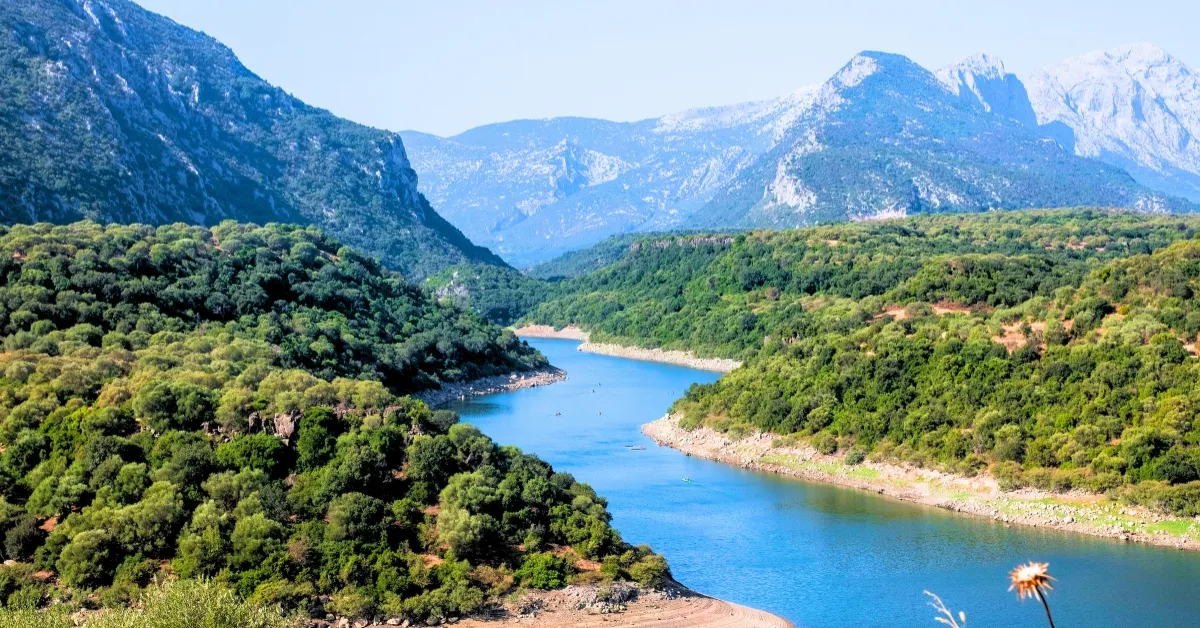
Switzerland is a country in Central Europe known for its mountains, lakes, and charming villages. Many of its cities have old town centres, such as Bern with its Zytglogge clock tower and Lucerne with its wooden chapel bridge. Additionally, it is home to more than 1,500 lakes and many beautiful rivers. The country has five main river basins that move water across the land. But do you know which river is called the National River of Switzerland? In this article, we'll explore this well-known river of Switzerland.
ALSO READ| Which River Is Known As The ‘River Of Five Colours’?
Which River is known as the National River of Switzerland?

The Aare River is known as Switzerland’s National River. Although the Rhine is longer, the Aare is unique because it stays completely within Swiss borders. It starts in the Bernese Alps at the Aare Glaciers and winds through scenic areas and cities like Bern, Switzerland’s capital.
The river runs for about 295 kilometres before joining the Rhine at Koblenz. Unlike other big rivers that cross into neighbouring countries, the Aare is entirely Swiss.
Quick Facts
| Feature | Details |
| Commonly Known As | The National River of Switzerland |
| Total Length | 295 kilometres (183 miles) |
| Source (Starts From) | The Aare Glaciers in the Bernese Alps (Canton of Bern) |
| Mouth (Ends In) | The Rhine River at Koblenz, Switzerland |
| Flows Through | Bern, Solothurn, Aargau, and lakes like Brienz and Thun |
| Primary Significance | It is the longest river that stays entirely within Swiss borders |
| Economic Use | Powers over 20 hydroelectric plants, providing renewable energy |
| Cultural Importance | Its loop defines the historic Old City of Bern, a UNESCO site |
| Water Characteristics | Famous for its clear, turquoise-blue "glacial milk" appearance |
5+ Fascinating Facts About the Aare River
- The river's distinct light-blue colour is caused by "glacial milk", a suspension of fine rock particles in meltwater.
- The Aare serves as a natural cooling system for the region, and its water quality is so high that it is often rated as safe for swimming.
- The river flows in a tight horseshoe loop around the Old City of Bern, providing a natural defensive barrier that has been used since medieval times.
- There are over 20 hydroelectric power plants located along the Aare, making it a major source of renewable energy for the Swiss.
- By the time the Aare joins the Rhine, it often carries a larger volume of water than the Rhine itself at that specific junction.
Which Is The Longest River In Switzerland?
The Rhine is the longest river that flows through Switzerland. It covers a total distance of 1,230 kilometres, with 375 kilometres of that path located within Swiss territory. It begins in the Grisons Alps and acts as a major international waterway. While other rivers stay inside the country, the Rhine connects Switzerland to the North Sea.
IN CASE YOU MISSED| Which is the Only River that Flows from South to North?
Which Is The Largest River In Switzerland?
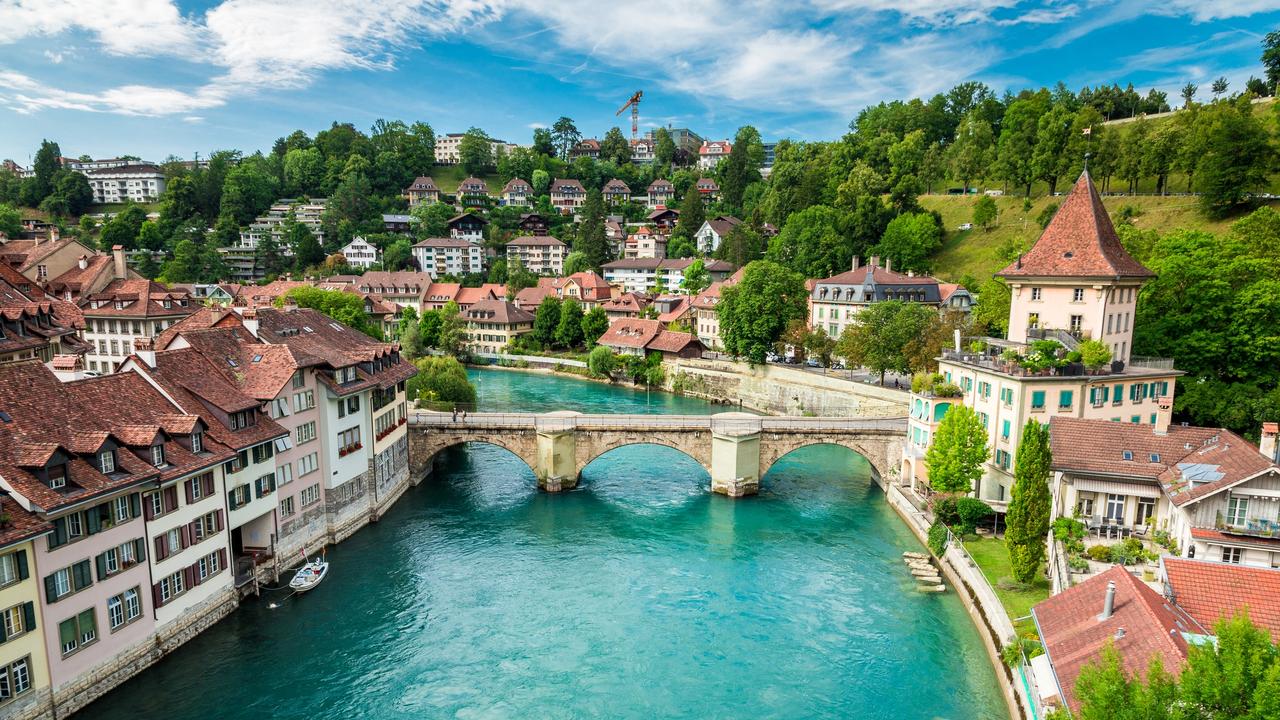
The Aare is considered the largest river that remains entirely within Switzerland. It stretches for 295 kilometres and remains entirely within Swiss borders. It is also the largest tributary of the High Rhine. In terms of water volume, it contributes significantly to the Swiss landscape, flowing through three major lakes and the capital city, Bern.
How Many Rivers Are There In Switzerland?
Switzerland is home to an incredible network of water, featuring approximately 1,500 lakes and countless streams. There are over 65,000 kilometres of river length across the country. These rivers are divided into 5 main drainage basins: the Rhine, Rhone, Danube, Po, and Adige, which distribute water to various seas across Europe.
What Is The Main River In Switzerland?
The Rhine is generally considered the main river due to its economic and geographical importance. It drains about 68% of the country’s surface water. However, the Aare is the most important "national" river because it is the longest one flowing exclusively in Switzerland. Both rivers are vital, providing nearly 60% of the nation’s electricity through hydroelectric power plants.
WHAT'S NEXT| Which River Is Known As The Silver River?


-1775113621256_t.webp)


Comments
All Comments (0)
Join the conversation