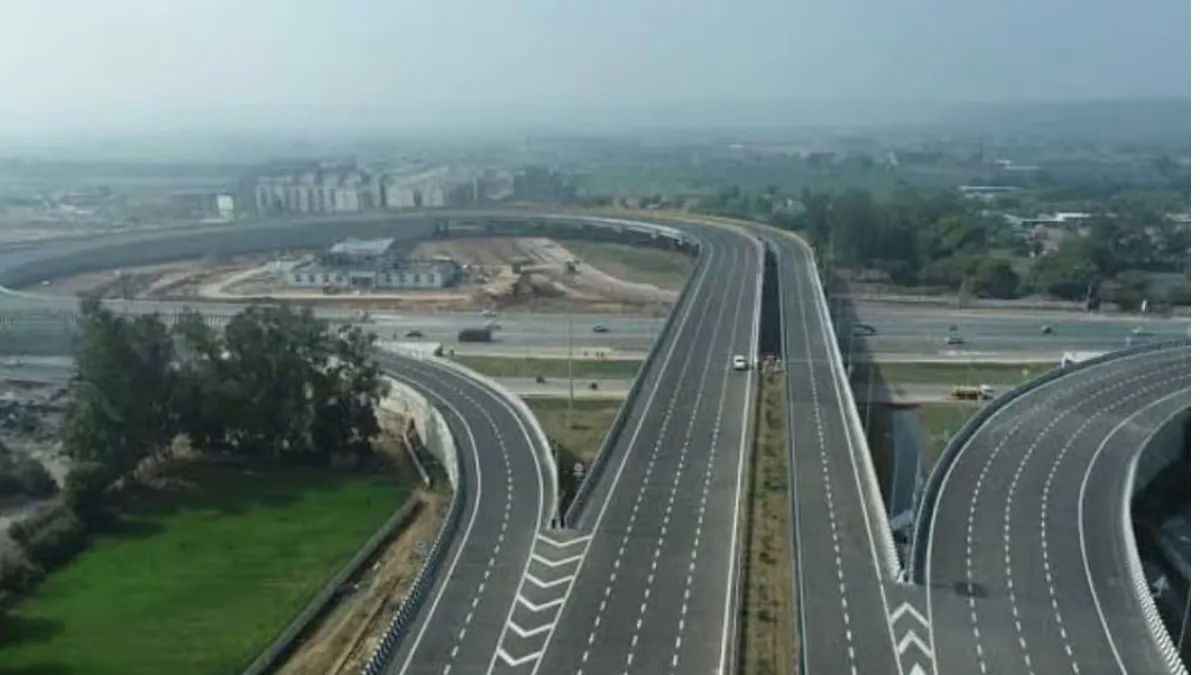
The fast-paced infrastructure development in India has incorporated more than 50,000 km of expressways, which are scheduled to be constructed with wildlife corridors to conserve the ecological biodiversity in strategic areas. The characteristics are required by the National Board of Wildlife and are examples of sustainable engineering in the face of an increasing urbanization.
The expressway network in India has taken off, with the purpose of linking key cities and passing through forests and sanctuaries which host tigers, elephants and leopards.
National Highways Authority of India (NHAI) and the Ministry of Road Transport and Highways (MoRTH) are concerned with wildlife-friendly designs such as elevated roads and underpasses which are guided by the National Board for Wildlife (NBWL).
This tradeoff deals with roadkill that kills thousands of animals each year, and it will promote coexistence between development and conservation.
Importance of Wildlife Corridors
Wildlife corridors facilitate safe movement of wildlife and minimise collisions by 90 percent in observed areas, as well as maintain genetic diversity in fragmented areas.
Solar-powered fencing, noise barriers and eco-bridges spanning hundreds of meters are a few of the innovations. These will be in line with the National Wildlife Action Plan of India, enhancing eco-tourism and sustainability in biodiversity.
Key Expressways Table
| Expressway/Section | Corridor Features | Location/Protected Area | Length/Details |
| Delhi-Dehradun Expressway (NH-72A) | 12 km elevated corridor (Asia's longest), 8 animal passes, 2 elephant underpasses, 370m tunnel | Rajaji National Park, Shivalik forests | 60 elephant crossings; species: elephants, leopards, deer, jackals, nilgai |
| Delhi-Mumbai Expressway | 12 km eco-corridor: 5 overpasses (500m each), 1.2 km underpass (India's longest), 2.5 km natural stretch | Ranthambore Tiger Reserve buffer, Chambal Valley | Tigers, bears, antelopes; first national highway wildlife corridor |
| Delhi-Vadodara Expressway (NH-148N) | 2.7 km elevated corridor, 5 animal underpasses, 3.9 km cut-cover tunnel, 700m bridge | National Chambal Sanctuary | Green highway initiative for riverine species |
| Ganeshpur-Dehradun (NH-72A) | 11.6 km elevated corridor, 4 underpasses, 360m tunnel, sound/light barriers | Forested Shivalik foothills | Mitigates elephant and leopard movement |
| NH-7 (Seoni section) | 1,400m elevated corridor, multiple underpasses | Pench Tiger Reserve buffer | Tiger movement facilitation |
| NH-45 (Wildlife-safe road) | Table-top red markings, underpasses | Tamil Nadu forests | India's first wildlife-safe national highway |
Case Studies on Wildife Corridor Expressways
Delhi-Dehradun Expressway
This 210-km highway has a 12-km elevated section that is innovative and developed on the advice of Wildlife Institute of India near the Rajaji National Park. Recent research reported 18 species, such as sambar deer and elephants, crossing underpasses safely- 60 crossings of elephants. The corridor reduces the fragmentation of habitats in the Shivalik elephant paths by half.
Delhi-Mumbai Expressway
Its Rajasthan stretch, which is 1,350 km long, features the longest wildlife overpass in India, 500m long, and 1.2 km underpass through Ranthambore buffer. Tigers and leopards were helped by real-time CCTV surveillance throughout construction, which ensured that there were no incidents. This will be a precedent in green expressways in the country.
Delhi-Vadodara Expressway
In Rajasthan, gharials and otters are safeguarded by a 2.7-km viaduct spanning Chambal River. The disturbance is minimized by five underpasses and cut-cover tunnels, which are part of NBWL-stipulated eco-restoration such as the planting of native trees.
Construction and poaching risks are obstacles to habitat disruption during construction and aggravated by high volumes of traffic.
NHAI opposes 5m-high fencing, night watch cameras, and speed bumpers; after completion audits through drone surveys monitor effectiveness. Awareness on the part of the community spurs and compensatory afforestation brings in protective layers.
Under initiatives such as Bengaluru-Chennai and Amritsar-Jamnagar Expressways, NHAI aims to have 100 + corridors monitored using AI and bio-fencing by 2030.
The green highway policy by MoRTH increases elevation in 20 tiger reserves. These are in line with the 2070 net-zero targets of India, which is a combination of mobility and ecology.



-1776185832341_t.webp)
