Iranian is one of the oldest uninterrupted cultural heritage sites of the world, dating back to a 5,000 year old urban civilisation of the area. Its history traces back to the ancient empires of Elamites and Persians and the theocratic system of governance to this day under the Supreme Leader, a history of resilience, improvisation, and adaptation.
The history of Iran dates back to millennia with the establishment of prehistoric settlements in 7000 BC and the development of magnificent empires that shaped Eurasia.
This paper discusses the construction of Iranian civilization, beginning with pre-Iranian peoples, the Indo-Iranian migrants, and who is constructing it today as the power structure of the Islamic Republic. The major portions include origins, empires, Islamic changes and modern influencers.
Iranian Civilization: Origins
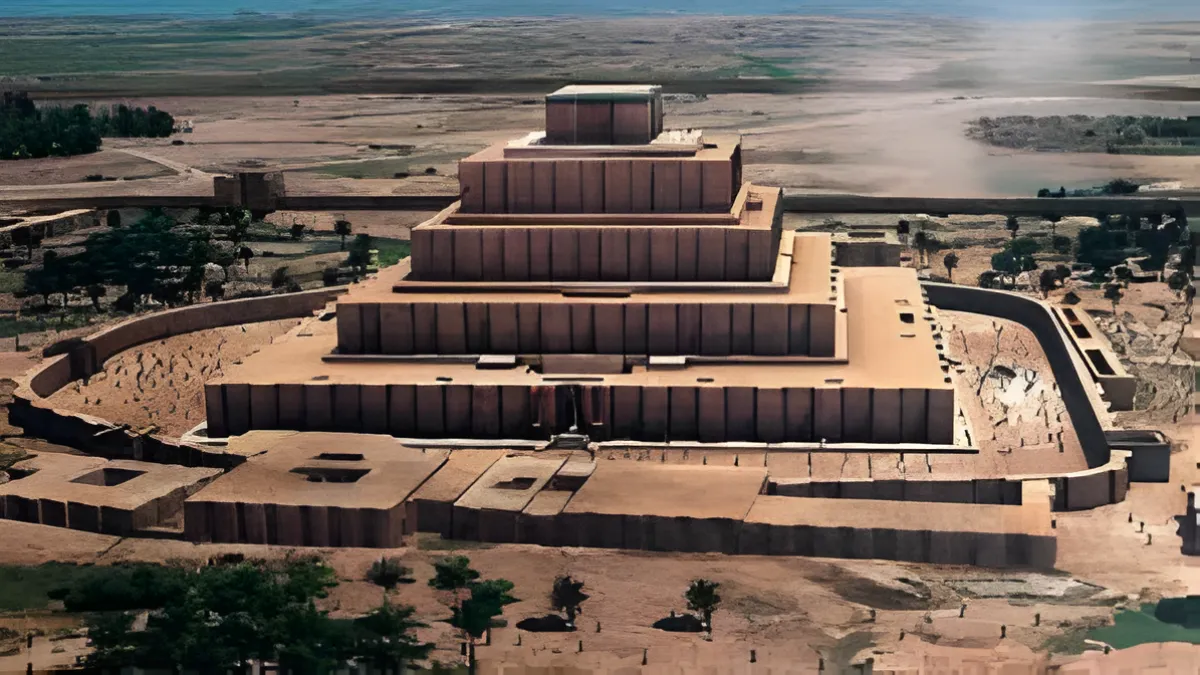
Advanced urban centers were the base of pre-Iranian groups. Rising to become the first known empire in the area, the Elamites originated around 3100 BC in the southwestern part of Iran and their capital was Susa and their grand structures were monumental ziggurats such as Choqa Zanbil.
Persian and Median tribes arrived in the area in the 2nd millennium BC as a result of Indo-Iranian migrations, which became the beginning of Iranian identity. The first Iranian-led empire was established in the northwest in 728550 BC, uniting tribes, and conquering the Assyrians.
| Period | Key Builders | Achievements |
| Neolithic–Chalcolithic (7000–4000 BC) | Early farmers at Susa, Ganj Dareh | Pottery, domestication of goats, early villages |
| Elamite (3100–539 BC) | Elamites | Proto-Elamite script, linear writing, trade networks |
| Median (728–550 BC) | Medes | Unified Iranian state, Zoroastrian influences, anti-Assyrian coalition |
Key Builders of Ancient Empires
The Achaemenid Empire (550330 BC) is a combination of the Median and Persian kingdoms and the largest empire in history to date, expanding through the Balkans to the Indus Valley. His administration encouraged tolerance, infrastructures such as Royal Road, and centralized administration.
The Parthians (248 BC224 AD) of northeastern Iran countered Roman expansion by using skilled horsemen and decentralized governance. It was succeeded by the Sasanian Empire (224651 AD) which integrated Iran under Zoroastrianism, leading to the promotion of medicine, mathematics, and art, and conflict with Rome and Byzantium.
These empires exported Persian rule, art and religion, which shaped the Greek, Indian and the culture of Central Asia.
Islamic Era Transformations
Persian culture survived despite the fall of the Sasanians in 651 AD by the Arab Muslim invasion. The Abbasid Caliphate (7501258 AD) saw Iranians such as the Barmakids in the revival, maintaining Greek texts and giving rise to Persian literature.
Persian language and epic poetry such as the Shahnameh of Ferdowsi were promoted by such dynasties as the Samanids (81999 AD) and Seljuqs (10371194 AD). The Safavids (15011736 AD) also instituted Twelver Shia Islam as the state, which influenced the modern Iranian identity.
The invasions of Mongols (12191358 AD) destroyed and stimulated the reconstruction of the Ilkhanid, combining Turco-Mongolism and Persian.
Islamic Republic (Post-1979) Shapers
The Supreme Leader has been the supreme power since the 1979 Revolution, as head of state, commander of forces and policy maker. By March 2026, Mojtaba Khamenei holds this position following the assassination of his father Ali Khamenei, and is in charge of the military, judiciary, and elections.
Clerical dominance is supported by institutions. Laws and Shia orthodox candidates are vetted by the Guardian Council which consists of 12 members (six of whom are nominated by the Supreme Leader). Security, economy, and proxy forces are controlled by the Islamic Revolutionary Guard Corps (IRGC), which is directly answerable to the Leader..
It was the Elamites, Medes, Persians, and subsequent Islamic dynasties that fashioned Iranian civilization into an innovation-laden and faith-filled tapestry. The Supreme Leader and clerical institutions guide it nowadays through geopolitical hurricanes, combining an ancient heritage with revolutionary ideas.