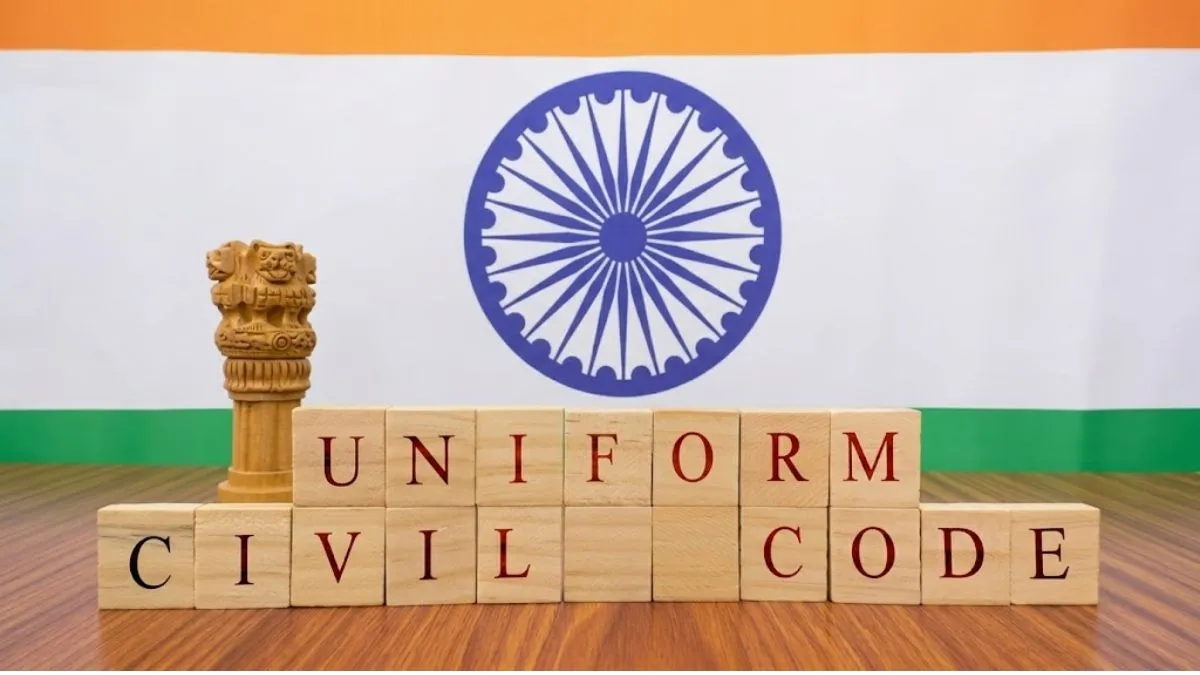
In India, Uttarakhand was the first state to adopt the Uniform Civil Code (UCC), which was passed in February 2024. But, do you know which state became the second to Adopt the Uniform Civil Code (UCC) after Uttarakhand? This state is commonly known as the “Jewel of Western India.” It is Gujarat, which became the second state to adopt the Uniform Civil Code (UCC). Recently, the Gujarat Assembly has passed the Uniform Civil Code (UCC) with a majority of votes after the 7-hours of long, debatable meeting on March 24, 2026 (Tuesday). With the passage of the bill, Gujarat becomes the second state in the country, after Uttarakhand, to adopt the UCC.
Gujarat Chief Minister Bhupendra Patel described the Uniform Civil Code (UCC) Bill as a step towards India’s civilisation with the ethos of unity and equality. With the title of ‘Gujarat Uniform Civil Code, 2026, the proposed law will apply throughout the state to residents of Gujarat living outside its territorial limits.
देश में हर नागरिक के लिए एक समान कानून हो, यह भाजपा का स्थापना से ही संकल्प रहा है। मोदी जी के नेतृत्व में भाजपा की राज्य सरकारें इस दिशा में निरंतर आगे बढ़ रही हैं। मुझे हर्ष है कि उत्तराखंड के बाद अब गुजरात ने भी समान नागरिक संहिता (UCC) विधेयक पारित करने का ऐतिहासिक कार्य कर…
— Amit Shah (@AmitShah) March 25, 2026
So, let’s explore in detail the Gujarat Uniform Civil Code, 2026, which became the second state to adopt the Uniform Civil Code (UCC) after Uttarakhand.
What is the Uniform Civil Code (UCC)?
First of all, before moving ahead with the Gujarat Uniform Civil Code, 2026, let’s understand what the Uniform Civil Code (UCC) is. The Uniform Civil Code refers to a common set of laws governing personal matters for all citizens of a country, irrespective of their religion, caste, or tribe. In India, this concept is rooted in Article 44 of the Directive Principles of State Policy. Article 44 states: "The State shall endeavour to secure for the citizens a uniform civil code throughout the territory of India."
Which State became the Second to Adopt the Uniform Civil Code (UCC) after Uttarakhand?
Gujarat became the second state to adopt the Uniform Civil Code (UCC) after Uttarakhand. Gujarat CM, Bhupendra Patel, said that the Gujarat Uniform Civil Code, 2026, is aligned with Article 44 of the Indian Constitution, and also aligned with the Indian Prime Minister Narendra Modi for “Ek Bharat Shreshtha Bharat.”
Gujarat CM Bhupendra Patel (@Bhupendrapbjp) posts, "I congratulate all the representatives of the state and all the citizens for passing the Uniform Civil Code (UCC) Bill with a majority in the Gujarat Assembly. This is a historic moment for Gujarat and the country. With this,… pic.twitter.com/vFYXlTAnqs
— Press Trust of India (@PTI_News) March 24, 2026
This bill was aimed at implementing a mandate for the registration of marriages, registration of live-in relationships, uniform rules for divorce, equal inheritance rights for daughters and sons, and strict implementation with penalties.
What are the key highlights of the Gujarat Uniform Civil Code, 2026?
The Gujarat government, led by Chief Minister Bhupendra Patel, introduced the bill following recommendations from a high-level committee chaired by Justice Ranjana Desai. The bill was drafted after evaluating over 20 lakh public suggestions.
1. Mandatory Registration of Marriages and Divorces
All marriages in Gujarat must now be registered within 60 days. Failure to comply can result in a fine of up to ₹10,000. Furthermore, the bill mandates that divorces must only be processed through legal court proceedings; any divorce occurring outside the court is considered invalid and can lead to up to three years of imprisonment.
2. Regulation of Live-in Relationships
In a significant move similar to the Uttarakhand model, the Gujarat UCC mandates the registration of live-in relationships.
-
Registration: Partners must register their relationship with the district authorities.
-
Protection: Women in live-in relationships are entitled to claim maintenance if deserted.
-
Legitimacy: Children born from such relationships are granted full legal recognition and inheritance rights.
3. Ban on Polygamy and Harmful Practices
The bill explicitly bans polygamy across all communities. It also prohibits practices like halala and iddat in the context of remarriage, ensuring that women can remarry without any conditional or derogatory rituals.
4. Equal Inheritance Rights
One of the core pillars of the Gujarat UCC is gender equality. The law ensures that sons and daughters have equal rights to ancestral and self-acquired property, removing long-standing gender biases found in various personal laws.
Quick Facts about the Gujarat Uniform Civil Code, 2026
| Feature | Regulation | Penalty for Non-Compliance |
| Marriage Registration | Must register within 60 days | Up to ₹10,000 fine |
| Live-in Relationships | Mandatory registration | Up to 3 months jail / ₹10,000 fine |
| Fraudulent Marriage | Coercion or fraud | Up to 7 years imprisonment |
| Invalid Divorce | Divorce without court approval | Up to 3 years imprisonment |
| Inheritance | Equal for sons and daughters | N/A (Legal mandate) |



Comments
All Comments (0)
Join the conversation