
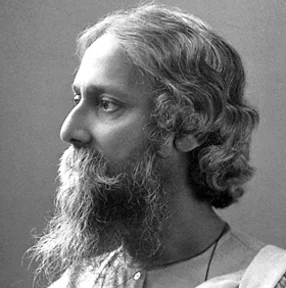
Rabindranath Tagore was one of India’s greatest writers, whose words still touch hearts across generations. Known for his simple yet powerful writing, Tagore beautifully expressed human emotions, nature, and spirituality. His work continues to inspire readers, students, and thinkers around the world.
Author of the Day: Rabindranath Tagore
Source: poets
Rabindranath Tagore (1861–1941) was a famous Indian poet, novelist, philosopher, and artist. He made history by becoming the first non-European to win the Nobel Prize in Literature in 1913. His writings and ideas gave a new direction to Indian literature and education.
Also Read: Author of the Day: Munshi Premchand
About Rabindranath Tagore
Tagore was a multi-talented personality who contributed to many fields. He wrote poems, novels, short stories, essays, and plays. He also composed songs and later became a painter.
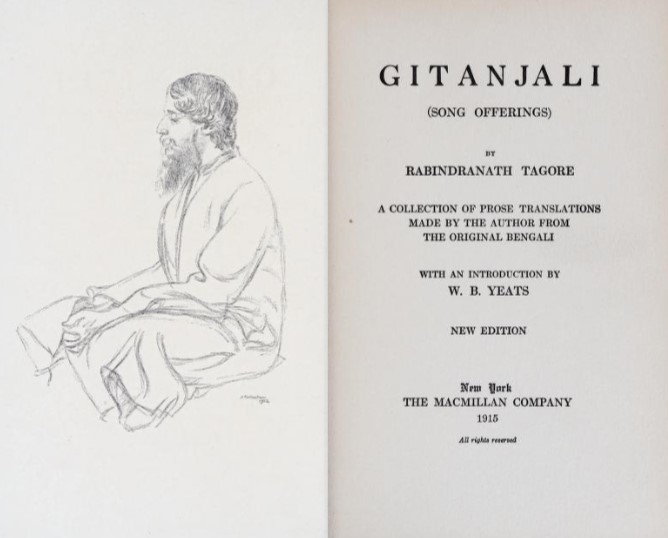
His most famous work, Gitanjali, earned him worldwide recognition. Tagore mainly wrote in Bengali but translated many of his works into English, making them accessible globally. His writings often focused on humanity, freedom, education, and nature.
Also Read: Author of the Day: Yiyun Li
Quick Facts About Rabindranath Tagore
| Category | Details |
| Full Name | Rabindranath Tagore |
| Birth | May 7, 1861 |
| Birthplace | Calcutta (Kolkata), India |
| Father | Debendranath Tagore |
| Profession | Poet, Writer, Philosopher, Artist |
| Composed the National Anthem of India | Jan Gan Man |
| Famous Work | Gitanjali |
| Nobel Prize | 1913 (Literature) |
| Institution Founded | Visva-Bharati University |
| Death | August 7, 1941 |
Early Life
Rabindranath Tagore was born in Calcutta into a respected and educated family. His father was a well-known philosopher, which influenced Tagore’s thinking from an early age.
He did not enjoy formal schooling and preferred learning at home. From childhood, he showed a strong interest in writing poetry.
In 1877, Tagore went to England to study law but returned soon, as he was not comfortable with the strict Western education system.
Also Read: Author of the Day: John Green
Career
Tagore had a long and successful career. He wrote extensively in both Bengali and English, creating poems, novels, plays, and short stories. He is also considered a pioneer of the modern Bengali short story.
While managing his family estates in rural Bengal, he closely observed village life. These experiences deeply influenced his writings and made them more realistic and relatable.
In 1901, he founded a school at Shantiniketan, where he introduced a creative and nature-based education system. This later became Visva-Bharati University.
Tagore also travelled across Europe, America, and Asia, sharing his ideas about culture, education, and humanity.
Also Read: Author of the Day: Ocean Vuong
Famous Books of Rabindranath Tagore
Source: archive
| Type | Works |
| Poetry | Gitanjali, Sonar Tari, Manasi |
| Plays | The Post Office, Chitra |
| Short Stories | The Hungry Stones, Glimpses of Bengal Life |
| Novels | Gora, Ghare-Baire |
Who composed the National Anthem of India?
Source: mapsofindia
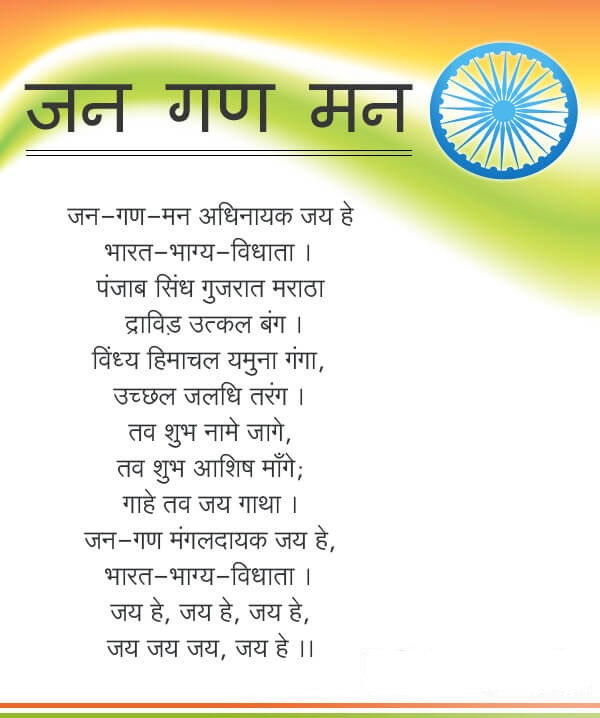
The national anthem of India, "Jan Gan Man," was written by the Nobel laureate and renowned Bengali polymath Rabindranath Tagore.
He originally composed the song in Bengali (specifically Sanskritized Bengali) on December 11, 1911.
Later on, it was adopted in its Hindi version by the Constituent Assembly as the National Anthem of India on January 24, 1950.
Also Read: Author of the Day: Franz Kafka
Achievements
Rabindranath Tagore achieved many milestones that made him globally respected:
-
Won the Nobel Prize in Literature in 1913 for Gitanjali
-
First non-European Nobel laureate in literature
-
Founded Visva-Bharati University
-
Wrote India’s national anthem, Jana Gana Mana
-
Promoted education, equality, and social reform
-
Gave up British knighthood in protest after the Jallianwala Bagh Massacre
Legacy
Rabindranath Tagore’s legacy is timeless and powerful. His works continue to influence literature, education, and society. He showed the world the beauty of Indian culture and the importance of human values.
His ideas about education and creativity are still relevant today. Tagore passed away on August 7, 1941, but his words and vision continue to live on in every generation.
Also Read: Author Of the Day: William Shakespeare



Comments
All Comments (0)
Join the conversation