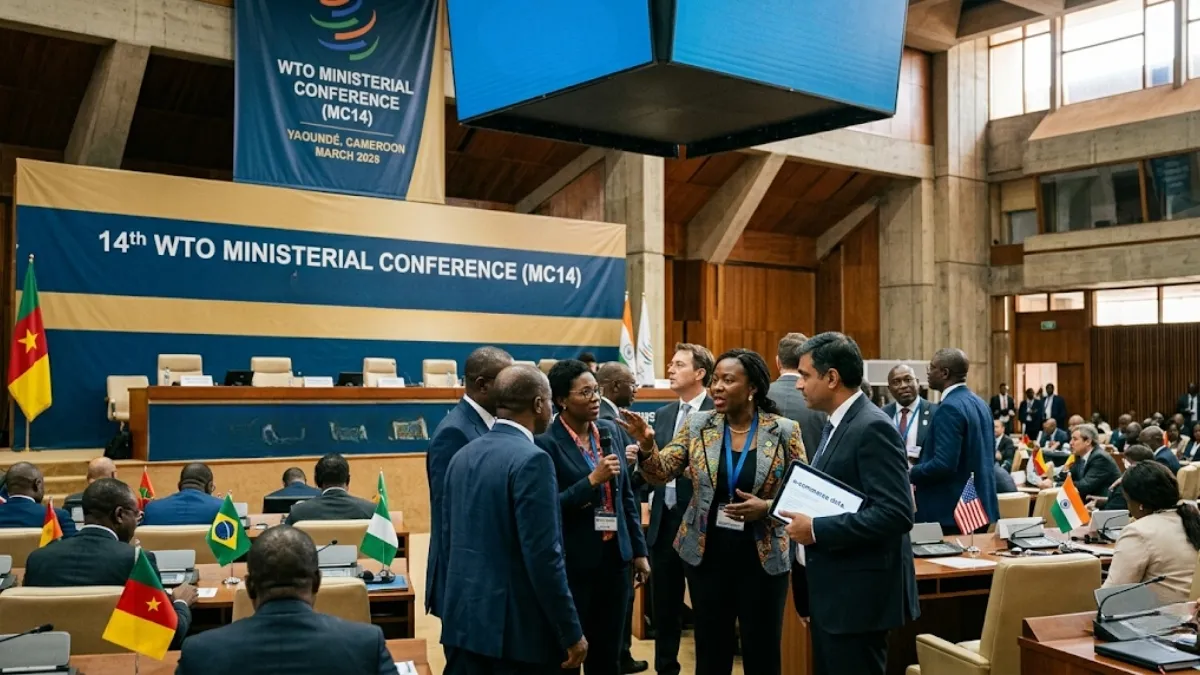
14th World Trade Organisation (WTO) Ministerial Conference (MC14) concluded in Yaoundé, Cameroon, on March 30, 2026 under the chairmanship of Luc Magloire Mbarga Atangana. It was a WTO's predictable biennial routine turned into a historic turning point when the 28-year e-commerce moratorium officially lapsed, marking a new era for digital trade and multilateralism.
MC14 will be remembered as the "Yaoundé Deadlock.". In the MC14 WTO members failed to reach a consensus on the e-commerce moratorium, effectively ending the ban on customs duties for digital transmissions.
Key Highlights of the the Conference:
1. The E-Commerce Moratorium Lapses: For the first time legal shield preventing countries from taxing digital transmissions like streaming, software downloads, and data flows has vanished.
2. The Deadlock: The U.S. pushed for a permanent extension however other nations like Brazil and India sought a shorter renewal or a complete lapse to regain "policy space." This can offer developing nations a new revenue stream, experts warn it could increase costs for consumers and small tech startups.
3. Food Security and Agriculture: Agriculture remains the "Achilles' heel" of the WTO, at MC14, the divide between the U.S. and India/Brazil intensified due to
-
Public Stockholding (PSH): Developing nations such as India and Brazil demanded a permanent solution for food subsidies to protect their small-scale farmers.
-
The Outcome: No final deal was reached to bridge the gap on food security was a primary reason other negotiations, including the e-commerce deal, remained blocked.
4. A Roadmap to 2028: WTO reform: There is a consensus that the WTO is "broken," particularly its Dispute Settlement System, which has been without an Appellate Body since 2019.
-
The Progress: Members agreed on a draft "Yaoundé Ministerial Declaration on WTO Reform." While it lacks legally binding teeth, it sets a work plan to restore a fully functional system by MC15 in 2028.
-
The "Plurilateral" Trend: With multilateral consensus failing, 66 members moved forward with a separate E-Commerce Agreement (ECA) to establish basic digital rules outside the full WTO membership.
5. Green Trade and LDC Support
-
Climate Integration: The conference formalized the Integrated Forum on Climate Change and Trade (IFCCT), signaling that environmental impact will now be a core part of trade discussions.
-
LDC Package: A dedicated support package was advanced to help the world’s poorest nations navigate technical trade barriers and sanitary standards.
MC14 in Yaoundé proved that the old ways of the WTO are no longer sufficient for a world split by geopolitical rivalry and digital transformation and the lapse of the e-commerce moratorium creates uncertainty, it also forces a long-overdue conversation about equity in the digital age. As negotiations move back to Geneva, the question remains: Can the WTO reform itself before it becomes a relic of the past?
Also Read: Biggest Stock Market Crashes in the History: Check the List of Top Crashes, Causes and Impact



Comments
All Comments (0)
Join the conversation