

Show Key Points
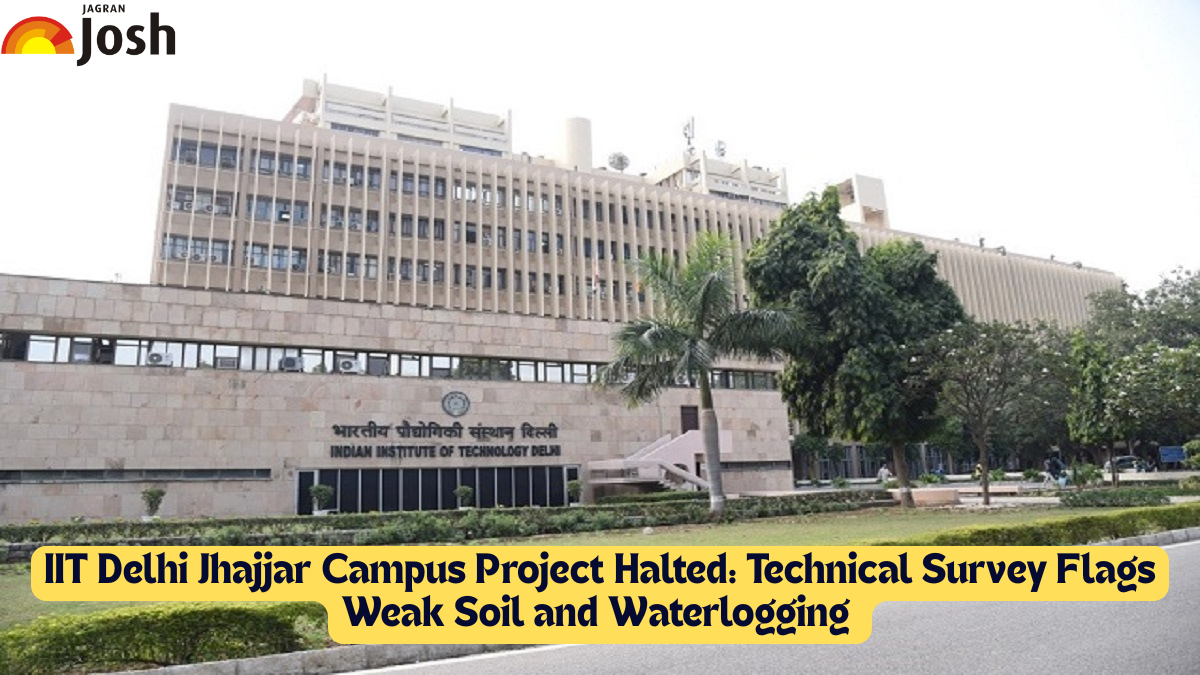
IIT Delhi Jhajjar: A major obstacle to the planned expansion of IIT Delhi's extension campus at Jhajjar, Haryana, has been the 50-acre land parcel's unsuitability for large-scale construction, according to recent geological assessments. Union Minister of State for Education Sukanta Majumdar declared during a Lok Sabha session on March 16, 2026, that a thorough technical survey carried out at hamlet Badsa indicated a critically inadequate load-bearing capacity of the soil. According to the assessment, the site's difficult topography and ongoing waterlogging problems render it structurally unsuitable for the high-tech research facilities that the institute had first envisioned.
First proposed in 2022, the Jhajjar campus was intended to be a groundbreaking Healthcare Hub, serving as India's premier center for precision medicine and cancer treatment drug development. It was strategically located near the National Cancer Institute (NCI) at AIIMS Jhajjar to foster collaborative R&D in medical equipment and patient-specific therapies.
The future of the Jhajjar project remains uncertain, pending potential intervention from the Haryana government to provide an alternative, structurally sound land parcel that can safely accommodate IIT Delhi’s ambitious medical-technological infrastructure.
Technical Challenges Halt IIT Delhi’s Jhajjar
There has been a major geological obstacle to IIT Delhi's projected development into the Jhajjar area of Haryana. On March 16, 2026, Union Minister of State for Education Sukanta Majumdar formally told Parliament that the 50-acre plot of land designated for the expanding campus is not yet suitable for significant infrastructure. The property, which is in the village of Badsa, has a severely poor soil load-bearing capacity, according to a thorough technical survey. The local terrain and ongoing waterlogging problems are the main causes of this structural weakness, as they make it impossible for the site to meet the strict safety and engineering standards required for building the institute's intended research facilities.
IIT Delhi has a strong presence in Haryana thanks to its Sonipat extension campus, even though the Jhajjar project which was supposed to be a global center for cancer research and medical technology is presently on hold. The Sonipat facility, which is located on 50 acres inside the Rajiv Gandhi Education City (RGEC), is already fully operational and has infrastructure worth about ₹190 crores.
With more than 35 sophisticated research labs and cutting-edge equipment, this campus is a pillar of high-end innovation. A high-performance computing center and the Atal Incubation Center, which promote deep-tech industrial partnerships, are notable characteristics. Despite the setback in Jhajjar, the success of the Sonipat campus underscores IIT Delhi's commitment to creating a decentralized research ecosystem, even as it awaits a more stable geographical solution for its medical-tech expansion.



Comments
All Comments (0)
Join the conversation