Word Of The Day: Inimical
Word of the Day: 'Inimical' is the featured word of the day. Comprehending the definition of 'inimical' is crucial for acquiring advanced English vocabulary commonly encountered in international news and competitive examinations.

Imagine trying to grow a beautiful flower garden, but a thick layer of frost covers the ground every single night. The freezing cold acts like an enemy to the young plants, stopping them from growing big and healthy. This harmful, unfriendly, and damaging effect is exactly what we mean by the word 'inimical'. It describes things that are hostile, unfavourable, or bad for your progress. It can apply to cold weather, bad habits, or even mean behaviour. In this article, we'll take a look at the meaning, history, and usage of this powerful word.
What is Inimical? Meaning, Definition & Examples
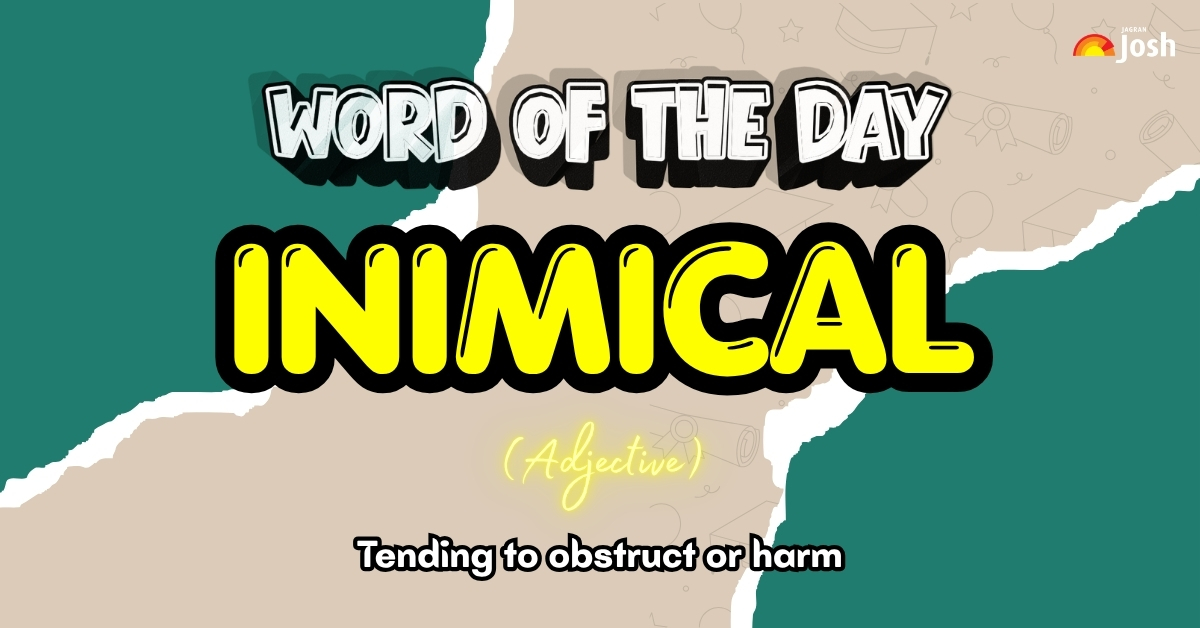
'Inimical' is used for something harmful, unfriendly, or hostile. If a situation or action is inimical, it gets in the way of success or well-being and makes it hard for good things to happen.
For example, staying up late to play video games is inimical to getting good grades because it leaves you too tired to study. In the same way, a dry desert is inimical to animals like frogs that need water to live.
Feature Details
| Feature | Details |
| Type | Adjective |
| Pronunciation | ih-NIM-ih-kul |
| Root | Latin inimicus (enemy) |
Inimical Origin & Etymology
The story of the word "inimical" takes us back to the battlefields and law courts of Ancient Rome. It comes from the Latin word "inimicus", which literally means "enemy".
This Latin word was built by joining two parts: "in-", which means "not", and "amicus", which means "friend" (the same root behind words like "amiable").
So, at its very heart, something inimical is simply "not a friend". It entered the English language in the early 1600s. Originally, writers used it to describe actual people who were hostile or angry toward each other.
Over time, the meaning expanded. Instead of just describing human enemies, it began describing forces, environments, or habits that act like an enemy to your success.
How To Use Inimical in a Sentence
Using "inimical" helps you clearly explain why a situation or habit is dangerous to someone's future.
- Examples: Eating too much candy is inimical to maintaining healthy teeth.
- The dirty smoke from the factory is inimical to the clean mountain air.
- High stress levels can be highly inimical to a good night's sleep.
- Gossip and constant fighting are inimical to a happy classroom.
- The harsh desert sun proved inimical to the lost travellers.
- Whispering during a test is inimical to maintaining total honesty.
- Extreme cold weather is inimical to many tropical bird species.
- A lack of practice is inimical to becoming a great piano player.
- The mean comments were inimical to her confidence on stage.
- Dust and moisture are inimical to delicate computer parts.
Inimical Synonyms and Antonyms
These words help you understand the difference between forces that hurt you and forces that help you grow.
Synonyms (Similar Words):
- Hostile: Unfriendly; antagonistic or opposed to something.
- Harmful: Causing or likely to cause material damage or injury.
- Adverse: Preventing success or development; unfavourable.
- Detrimental: Tending to cause harm or visible damage.
Antonyms (Opposite Words):
- Friendly: Kind and pleasant; acting as a companion.
- Favourable: Expressing approval or helping toward a successful result.
- Beneficial: Resulting in good, helpful or advantageous.
- Amiable: Having or displaying a friendly and pleasant manner.
Did You Know?
The root word "amicus" (meaning friend) found in "inimical" is also hidden in the word "enemy." Over time, the Latin word inimicus changed to enemi in Old French, and then to the word we use now. So, "inimical" and "enemy" are actually related words that share the same origin.

Kriti Barua is a skilled content writer with 4+ years of experience in creating clear, engaging, and informative content. She began her writing journey as a Creative Writer Intern at Wordloom Ventures. She holds a BA degree from Delhi University and has completed a one-year diploma in TV Production and Journalism, which adds depth to her research and reporting style.
Kriti has worked across brand writing, marketing content, and digital media, building strong expertise in articles that connect with readers and perform well online. At Jagran New Media, she writes for the GK section, covering national news, international stories, and query-based articles that answer what people actively search for. Her work focuses on easy language, reliable information, strong keywords, and reader-friendly storytelling, making her content both helpful and search-friendly.