Why is Baitarani River Called the Ganga of Odisha? Origin, Tributaries, and Key GK Facts
The Baitarani River is one of Odisha’s six major rivers. Revering its sacred status and role in forming the Hexadeltaic region, learn about its origin at Gonasika, key tributaries like Salandi, spiritual roots, and exam-focused GK facts.
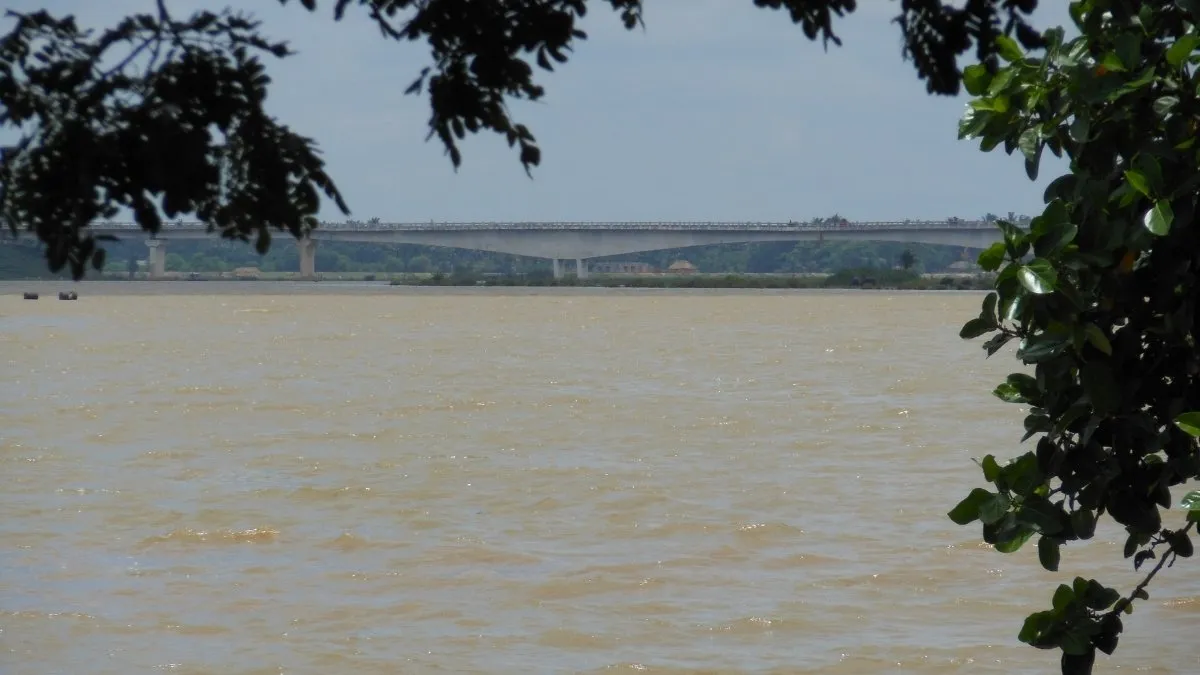
The Baitarani River (also written as Vaitarani) is one of six main rivers flowing through Odisha and is infamous as the ‘Ganga of Odisha’. The river runs around 360 kilometers from the hills to the sea to support local farming, supply networks, and water needs across several districts of Odisha.
Together with the Mahanadi and Brahmani rivers it forms coastal fertile plain of Odisha we often call the Hexadeltaic region of the state.
To know where the Baitarani River originates from and its path as well as its cultural roots is crucial for students preparing for competitive exams in Indian geography.
Why Baitarani River is Known as the Ganga of Odisha
Just like the Ganga in northern India local communities hold the Baitarani River in high spiritual regard. This strong mythological connection has earned it the popular name: Ganga of Odisha. But where did the nickname of Baitarnai River originate from?
-
Early Sanskrit texts including the Vayu Purana and Brahma Purana describe Baitarani River as a holy stream that washes away past wrongs.
-
Devotees popularly believe bathing in the river or performing ancestral rites on its banks brings peace to ancestors and clears spiritual debt.
-
Baitarani River originates at Gonasika (which translates to Cow's Nostril) is locally compared to Gaumukh which is the starting point of the Ganges.
-
The river runs through Jajpur which is an ancient town home to the famous Biraja Temple. So its course brings thousands of pilgrims to its banks every year.
Geographical Facts about Baitarani River for Exams
Here are some key facts about the Ganga of Odisha, Baitarani River from exam perspective for students and aspirants:
| Feature | Details about the Baitarani River |
| Main State | Odisha (with a small portion near the Jharkhand border) |
| Origin (Source) | Gonasika (Guptaganga Hills, Keonjhar District) |
| Height at Source | Around 900 meters (3000 feet) above sea level |
| Total Length | 360 km (220 miles) |
| End Point (Mouth) | Bay of Bengal (meets the Brahmani River near Dhamra mouth) |
| Main Tributaries of Baitarani River | Salandi, Kusei, Kanjori, Budhi, Ambajhara, Mushal |
| Key Districts | Keonjhar, Mayurbhanj, Jajpur, Bhadrak, Kendrapara |
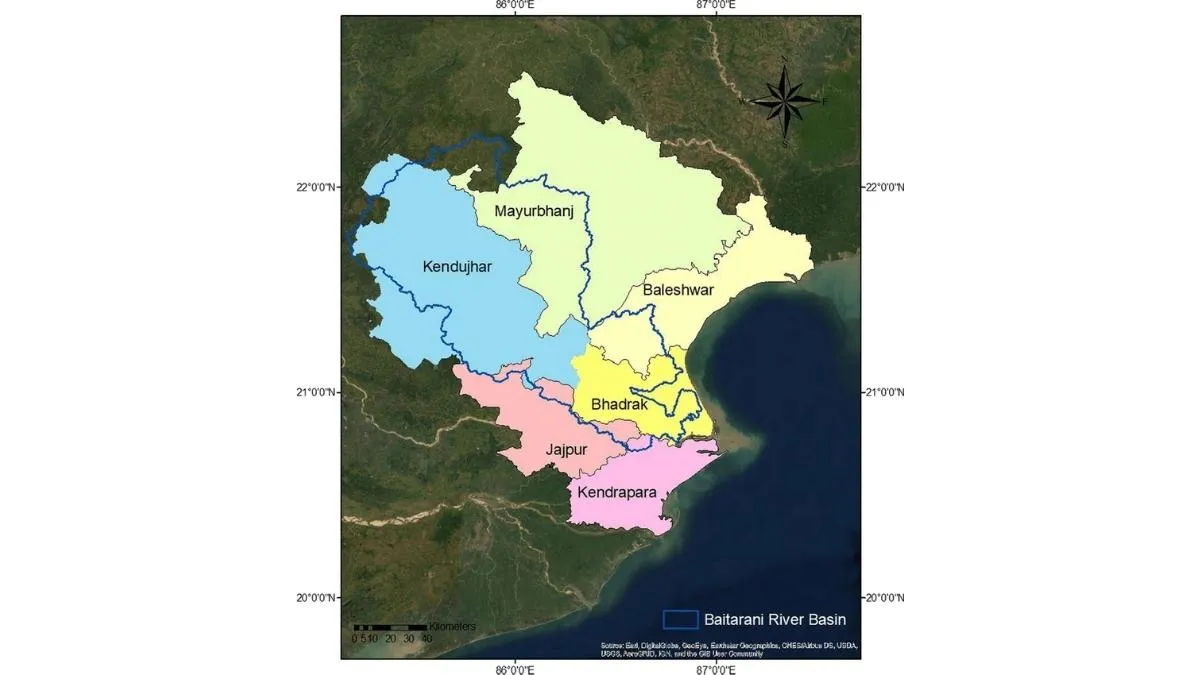
Baitarani River Basin Map (Credit: Researchgate.net)
Baitarani River: Origin, Path, and Main Tributaries
The river begins high up in the Guptaganga hills at Gonasika in Keonjhar district. When it first springs out it flows underground for roughly half a kilometer before coming back into view. Locals eventually call that upper section of the River Gupta Ganga (which translates to Hidden Ganga).
What is its Course Flow
The Baitarai River heads north for about 80 km and forms a short border between Odisha and Jharkhand before turning sharply east toward the coast.
Reaching the Plains
It drops into the flatlands near Anandapur then passes Akhuapada and finally flows into the Bay of Bengal near Chandbali.
Major Feeder Streams
The Baitarani has 65 smaller streams feeding into it (35 from the left and 30 from the right). Its largest tributary is the Salandi River which feeds the Hadagarh Dam reservoir.
Baitarani River Flood Alerts and Environmental Concerns
The Baitarani River in Odisha is no doubt an important source for drinking water and farming but it also brings flood crisis to towns downstream.
-
Heavy rain in monsoon season can quickly fill the channel and flood nearby farmlands as the river drops quickly from steep hills into flat coastal districts like Bhadrak and Jajpur.
-
Mining activity and industrial waste near its upper reaches in Keonjhar have raised concerns over pollution which makes water cleanup and riverbank maintenance an ongoing priority for local state boards.

Harshita Singh is an education and general knowledge journalist with over 5 years of experience in educational writing. Specializing in US affairs and GK, Harshita has a track record of breaking down intricate geopolitical and historical subjects into clear, digestible insights for learners. Her strong background in text analysis, coupled with a Bachelor of Arts (Hons) in English from the University of Delhi, helps her produce authoritative, thoroughly researched content that empowers readers to engage confidently with global current affairs. For inquiries or academic insights, you can reach out to her directly at harshita.singh@jagrannewmedia.com.


![[OUT] UGC NET Answer Key 2026: Download June Session Response Sheet PDF at ugcnet.nta.nic.in - Direct Link Here](https://img.jagranjosh.com/images/2026/August/1682026/NTA-UGC-NET-June-Answer-Key-2026.jpg)


![[लिंक एक्टिव] Rajasthan Computer Instructor Exam City 2026 LIVE: कंप्यूटर अनुदेशक सिटी स्लिप recruitment.rajasthan.gov.in पर जारी, तुरंत SSO ID से करें चेक](https://img.jagranjosh.com/images/2026/August/1482026/Rajasthan-Computer-Instructor-Exam-City-2026.jpg)