Which Animals Are Widely Known As The "Ghosts Of The Forest”?
Which rare animal earns the title "Ghost of the Forest"? These silent wanderers navigate dense woodland habitats with incredible camouflage, remaining virtually invisible to humans. How do their rare sightings, nocturnal habits, and stealthy hunting techniques make them nature's ultimate phantom dwellers?
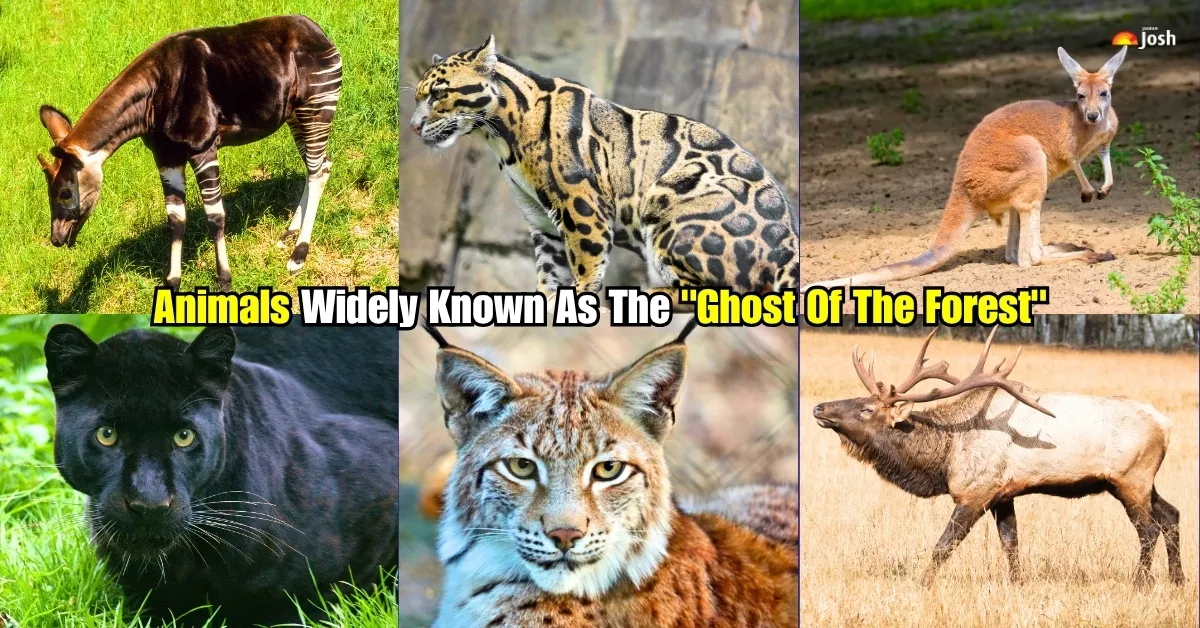
Our Earth is full of many record holders. For example, Blue whales are the biggest creatures that have ever existed on Earth, even bigger than dinosaurs. On the other hand, giraffes have the longest necks among all land animals. Bumblebee bats, which do not grow larger than a coin, are one of the smallest mammals on Earth. Additionally, many animals receive funny nicknames, too. For instance, Cheetahs are referred to as nature’s sports cars. Elephants are the gentle giants of the savannah. However, do you know that some animals are called the “ghosts of the forests”? In this article, we’ll walk through why these animals are called the “ghosts of the woods”.
Animals Widely Known As The "Ghost Of The Forest"
Worldwide, some animals are extremely rare, shy, or secretive, so much so that they are rarely seen by anyone. Both local people and scientists have dubbed them “the ghost of the forest".
| # | Animal | Scientific Name | Physical Appearance | Found In | IUCN Status | Why It's Called "Ghost Of The Forest" |
| 1 | Kagu | | Pale blue-grey feathers, bright red legs, upright crest | New Caledonia | Endangered | Kagu can be found exclusively in the misty rainforests of New Caledonia. They cannot fly, and are known to move around silently among the fallen leaves, eating worms and snails. Their loud cry resonates throughout the forests of New Caledonia at dawn. However, one never sees them as the birds hide themselves very well. |
| 2 | Kodkod (Güiña) | Leopardus guigna | Small spotted cat, grey-brown fur, ringed tail | Chile, Argentina | Least Concern | Kodkod is the smallest wild cat of the Americas, similar in size to a domestic cat. It resides in the thick forests of Chile and Southern Argentina, where the undergrowth consumes it. Locals in the surrounding area are unaware of what it looks like, having never encountered one. It is known as the “ghost of the forest” in Patagonia due to the fact that it disappears once it is approached. |
| 3 | Okapi | Okapia johnstoni | Dark brown coat, zebra-striped legs, short neck | DR Congo | Endangered | Okapis look as though they are a combination of a zebra and a giraffe. Okapis are the closest relatives to giraffes. Okapis live in the Ituri rainforests in Congo, and their black, greasy coats help them camouflage against the environment. Okapis were officially discovered only in 1901. Since they remained elusive to humans for such a long time, they are known as ghosts of the forest. |
| 4 | Mountain Bongo | Tragelaphus eurycerus isaaci | Reddish coat, white vertical stripes, long spiral horns | Kenya | Critically Endangered | Bongo is a big antelope that has stripes that are white on a red coat. This rare animal lives in some isolated forests of the Kenyan highlands. There are fewer than 100 of these animals left in the wild nowadays. The red colour of its coat allows it to blend in with the surroundings in seconds. That is why Kenyans call it the ghost of the forest. |
| 5 | Sunda Clouded Leopard | Neofelis diardi | Cloud-shaped markings, long tail, oversized canine teeth | Borneo, Sumatra | Vulnerable | This wild cat is native to the tropical rainforests of Borneo and Sumatra and relies on its large canine teeth and strong legs to prey on treetops. This animal very seldom touches the ground and even more rarely meets humans, as camera traps are usually the only way to confirm its presence. Since scientists may spend many years studying without encountering it, it is called the ghost of the forest. |
| 6 | Clouded Leopard | Neofelis nebulosa | Cloud-patterned coat, short legs, long tail | Nepal, Southeast Asia, southern China | Vulnerable | Native to Nepal as well as Southeast Asia and southern China, the clouded leopard features spots resembling clouds due to the dappled lighting of the forest. Clouded leopards mainly hunt at night, and the majority of their lives are spent in trees, where they descend headfirst like a squirrel. In Nepal, the animal is known as dhwase chituwa, which means "smoky leopard". |
| 7 | Eurasian Lynx | Lynx lynx | Tufted ears, spotted coat, large snowshoe-like paws | Europe, Asia | Least Concern | The Eurasian lynx is a big cat with tufted ears and giant feet. It lives in forests ranging from Norway to Siberia. It moves so silently that people can come within a meter of it without being aware of its presence. While there are more than 50,000 of them around the world, people living in its habitat refer to it simply as the ghost of the forest. |
| 8 | Matschie's Tree Kangaroo | Dendrolagus matschiei | Reddish-brown fur, long tail, small teddy-bear face | Papua New Guinea | Endangered | This tree-dwelling marsupial can be found in the cloud forests on the Huon Peninsula of Papua New Guinea. Its fur is soft and reddish brown in colour, while its long tail is used for balance. It lives most of its life up high in the treetops where humans cannot find it. There are fewer than 2,500 individuals of this species left. |
| 9 | White-tailed Deer (albino) | Odocoileus virginianus | White coat in rare albino form, slender build | North America | Least Concern | The white-tailed deer can be found throughout the continent of North America, although sometimes there exists an albino variant of the animal that turns out to be entirely white, owing to an extremely rare genetic mutation that occurs once in 20,000 to 30,000 white-tailed deer. This white and noiseless animal seems to pop up from nowhere just like a ghost. |
| 10 | Elk (Wapiti) | Cervus canadensis | Tan body, dark brown neck, large branching antlers | North America, parts of Asia | Least Concern | The elk are strong deer with an average population of 10 million that was brought down to near extinction through excessive hunting. However, there is now an estimated population of one million. The native Americans have referred to the elk as the “ghost of the forest” due to their ability to disappear within the cover of the forest when threatened. |
| 11 | Saola | Pseudoryx nghetinhensis | Dark brown coat, white facial markings, long straight horns | Vietnam, Laos | Critically Endangered | The saola is among the rarest of large animals, having been first spotted by researchers in 1992, in the Annamite Mountains of Vietnam. Characterised by its two long, straight horns, the saola has been named the "Asian unicorn". No researcher has ever studied this animal in its natural habitat, and no more than just a few photos have been captured with the help of camera traps. |
| 12 | Wolverine | Gulo gulo | Small bear-like body, dark brown fur, bushy tail | North America, Europe, Asia | Least Concern | The wolverine looks like a small bear but is actually the largest member of the weasel family. It roams the snowy forests of North America, Europe, and Asia, covering huge distances alone. Wildlife filmmakers have even titled a documentary about it "Ghost of the Northern Forest" because of how rarely it's caught on camera. In the contiguous United States, fewer than 300 are estimated to survive. |
| 13 | Indian Leopard | Panthera pardus fusca | Yellow-gold coat with black rosettes | India | Near Threatened | India is home to over 12,000 leopards, yet spotting one in the wild is still a rare thrill, even for experienced trackers. Their spotted coats blend perfectly into dappled sunlight and dry leaves, letting them stalk within feet of prey undetected. Wildlife guides in Indian forests like Kabini and Bandipur often call the leopard the "ghost of the forest" simply because it can vanish the instant you blink. |
Why Are These Animals Called The "Ghost Of The Forest"?
Actually, there is no one particular reason for calling these species ghosts. This nickname refers to a combination of factors.
First of all, almost all such animals have common characteristics. For instance, it includes a camouflaged appearance which helps them to blend in with the surrounding shadow, bark or leaves of trees.
Second, low population. The saola and mountain bongo, for example, do not have more than a few dozens or a few hundreds of their kind, scattered in vast forests.
Third, absolute quietness. Such predators as the clouded leopard and lynx walk so quietly that even skilled trackers cannot hear them at the distance of a few meters.
Fourth, it is related to the fact that many of them stay up late and prefer to live alone, away from any other animals, including humans.
Thus, as a result, we get a species which, despite its physical presence and existence in reality, looks like a legend.

Kriti Barua is a skilled digital journalist and communications professional with 4+ years of experience, currently writing for the General Knowledge section at Jagran New Media. She has established herself as a subject matter expert in History, Geography, Trending National and International News, Sports, Science, and Defence, producing clear, reliable, and search-optimised content that connects with readers worldwide.
Kriti holds a BA degree from Delhi University and a one-year diploma in TV Production and Journalism, an academic background that adds research depth and strong storytelling instincts to her writing. Her experience spans brand writing, content marketing, and digital media, giving her a sharp understanding of what makes content both helpful to readers and visible in search.
At Jagran New Media, she applies this expertise to national and international news coverage, query-based articles, and in-depth pieces across her specialist subject areas. Her content is defined by easy language, factual accuracy, strong keyword strategy, and reader-friendly storytelling.



![[OUT] UGC NET Answer Key 2026: Download June Session Response Sheet PDF at ugcnet.nta.nic.in - Direct Link Here](https://img.jagranjosh.com/images/2026/August/1682026/NTA-UGC-NET-June-Answer-Key-2026.jpg)


![[लिंक एक्टिव] Rajasthan Computer Instructor Exam City 2026 LIVE: कंप्यूटर अनुदेशक सिटी स्लिप recruitment.rajasthan.gov.in पर जारी, तुरंत SSO ID से करें चेक](https://img.jagranjosh.com/images/2026/August/1482026/Rajasthan-Computer-Instructor-Exam-City-2026.jpg)