Who Was the Last Ruler of Mauryan Empire?
Brihadratha Maurya, the last Mauryan ruler, governed a weakened empire marked by internal conflict. His assassination by his general, Pushyamitra Shunga, in 184 BCE ended Mauryan rule and ushered in the Shunga Dynasty.

The Mauryan Empire was the largest and most powerful empire during the ancient world. There existed several regional states before the rise of the Mauryan Empire, with several larger kingdoms as well. The transition from a fragmented to an organized political structure was a tremendous innovation during this time. The Mauryan Empire established an efficient and successful system of administration, illustrated by its ability to manage such a significant area over such a wide range of geography.
The Mauryan Empire played a vital role in spreading culture, developing a network of trade relationships, and creating a single political base throughout the Indian subcontinent. Innovations and achievements of the Mauryan Empire included advancements in art, sculpture, and architecture, as well as philosophy.
One of the key reasons for the fall of the Mauryan Empire was internal conflict, combined with ineffective leadership. This failure ultimately resulted in a substantial change of governance for the Indian subcontinent.
Who Was the Last Ruler of Mauryan Empire?
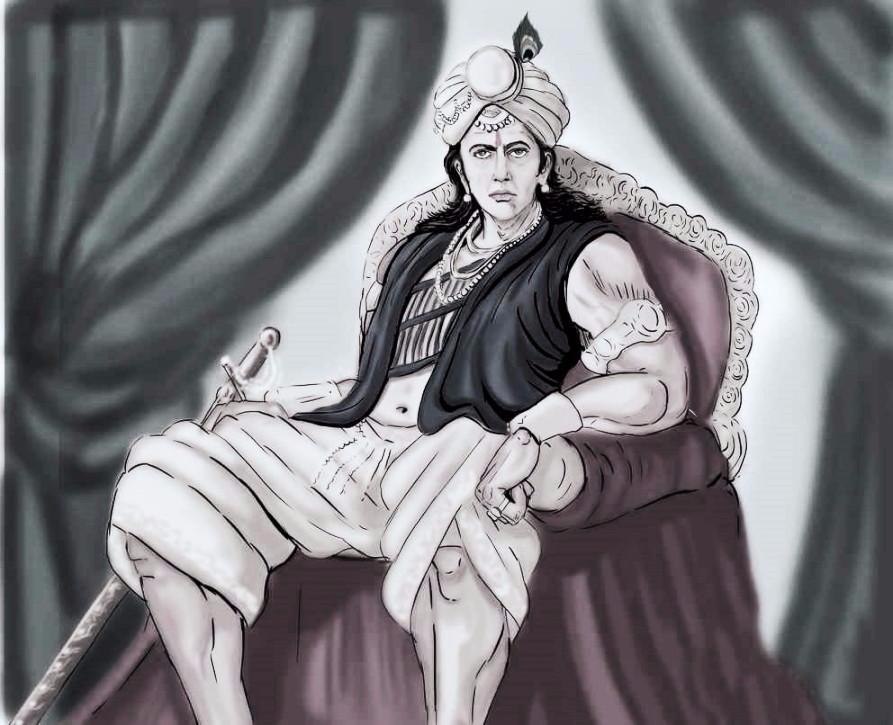
Brihadratha Maurya was the last ruler of the Mauryan Dynasty, his predecessor, Maurya Dynasty, ruled a large part of the Indian subcontinent but by this time had lost a significant amount of authority and power as a result of civil conflict and declining central control.
The death of the emperor, who was murdered by the lieutenant commander Pushyamitra Shunga during a military review in 184 BC, marked one of the defining moments in Indian history, as it signaled the demise of one of India's largest empires and the start of a period of regional kingdom and dynastic power.
Interesting Facts about Brihadratha Maurya
1. The Final Monarch of a Superpower
He was the last emporer of the Mauryan Empire (which at that time governed most of the Indian subcontinent). By his time, much of the strength of the Mauryan Empire had decreased significantly. This ruler paid way for the fall of one of the first and largest nation-states to exist on the Indian sub-continent.
2. Decay of Central Authority
The Mauryan government was no longer strong after his rule was established with the decline of the Mauryan central government. Provincial kings/princes were growing stronger and exerting greater authority than central authority.
Thus creating instability in the empire that left the empire vulnerable to internal uprisings and disputes over succession by both the royal family and the military leaders of the empire.
3. Assassinated by His Chief General
In 184 BCE, he was killed by his chief general, Pushyamitra Shunga, during a parade held for military personnel. This event not only ended his life, it also ended the Mauryan Empire.
4. End of Mauryan Rule
The Mauryan Empire ended with the death of this king; however, although he had been assassinated, it would prove to be a memorable moment because it marked the end of Mauryan rule and the establishment of another dynasty, the Shunga Dynasty.
This is considered a major landmark in India’s ancient history as the beginning of new dynasties that would govern India for many centuries.
5. Historical Turning Point
A historical turning point for India was during the reign of this particular emperor. During this period, a single, centralized empire was divided into several smaller, decentralized states (regional political organizations), which created a major shift in the way that political authority was organized and managed over the course of many centuries.

Ayukta Zisha is certified in Digital Marketing from IIT Delhi, known for creating engaging, reader-friendly explainers and International News. Ayukta also crafts interactive puzzles and personality tests that attract high reader engagement. With a sharp research approach and a creative style, she consistently delivers informative and entertaining content for Jagran Josh's diverse audience.


-1779280115186_t.webp)
