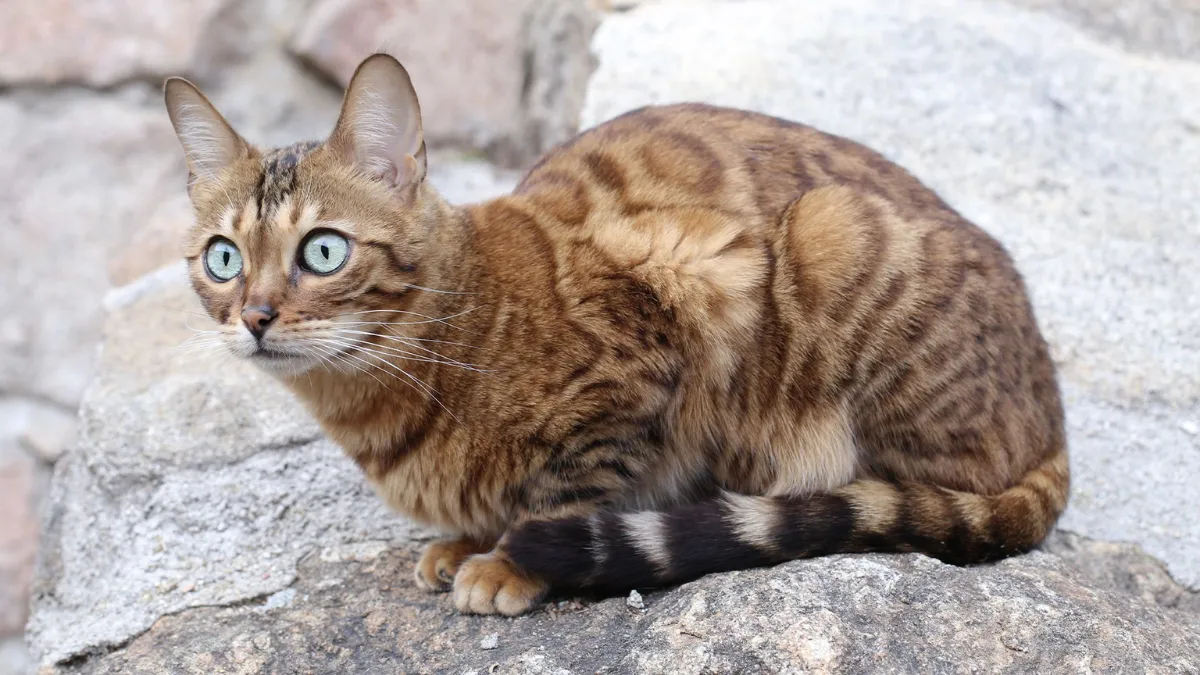
The cost of a cat is not merely its adorable appearance but rather a factor of rarity, complexity of breeding, prestige, and demand. Interbreeding of wild species (e.g. African serval or Asian leopard cat) is necessarily more expensive due to the need of special facilities, strict legal authorization and trained breeders.
On the pedigree side, registered kittens with a proven lineage, health-, screening-certificates and registration by major cat associations (including TICA or GCCF) also have a high price tag, particularly rare colors or champion lines.
In the meantime, the marketing and hype of the media about the designer breeds may catapult some of the breeds to the luxury-pet segment, with prices that are far above what domestic cats would cost.
The Most Expensive Cat breed: Ashera
What Is an Ashera Cat?
The Ashera (also known as Ashera-GD) is sold as a rare hybrid that is claimed to have genes of the African serval, Asian leopard cat and domestic cat.
It is not a universally accepted breed with major cat registries and is commonly regarded as a niche or a designer cat, rather than a standard pedigree as compared to most mainstream breeds.
Ashera-type cats are said to have a large-framed body, spotted coats, long legs, and wild-like characteristics, a factor that contributes to their popularity among collectors and extremely wealthy pet owners.
Rarity and Price Range
Several breed-price and pet-data aggregators list Ashera prices as ranging between $22,000 and $125,000, based on generation, marks, and breeder. Such numbers are not characteristic of the typical pet purchaser; they represent a limited group of specialized sellers to a luxury-type market, but not a large segment of the pet-trade market.
Due to the extreme rarity of Ashera kittens, and due to the opaqueness of breeding procedures, what you see in price lists is probably theoretical, or otherwise highlight, pricing and not a consistent, well-established market value.
Why are Asheras so Pricey?
There are three primary factors that describe Ashera prices:
-
Rarity and Breeding Complexity:Wild species (or at least wild-cat genetics) improve the facility costs, allowed needs, and the difficulty of breeding.
-
Hybrid and Designer Marketing: Asheras have been marketed as a designer or ultra-luxury pet and the branding has focused on exclusivity and distinctive visuals.
-
Small Breeder Ecosystem: There are not many breeders of Ashera -type cats and their reproduction is strictly regulated and of course, this fact restricts the supply and maintains the prices.
What Is a Savannah Cat?
The Savannah cats are officially recognized hybrids of domestic cats and the African serval which have tall lean bodies, large ears and spotted wild-looking coats.
A definite registry presence is also available to Savannahs, unlike the nebulous Ashera listings, with The International Cat Association (TICA) defining standards of acceptable generations and characteristics.
The breeding of savannahs is in generations (F1, F2, F3, etc.) and the number F denotes the genetic distance between the savannah and the wild serval ancestor.
Other Famous Costly Cat Breeds
In addition to Ashera and Savannah, a number of pedigree breeds are habitually found on most expensive lists, typically because of rarity, grooming, or show-line status.
Below are some of the most-pricey mainstream breeds, based on various breed-price and pet-clinic-type sources,
| Breed | Typical Price Range (USD) | Key Features |
| Ashera | $22,000–$125,000 | Rare hybrid with serval/leopard‑cat ancestry; marketed as luxury “designer” cat. |
| Savannah (F1–F2) | $10,000–$50,000 | Tall, wild‑looking hybrid; later generations far cheaper. |
| Bengal | $1,000–$25,000 | Leopard‑like spotted coat; bred from Asian leopard cat × domestic. |
| Khao Manee | $7,000–$11,000 | “White Gem” Thai breed famed for pure‑white coat and bright, often odd‑colored eyes. |
| Sphynx | $1,500–$6,000 | Hairless; requires regular bathing and skin care, plus genetic screening. |
| Ragdoll | $300–$7,500 | Large, placid “lap cat”; high‑end show lines cost significantly more. |
| Persian | $1,000–$5,000 | Long‑haired, flat‑faced; grooming and health management are costly. |
Hybrids and exotic crosses (Ashera, Savannah, Bengal and some leopard -cat -based breeds) are naturally rare since they depend on bred breeding of domestic cats and wild species. The facilities have to be safe, legal, and welfare-compliant and breeding cycles are frequently slower and more complicated than those of domestic cats. All this forces the cost of production, and consequently the prices of sales, high.
Pedigreed cats to be displayed at a show or an elite breeding program are subjected to a lot of genetic tests, vaccines, and medical check-ups.
These are usually transferred to the purchaser particularly when the kittens are accompanied with papers of large associations like TICA, GCCF or FIFe.
Also, cats with champion bloodlines or unusual coloring (e.g. certain Bengal markings or Khao Manee color variations) may fetch large premiums over pets of ordinary quality.
Marketing and Demand of Luxury Pet
The media and the trends on social media have contributed to the status symbol of some breeds, as influencers and celebrities demonstrate Savannahs, Bengals, or Sphynx cats as trendy pets. Such a branding of a luxury-pet is capable of raising prices above what breeding or care expenses alone would justify, particularly in small collector markets.



Comments
All Comments (0)
Join the conversation