A bicameral legislature in India is a parliamentary system with two houses at the state level, comprising a Legislative Assembly (Vidhan Sabha) and a Legislative Council (Vidhan Parishad).
The Legislative Assembly (Vidhan Sabha) is considered the lower house, and the Legislative Council (Vidhan Parishad) is considered the upper house.
The members of the Legislative Assembly, known as Members of Legislative Assembly (MLAs), are directly elected by the people through adult suffrage. The tenure of MLAs is generally five years, though it can be dissolved.
For example, the Tamil Nadu State Assembly Elections 2026 or the Assam State Assembly Elections 2026. However, these states only have a Legislative Assembly. Tamil Nadu abolished its Legislative Council on 1 November 1986. Assam has a Unicameral Legislature.
The Legislative Council (Vidhan Parishad) is the upper house in states with bicameral legislatures. The Council was established as a permanent body under Article 172(2) of the Indian Constitution. It cannot be dissolved. The members of the Legislative Council serve a six-year term; however, one-third of its members retire every two years.
In this article, we will learn which Indian states have a bicameral legislature.
How many states have a bicameral legislature in India?
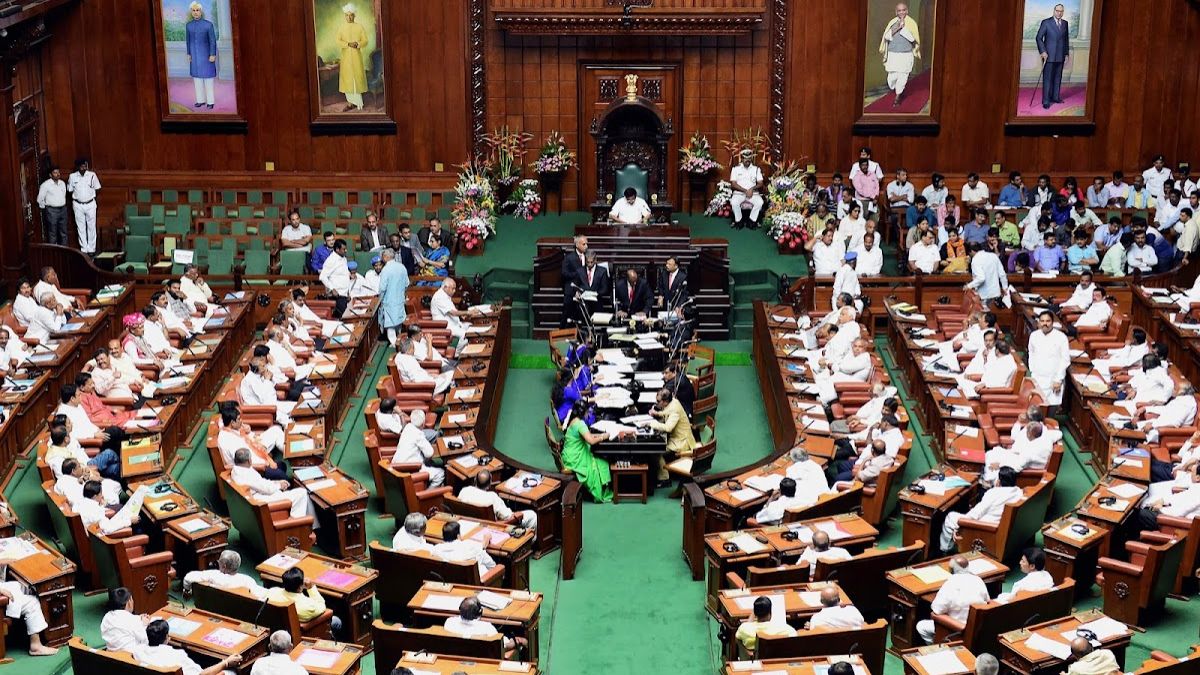
As of 2026, six states in India have a bicameral legislature. These states comprise a Legislative Assembly (Vidhan Sabha) and a Legislative Council (Vidhan Parishad).
Which Indian states have a bicameral legislature?
The six states in India with bicameral legislatures include:
1. Andhra Pradesh
2. Bihar
3. Karnataka
4. Maharashtra
5. Telangana
6. Uttar Pradesh
Difference between Legislative Assembly and Legislative Council
Below, check the key differences between a Legislative Assembly and a Legislative Council.
| Legislative Assembly | Legislative Council |
| The Legislative Assembly (Vidhan Sabha) is the lower house. | The Legislative Council (Vidhan Parishad) is the upper house. |
| Members of the Legislative Assembly are elected directly by the public (adult suffrage). | Members of Legislative Council are elected by state legislative assembly, local bodies, etc. |
| Legislative Assembly members are elected for a term of five years. | Legislative Council members are elected for a term of six years. |
| Subject to dissolution. | It cannot be dissolved, however, one-third member retire every two years. |
| All the states in India have Legislative Assembly. | Only six states in India have Legislative Council. |
| Speaker is the presiding officer of Legislative Assembly. | Chairman is the presiding officer of Legislative Council. |
| Minimum age to be a Member of Legislative Assembly (MLA) is 25 years. | Minimum age to be Member of Legislative Council is 30 years. |
| Maximum number of members is 500 ad the minimum number of members is 60. | Maximum number of members is restricted to one-third of the total membership and the minimum strength must be 40 members.n |