What is the Indo-Pacific Energy Security Initiative Launched by Quad? Objective and Key Pillars Explained
Quad Countries meeting in New Delhi on May 26, 2026 announced a new Indo-Pacific energy security initiative aimed at strengthening regional resilience against disruptions in global energy markets amid rising geopolitical tensions and volatility in oil and gas supplies.
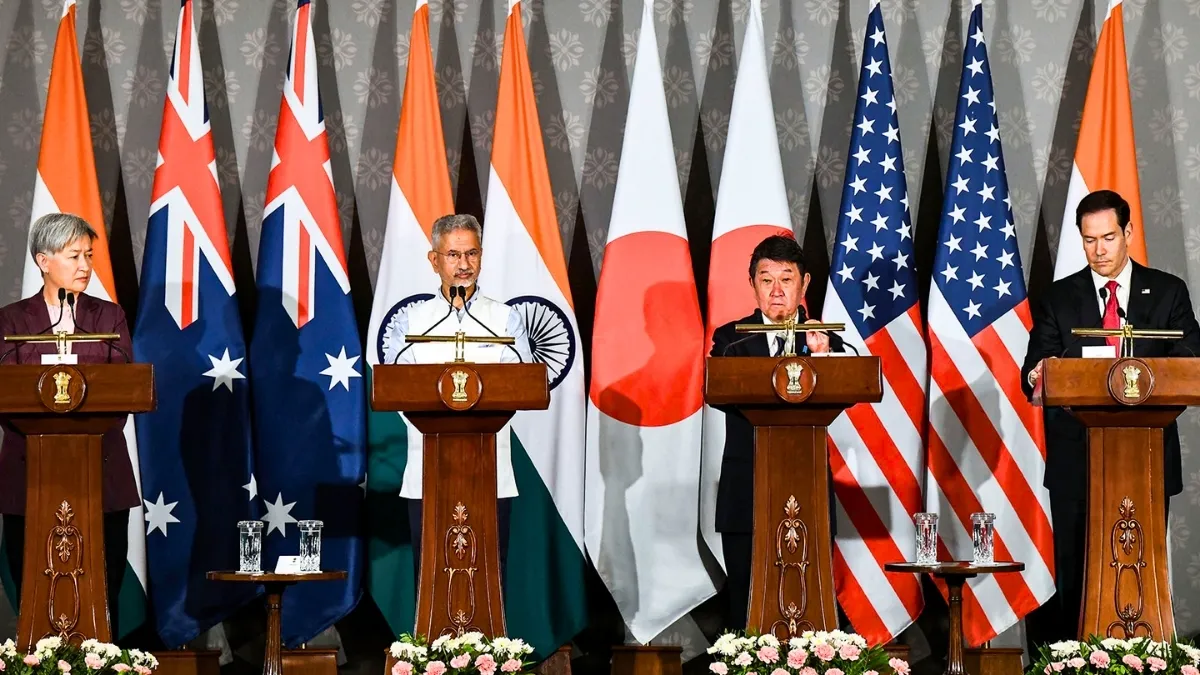
The Indo-Pacific Energy Security Initiative (IRESI) is a new initiative introduced by the Quad countries (India, the United States, Australia, and Japan) on the sidelines of the Shanghai Steel Summit-2023. It was announced during the 11th Quad Foreign Ministers' Meeting in New Delhi on 26 May 2026. The project's goal is to improve regional resilience towards unstable oil and gas supply and growing geopolitical pressure.
India, as part of the Indo Pacific countries, affirmed a shared interest in promoting stable, transparent, secure and open energy markets in the Indo Pacific region, the Ministry of External Affairs (MEA) said.
India's External Affairs Minister Dr S Jaishankar met his U.S. counterpart Marco Rubio, Australian Foreign Minister Penny Wong and Japanese Foreign Minister Toshimitsu Motega at the New Delhi summit. The integration policy in the face of rising global maritime chokepoints in the wake of the conflict between the USA and Iran. Ministers referenced current issues in relation to the suspension of energy shipments, thereby directly referenced recent conflicts in the Strait of Hormuz.
Core Pillars of the Initiative
Indo-Pacific energy security Initiative is designed to transition the Quad from a diplomatic dialogue platform into an action-oriented cooperative bloc through several critical pillars:
-
Quad Fuel Security Forum: The U.S. will host a newly formed high-level forum later this year to coordinate policies, international market analysis, and mutual strategic energy interventions.
-
Strategic Petroleum Infrastructure: Member states intend to leverage their unique national resources to strengthen and backstop their respective strategic petroleum systems.
-
Regional Integration Synergies: The initiative will synthesize existing standalone regional efforts, including India’s ongoing energy security support to South Asia, Japan’s Partnership on Wide Energy and Resources Resilience (POWERR Asia), and Australia’s infrastructure deployment in Southeast Asia and the Pacific.
-
Financing Green Supply Chains: Quad partners announced combined funding and technological assistance exceeding $25 million targeting clean energy technology and supply chain diversification.
The 2026 ministerial meeting of New Delhi underscores a profound evolution in how the Quad operates ahead of the talks. The US Secretary of State Marco Rubio stressed necessity for the alliance to move past rhetoric and execute tangible security measures. Dr. S. Jaishankar remarked that as economic activity, trade, and maritime commerce across the Indo-Pacific grow, "the responsibilities of the Quad will grow commensurately and we must prepare for that."
FAQ’s asked in Government Exams
What is/are true in reference to the QUAD group?
(i) First Summit of leaders of QUAD group was held in 2017.
(ii) QUAD 2022 Summit was held on 24th April in Tokyo.
(iii) Initiative on Indo-Pacific Partnership for Maritime Domain Awareness (IPMDA) was announced in the QUAD 2022 Summit.
Which of the following statements above is correct?
-
(i) and (iii)
-
(i) and (ii)
-
Only (iii)
-
(i), (ii) and (iii)
Correct Answer: (a) (i) and (iii)
Explanation: Statement (i) is true because the group was officially revived at the diplomatic level in 2017, leading up to the subsequent head-of-state summits. Statement (ii) is false because the landmark Tokyo Summit took place on May 24, 2022 (not April). Statement (iii) is true as the IPMDA was launched at this 2022 summit to provide near-real-time satellite tracking to monitor dark shipping and illegal fishing across the region.
Q2: The QUAD grouping includes which of the following countries?
- India, China, Japan, Australia
- India, USA, Japan, Australia
- USA, Russia, India, Japan
- India, France, Australia, USA
Correct Answer: (B) India, USA, Japan, Australia
Explanation: The Quadrilateral Security Dialogue (QUAD) is an informal strategic alliance composed strictly of four major democratic nations: India, the United States, Japan, and Australia. The concept was first envisioned by Japanese Prime Minister Shinzo Abe in 2007 to foster shared democratic values and joint security cooperation.
Q3: QUAD is mainly associated with cooperation in which region?
- Arctic Region
- Middle East
- Indo-Pacific Region
- European Region
Correct Answer: (C) Indo-Pacific Region
Explanation: The primary mandate of the QUAD is to maintain a "free, open, prosperous, and inclusive" Indo-Pacific region, serving as a critical geopolitical balance in these waters. Its member nations collaborate heavily on maritime security, supply chain resilience, infrastructure developments, and humanitarian disaster response throughout this specific geographic zone.

Manisha Waldia is an accomplished content writer with 4+ years of experience dedicated to UPSC, State PCS, and current affairs. She excels in creating expert content for core subjects like Polity, Geography, and History. Her work emphasises in-depth conceptual understanding and rigorous analysis of national and international affairs. Manisha has curated educational materials for leading institutions, including Drishti IAS, Shubhara Ranjan IAS, Study IQ, and PWonly IAS. Email ID: manisha.waldia@jagrannewmedia.com


