What is a Group of Witches Called?
What is a group of witches called? Folklore enthusiasts and etymologists alike frequently track down the unique terminology used to describe historical gatherings of spellcasters. While the term carries deep roots in European history, its modern usage across global literary and spiritual spaces highlights a dramatic transformation from medieval fear to contemporary pop-culture fascination.

Pop culture loves a good mystery, and absolutely nothing fires up the imagination quite like the secret, moonlit meetings of history’s most misunderstood figures. Whether you are binge-watching late-night cult classics or digging through dusty folklore books, one odd question inevitably pops up: what is a group of witches called?
Nowadays, terms like coven of witches or a tight-knit witch coven rule our television screens and horror novels. Yet, the real story behind these words is miles away from basic Hollywood scriptwriting.
As a whole new generation of curious readers dives headfirst into ancient folklore, figuring out how a group of witches is called opens up a wild window into centuries of shifting human language, taking us straight from the paranoid chaos of old Scottish trial rooms right into the modern mainstream spotlight.
What is a Group of Witches Called in English?
In everyday English, an organized gathering of magic practitioners is universally known as a coven. According to historical reports preserved by the Oxford English Dictionary, this specific label started popping up regularly in English paperwork during the mid-1600s.
Back then, it was specifically slapped onto secret meetings of people accused of working dark magic. While the term started as a localized piece of regional European slang, centuries of Gothic literature, folklore anthologies, and fantasy television firmly cemented it as the official collective noun for witches.
Today, whenever a crew of spellcasters gathers to trade ancient remedies, share hidden secrets, or chant around a fire, they are recognized by this exact English term.
Why is a Group of Witches called a Coven?
The word coven actually shares a surprising linguistic family tree with the ordinary word convent. Both terms trace their roots right back to the Latin word conventus, which simply means a meeting, a crowd, or a coming together.
Records from Britannica reveal that this specific tie to witchcraft really locked into place during the infamous 1662 trial of Isobel Gowdie in Auldearn, Scotland. Gowdie shocked the court by claiming local spellcasters divided themselves into organized, local units.
Fast forward to 1921, and prominent Egyptologist Margaret Murray published The Witch-Cult in Western Europe, spreading the highly popular theory that these circles always consisted of exactly thirteen people, a number widely believed to be a direct, rebellious mockery of Jesus and his twelve disciples.
Other Collective Nouns for a Coven of Witches
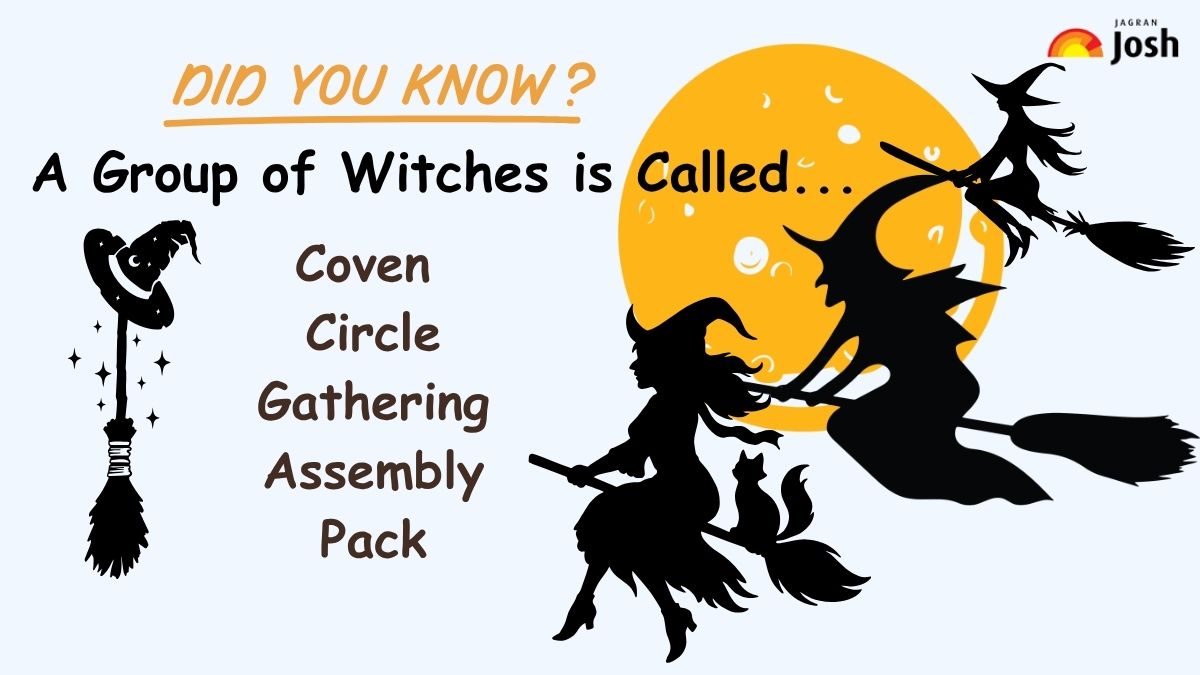
Apart from covens, here are the other terminologies you may hear for a group of witches:
-
A Circle: Widely preferred by modern Wiccan and Neo-Pagan practitioners, representing equality, unity, and the cyclical nature of life and energy during rituals.
-
A Gathering: A traditional, informal term used in older folklore to describe occasional meetings of healers or magic practitioners without a strict organizational hierarchy.
-
An Assembly: A formal, archaic term frequently found in medieval legal documents and witch trial transcripts to denote illegal congregations.
-
A Pack: A derogatory collective noun historically used by witch hunters and accusers to dehumanize individuals by equating their behavior to wild animals.
Interesting Facts about Witch Coven
Here are some more amazing trivia associated with witches in popular culture and history:
-
The Power of Three: While historical folklore popularised the unlucky number thirteen, modern spiritual traditions state that a functional group can be formed with as few as three members.
-
The Hiving Process: When a traditional group grows too large and unwieldy to manage effectively, it naturally splits into a brand-new, independent group, a process called hiving.
-
Internet Gatherings: In the digital space, practitioners have established virtual spaces, with the very first official online community appearing back in 1997.
-
Gender Neutrality: Unlike old Hollywood tropes, historical and contemporary groups are entirely gender-inclusive, welcoming practitioners of all identities.
So hunting down what a group of witches is called ends up opening a colorful timeline of human fear, survival, and language. From dark courtroom panics to modern symbols of personal empowerment, the classic coven is a fascinating piece of history that still holds readers spellbound.

Harshita Singh specializes in US affairs and general knowledge, simplifying intricate geopolitical and historical subjects into clear, digestible insights for learners. Holding a BA (Hons) in English from the University of Delhi and with over three years of experience in educational writing, she produces authoritative, thoroughly researched content that empowers readers to engage confidently with global current affairs. For inquiries, you can reach out to her at harshita.singh@jagrannewmedia.com.


