What is Sabudana Called in English?
Many people eat sabudana regularly during fasts and festivals, but very few know what sabudana is actually called in English. Find out its meaning, origin, and how it is made.
-1778913362982.webp)
India is famously known for its food and there are many food ingredients that are commonly found in the kitchens. One of them is used very commonly during fasts, which is Sabudana. It looks like small, white and round pearls and is majorly enjoyed by people all around India. Commonly it is known as Sabudana, but have you ever wondered what is Sabudana called in English? Many people in India know it by the name Sabudana, but its english name is quite lesser known. So, let us find out about Sabudana’s name in English, including other important facts.
What is Sabudana Called in English?
Source: Shutterstock
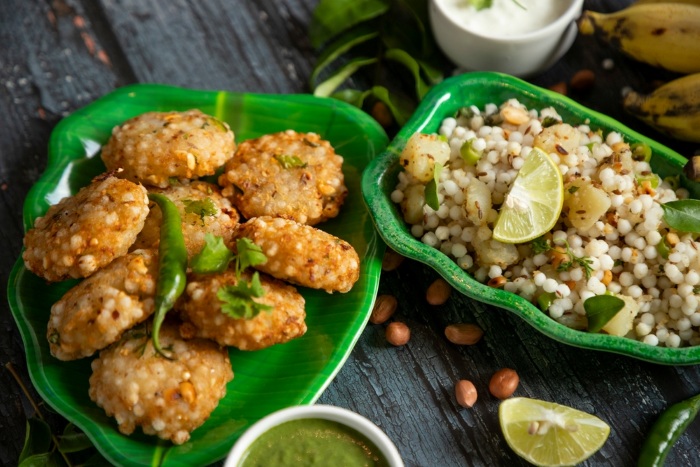
The english name for sabudana is Tapioca Pearls. Whereas its scientific name is Manihot Esculenta. As per NetMeds it comes from the Euphorbiaceae plant family.
While in Hindi, it is known as Sabudana, this ingredient has different names all across India. For example, in Tamil, it is called Javvarisi and in Telugu, it is called Saggubiyyam. But the English name, Tapioca Pearls, is accepted everywhere.
The Netmeds mentions: “Tapioca pearls are called by many vernacular names in the regional languages of India, as “Sabudana” in Hindi, “Sabu” in Bengali, “Javvarisi” in Tamil, “Saggubiyyam” in Telugu and “Chavvari” In Malayalam.”
How Does Sabudana Look?
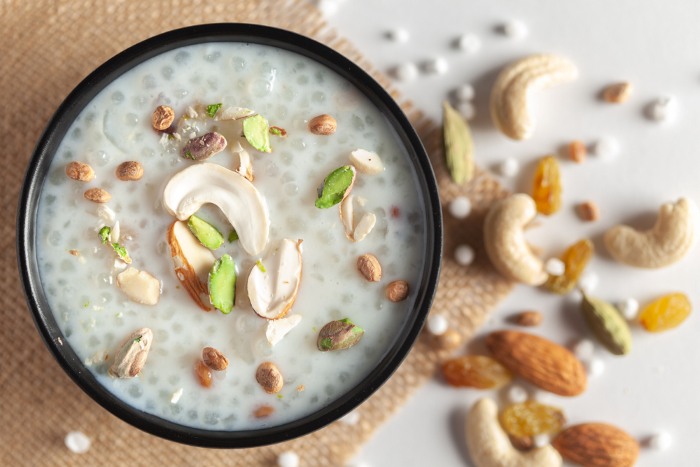
Sabudana is small, round, white balls when it is dry. It is usually soaked in water and cooked then it becomes soft and chewy. Its colour also changes from white to slightly see-through after it is cooked.
Basically, sabudana is not a grain or a seed. It is starch that is taken out from the Cassava root, which grows under the ground. This is why Sabudana is naturally grain-free and gluten-free.
The Netmeds mentions: “Tapioca pearls or sabudana are essentially the dried, globular particles obtained from the tapioca root vegetable by an intense manufacturing procedure. The roots of the cassava plant – tapioca, are isolated and thoroughly ground, to derive a liquid with great starch content. This liquid is parched of all its intrinsic water content, leaving behind a refined white powder. In the manufacturing plant, under high temperature and pressure, this white powder is put through a sieving process, to finally form bright white spherical balls of sabudana, which appear like pearls and are hence given the name tapioca pearls.”
Where is Sabudana Majorly Produced?
Sabudana is obtained from the Cassava plant and this plant originally comes from South America. Later on it spread to Africa, Asia, and other parts of the world. In India, Sabudana production started around 1943 to 1944. The biggest production hub for Sabudana in India is Salem in Tamil Nadu.
The Better India mentions: “While the introduction of kappa in India took place in Kerala in the 1800s, it was only in 1943 that the first units of crude Sabudana came to Salem, Tamil Nadu as part of an import from Southeast Asia. Also known as sago, Sabudana has been a crucial ingredient in Chinese cuisine for over thousands of years but came to India less than 80 years ago.”
Nutrition Facts of Sabudana (Tapioca Pearls)
Here is the nutritional information about sabudana as per Metropolis India:
| Nutrient | Per 100g (uncooked sabudana) |
| Energy | 358 kcal |
| Carbohydrates | 88.7 g |
| Protein | 0.2 g |
| Fat | 0.2 g |
| Fibre | 0.9 g |
| Calcium | 20 mg |
| Iron | 1.58 mg |
| Potassium | 11 mg |
| Sodium | 1 mg |
So there you know what Sabudana is called in English. In simple words, it is called Tapioca Pearls and its scientific name is Manihot Esculenta. Next time you see the words Tapioca Pearls on a packet in a shop, do not get confused. It is the same Sabudana that you eat during fasting days and in everyday cooking.
READ| What is Arbi Called in English?

Nikhil is a dedicated content writer with more than five years of experience, and works for the Jagran Josh General Knowledge section. He likes to create engaging and easy-to-read general knowledge content. He has spent years working on brain teasers, optical illusions, trending stories, and informative listicles that simplify facts for readers. His approach focuses on clarity, creativity, and making information feel effortless to understand.

-1778913541239_t.webp)

