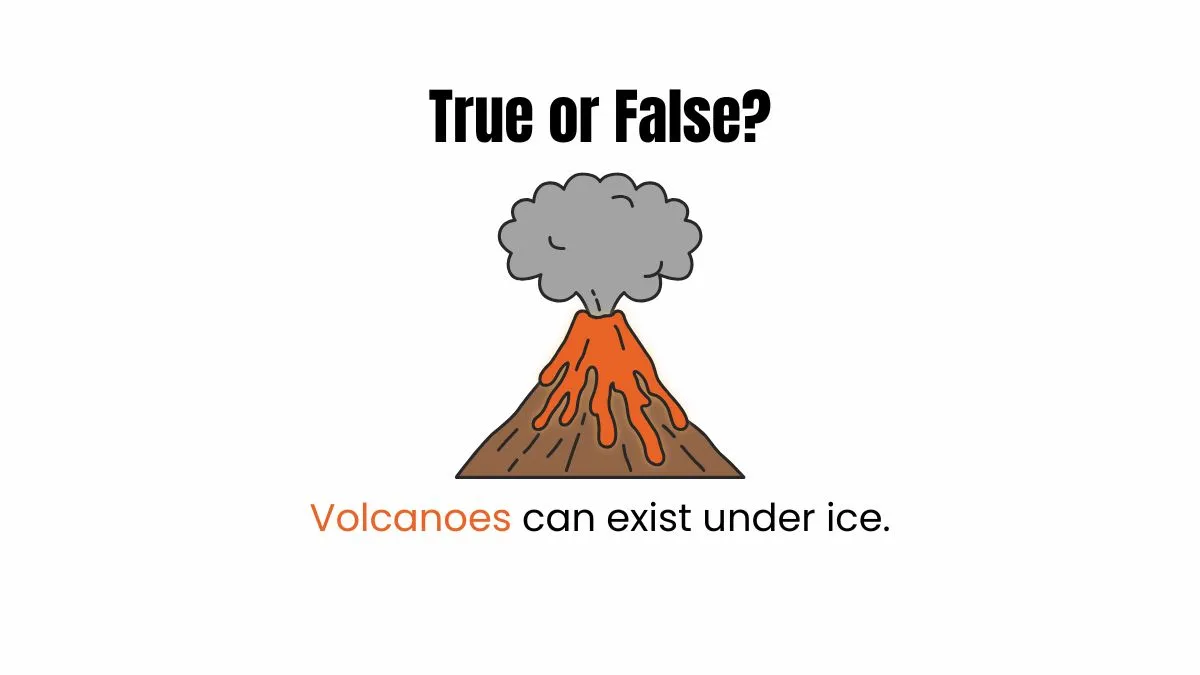
A volcano is an opening in the Earth's crust that allows molten rock, gases, and debris to escape from below the surface. The molten rock that rises in volcanic vents is known as 'magma', and after it erupts from a volcano, it is called 'lava'.
On Earth, volcanoes are often found where tectonic plates are either converging or diverging. Volcanoes, based on their frequency of eruption, are referred to as either dormant, active, or extinct. Dormant volcanoes have not erupted in a long time but may erupt again. Did you know scientists who study volcanoes are called volcanologists?
There are different types of volcanoes, namely shield volcanoes, stratovolcanoes, and cinder cones. Shield volcanoes are large, wide volcanoes with gentle slopes. They often have runny lava flows. Stratovolcanoes are cone-shaped mountains known for explosive eruptions, and cinder cones are steep-sided cones formed from piled volcanic cinders.
In this article, we are going to test your trivia knowledge about volcanoes with 10 true or false statements. You have to answer if the statement is true or not. These are some truly interesting and not so commonly known facts about volcanoes.
True or False: Volcanoes Can Exist Under Ice?
1. The word 'Volcano' comes from the name of the Roman god of fire, 'Vulcan'. True or False?
True. In ancient Roman stories, people believed that volcanoes were places where Vulcan, the god of fire and blacksmithing created weapons for the gods.
2. There are more than 2,500 active volcanoes on the Earth. True or False?
False. There are more than 1,500 active volcanoes on the Earth. Most of these volcanoes are found around the Pacific Ocean.
3. Volcanoes exist on other planets. True or False?
True. The largest volcano in our solar system is Olympus Mons on Mars. It is about three times the height of Mount Everest. While Venus is also covered with over 1,600 major volcanoes.
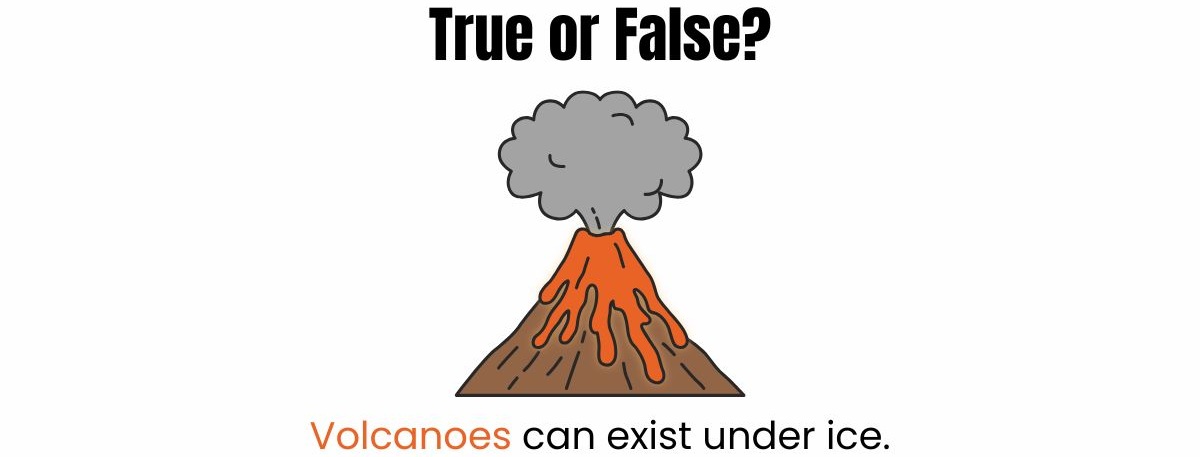
4. Volcanoes can exist under ice. True or False?
True. Volcanoes do exist and can erupt underneath ice sheets, ice caps, and glaciers. This phenomenon is called glaciovolcanism or subglacial volcanism.
5. Magma and lava mean the same thing. True or False?
False. While both are molten rock but their name depends on their location. Magma is molten rock trapped deep underground. While lava is molten rock that erupted through the vent.
6. A large number of volcanoes are located in the 'Ring of Fire'. True or False?
True. The 'Ring of Fire' is a big, horseshoe-shaped area about 40,000 km all around the Pacific Ocean. It is the most volcanic zone on Earth, touching the coasts of North and South America, New Zealand, the Phillippines, Indonesia, and Japan.
7. Volcanic eruptions cannot cause lightning. True or False?
False. Volcanic eruptions can cause lightning when small bits of ash, dust, and gas in the eruption mix together and make static electricity. If enough static electricity builds up, lightning appears through the eruption cloud.
8. The island of Iceland is volcanic. True or False?
True. Iceland is known for its volcanoes. It is located where two big pieces of the Earth's crust meet. People sometimes call Iceland the 'Land of Fire and Ice'.
9. Volcanic soil is not suitable for agriculture. True or False?
False. Volcanic soils are created from volcanic ash, which contains lots of minerals that plants can use. When lava cools down, the mineras turn into rocks like granite. Eventually these rocks break down and become soil.
10. Volcanic gases smell like rotten eggs. True or False?
True. Volcanic gases smell like rotten eggs. The volcanic gases are water vapours, carbon dioxide, sulfur dioxide, hydrogen sulfide, and hydrogen halides. Of all these gases, hydrogen sulfide (H2S) is noticeable because it smells like rotten eggs.
Did you learn something new today? Tell us in the comments!



Comments
All Comments (0)
Join the conversation