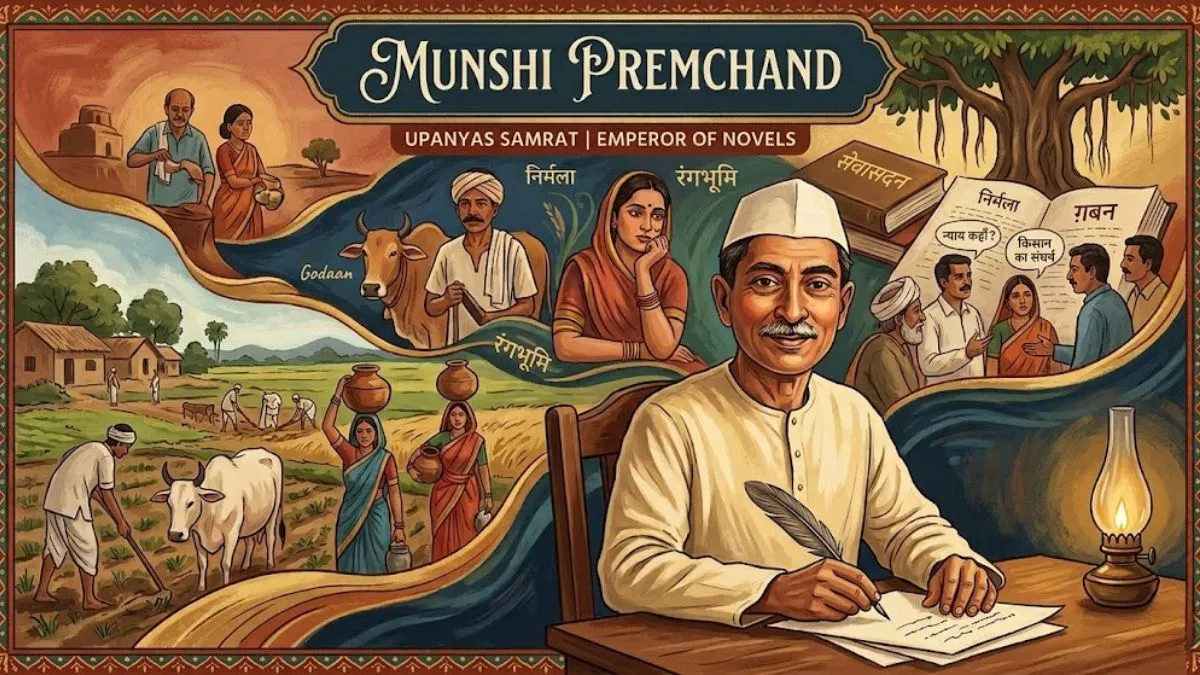
Munshi Premchand is considered one of the most influential writers in Indian literature. He is known for his realistic storytelling; he brought forward the struggles of common people, social inequalities, and moral values through simple yet powerful language. His works are still widely read, studied, and admired across generations.
Author of the Day: Munshi Premchand
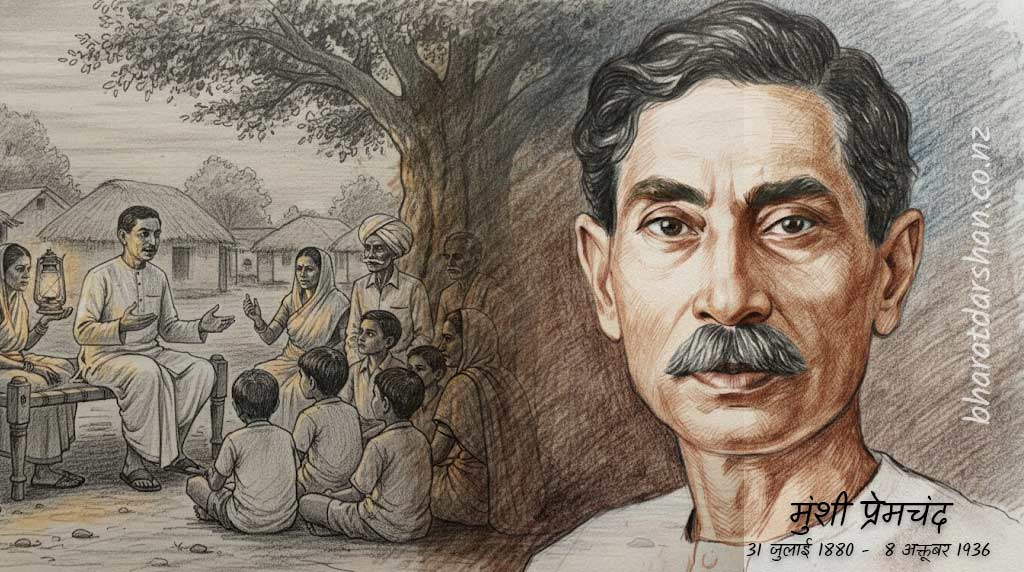
Source: bharatdarshan
Munshi Premchand, often called the “Upanyas Samrat” (Emperor of Novels), revolutionised Hindi and Urdu literature. He shifted storytelling from fantasy and romance to realism, highlighting rural life, poverty, women’s issues, and social justice in early 20th-century India.
Who was Munshi Premchand?
Munshi Premchand, whose real name was Dhanpat Rai Srivastava, was an Indian legend in both novels and short stories. He wrote his early work under the initial name Nawab Rai, and later his name changed to Premchand when his earlier work received censorship. His works, to a large extent, are insightful, emotionally intelligent social realities.
Quick Facts about Munshi Premchand
| Category | Details |
| Real Name | Dhanpat Rai Srivastava |
| Pen Name | Premchand |
| Birth | 31 July 1880 |
| Birthplace | Lamhi, Uttar Pradesh |
| Death | 8 October 1936 |
| Place of Death | Banaras (Varanasi), Uttar Pradesh |
| Languages | Hindi, Urdu |
| Title | Upanyas Samrat |
| Profession | Writer, Teacher, Editor |
| First Pen Name | Nawab Rai |
Early Life
Premchand was born in Lamhi village, close to Banaras, in a poor family. His father was a low-income earner in a post office. His mother died when he was young, and the situation in his family had become a challenge.
He also became interested in reading despite the poor conditions. During his working life, he read novels in world literature and carried on studies. He had to walk very long distances day by day, paid tuition and attended night classes to finish his school.
Career Journey
Premchand began his career as a teacher, which later developed into a government school officer. He quit his coveted position to be able to write about the country under the influence of the Mahatma Gandhi Non-Cooperation Movement.
He worked in:
-
Departments of teaching and education.
-
Publication and printing (Saraswati Press).
-
Editing magazines (Zamana, Madhuri).
-
Film writing (movie Mazdoor)
Although he faced financial hardship and suppression, he still persisted with his writings and produced some of the best works in Indian literature.
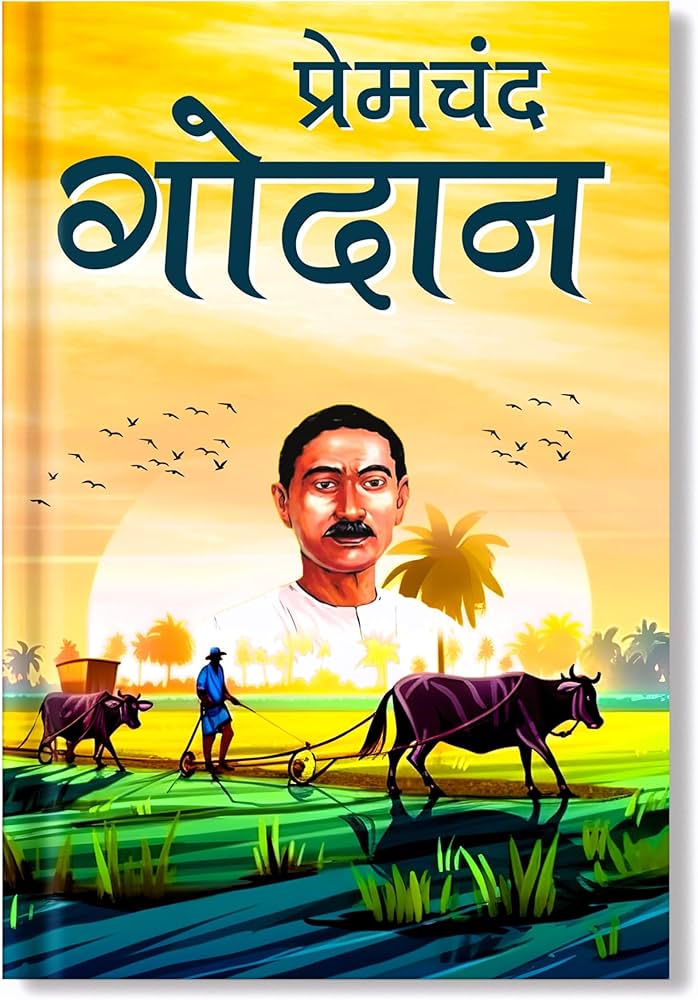
Source: amazon
Famous Novels of Munshi Premchand
| Novel | Year | Key Theme |
| Godaan | 1936 | Rural life, poverty, किसान संघर्ष |
| Gaban | 1931 | Middle-class greed and morality |
| Nirmala | 1923 | Dowry system and women’s suffering |
| Rangbhoomi | 1924 | Social injustice and exploitation |
| Karmabhoomi | 1932 | Politics and social reform |
| Sevasadan | 1918 | Women’s dignity and society |
| Premashram | 1922 | Peasant life and struggles |
| Kayakalp | 1926 | Social transformation |
| Pratigya | 1927 | Widow remarriage |
| Mangal Sutra (Incomplete) | — | Social issues |
Famous Short Story Collections
| Collection | Highlight |
| Soz-e-Watan | First collection (banned by the British) |
| Prem Pachisi | Popular Hindi stories |
| Prem Battisi | Social themes |
| Prem Chalisi | Moral-based stories |
| Mansarovar | Collection of the best short stories |
What are the achievements of Premchand?
Munshi Premchand was a great writer who brought revolutionary changes in Hindi-Urdu literature. Here are some of his achievements given below:
-
He is known as the father of modern Hindi-Urdu fiction
-
He was also awarded the title of “Upanyas Samrat”
-
He was also elected President of the Progressive Writers’ Association in 1936
-
He wrote more than 300 short stories and several novels
-
His works are translated into many languages worldwide
What is the legacy of Upanyas Samrat?
Munshi Premchand transformed Indian literature. He highlighted issues that could be found in real life, like caste discrimination, poverty, women's inalienability and rural plights.
His writing style was:
-
Simple and easy to understand
-
Deeply emotional and realistic
-
Focused on common people
Today, his works are included in school and university programs, and he is remembered as a writer who brought about the voice of the unheard.
Conclusion
Munshi Premchand was not just a writer, but he was a social reformer in literature. His classic short stories are still able to teach and motivate people to present the truth about society. His work qualifies him to be one of the best Indian literary figures.



Comments
All Comments (0)
Join the conversation