Top 5 Major Theories of International Relations Explained
This article explores five major International Relations theories: Realism, Liberalism, Constructivism, Marxism, and Feminism, providing conceptual frameworks for understanding state behavior, global politics, and conflict, essential for competitive exam preparation
-1780659356759.webp)
International Relations explores the relations between the state, the international system, and other factors in an increasingly interconnected global community through the study and analysis of the patterns of conflict, cooperation, and the application of power through diplomacy. International Relations analyzes various forms and patterns of society over time and includes a wide range of theoretical perspectives within the field, including power, economics, institutions, and ideas.
International theory serves as a conceptual framework within which scholars can study the behaviour of states and understand how international systems or global orders develop and are maintained or changed in relation to other states. Competitive exams such as the UGC NET and UPSC typically utilize major international relations theories as a foundation for navigating global politics and international systems.
Top 5 Major Theories of International Relations
There are a number of essential theoretical perspectives utilized to explain International Relations as a method of comprehending global politics. Below is a table of the five major theories of International Relations.
| No. | Theory | Key Thinkers | Focus |
| 1 | Realism | Hans Morgenthau, Kenneth Waltz | Power, security, national interest |
| 2 | Liberalism | Immanuel Kant, Woodrow Wilson | Cooperation, institutions, peace |
| 3 | Constructivism | Alexander Wendt | Ideas, identity, norms |
| 4 | Marxism | Karl Marx, Immanuel Wallerstein | Economic inequality, capitalism |
| 5 | Feminism | J. Ann Tickner, Cynthia Enloe | Gender, power structures, inequality |
Top 5 Major Theories of International Relations
Here are the top 5 major theories of International Relations that explain how states behave, interact, and shape global politics and order.
1. Realism
Realism believes that states behave like self-interested individuals that want to protect themselves, hence there is no 'international police force' and nation-states must implement their own security. They do so by competing against one another for power, safety, and resources. They may sometimes trust one another but primarily they maintain a level of wariness toward other states due to their fear of being attacked or cheated.
Key Theorists:
Hans Morgenthau is considered the founding father of Classical Realism, which believes international relations are based on human nature, power, and national interest.
Kenneth Waltz's theory of Neo Realism or Structural Realism states that state action can be explained by an anarchic system or their balance of power relative to each other rather than by human characteristics or motives.
Major Components of Realism:
Anarchy: The state of anarchy prohibits any one global government from controlling other states.
States as Primary Actors: States are the only actors that interact in the global arena.
Self-Help: Each state must protect itself.
Maximization of Power: Strength, both military and economic, is essential for maintaining power.
Conflict as Natural and Inevitable: Wars and rivalries are a natural occurrence.
2. Liberalism
Liberalism sees nations as being friends rather than foes, working together to find common ground instead of constantly fighting. While there is no overall police force in the world to maintain law and order among nations, countries with similar beliefs can live together in harmony by sharing, trading and implementing laws that allow them to coexist. By working together in their mutual benefit , countries create an environment of reassurance that prevents war from occuring.
Key Theorists:
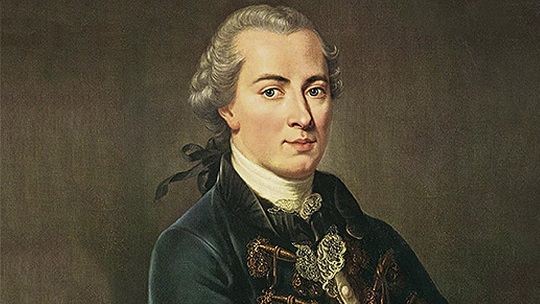
Immanuel Kant was one of the original thinkers of Liberal philosophy and is credited with developing the concept of cooperation as a means of achieving peace and democracy. Woodrow Wilson supported the establishment of international organizations, including the League of Nations, as a means of preventing future wars.
Major Components of Realism:
Cooperative Relationships: States can maintain cooperative relationships similar to that of friends rather than enemy states.
International Institutions: International institutions such as the UN assist in resolving disputes through peaceful means.
Economic Interdependence: The increased volume of trade among nations increases interdependence and reduces the likelihood of war.
Rules Based Order: Nations abide by national and international laws applicable to all states in order to promote international peace and stability.
3. Constructivism
The theory of constructivism believes that a country's behaviour is influenced primarily by their perceptions regarding the world and their interactions with other countries. Constructivism also rejects the notion that countries act solely in pursuit of power or wealth, and instead holds that they behave towards others based on how they view each other as either friends or enemies.
Key Theorist:
The most significant figure in Constructivism is Alexander Wendt, who popularized the statement “anarchy is what states make of it." In other words, he believes that international relations do not have a fixed structure based upon friendship and hostility, insteed those structures are created by the interactions of states.
Major Components of Realism:
Beliefs Matter: A country’s beliefs affect the way in which its government operates.
Norms: A country’s behaviour is based on its understanding of the norms and customs of other countries.
Social Interaction: A country learns about things from its interactions with other countries.
Change is Possible: A country’s relationship with another country can evolve and change over time.
4. Marxism
Marxism sees the world as an unequal place where the developed nations, with their considerable financial wealth, dominate the developing nations. Additionally, it argues that global politics is primarily based on economics, rather than power or security. In fact, the capital accumulated by developed nations stems primarily from the exploitation of resources and labor in developing nations.
Key Theorists:

Marxism was developed first by Karl Marx, and is based on the notion of class struggle between rich and poor people.
Immanuel Wallerstein created the World-Systems Theory which divided the globe into the wealthy countries of the center, and the underdeveloped countries of the periphery.
Major Components of Realism:
Economic Power: Money is the ultimate measure of someone's power in the world.
Core and Periphery: The wealthy countries of the center have an influence over the countries of the periphery.
Exploitation: The countries of the periphery are used by the countries of the center as sources of cheap labour and raw materials.
Capitalism: The global capitalist system perpetuates inequality in the world.
Dependency: The countries of the periphery rely on the countries of the center for their economic viability.
5. Feminism
Feminism advocates for an equal consideration of both men and women when analysing political issues on a global scale. According to Feminists, traditional Political Theories have an overwhelming male bias and prioritise war and power, thus disregarding the role and value of women in establishing peace. Feminism strives to achieve fair treatment and an equal place for women in the world.
Key Theorists:
Two of the most influential Feminist Thinkers are J. Ann Tickner and Cynthia Enloe. Their contributions dissected how women are impacted by the ramification of war, how women are impacted differently than men by political decision-making, and that women’s perspectives and voices are often not included in the political decision-making process.
Major Components of Feminism
Gender Matters: Women and men consider political issues differently.
Equality: Both men and women deserve to have an equal voice and rights.
Human Security: Protection of the individual.
Invisible Women: The historical role of women in war and in society is largely disregarded.
Important Exam Facts on International Relations Theories
The table contains important information about the International Relation's Theories . These points are relevant for Competitive Exams such as the U.G.C NET, UPSC, and the State PSC Exams to aid in quick revising and in formulating a sound conceptual basis.
| Important Fact | Exam Relevance |
| Realism believes the international system is anarchic with no world government. | UPSC Prelims, UGC NET basics of IR |
| Hans Morgenthau is known as the Father of Classical Realism. | Common UGC NET/Political Science |
| Kenneth Waltz developed Neo-Realism (Structural Realism). | UPSC/NET |
| Liberalism emphasizes the role of international institutions like the UN and WTO. | UPSC GS and IR conceptual questions |
| Democratic Peace Theory is a key idea of Liberalism. | UGC NET and Political Science MCQs |
| Constructivism was popularized by Alexander Wendt. | NET/JRF theory-based questions |
| Constructivism says “anarchy is what states make of it.” | Frequently asked quote-based MCQ |
| Marxism in International Relations focuses on economic inequality and capitalism. | UPSC/NET questions on global inequality |
| Immanuel Wallerstein developed World-Systems Theory. | UGC NET questions on Sociology |
| Feminist theory highlights gender bias in global politics | NET and modern IR questions |
Conclusion
International Relation theories provide various points of view for interpreting international politics, state behaviour, cooperative activity, conflict resolution and the balance of power in the world. Realism, Liberalism, Constructivism, Marxism and Feminism are all useful frameworks for researching International Relations and serve as an important component for competitive exams and academic research.

Ayukta Zisha is certified in Digital Marketing from IIT Delhi, known for creating engaging, reader-friendly explainers and International News. Ayukta also crafts interactive puzzles and personality tests that attract high reader engagement. With a sharp research approach and a creative style, she consistently delivers informative and entertaining content for Jagran Josh's diverse audience.


