In the global race for clean energy, one geographic region has become the centre of geopolitical and economic attention: the Lithium Triangle of the World. As the world shifts toward electric vehicles (EVs) and renewable energy storage, the demand for "white gold"—the nickname for lithium—has reached unprecedented levels. Lithium is the softest and silvery metal on Earth, which is used mostly in rechargeable batteries, and supports the clean energy transition. The total reserve of lithium is around 150 million tons, as per the data from the United States Geological Survey of 2026.
But which countries actually make up the Lithium Triangle of the World, and why are they so important to our future? Let’s dive into this article to explore in detail the Lithium Triangle of the World.
Also Read: List of Top 8 Countries Of Production And Reserves of Lithium
Which Countries are known as the Lithium Triangle of the World?
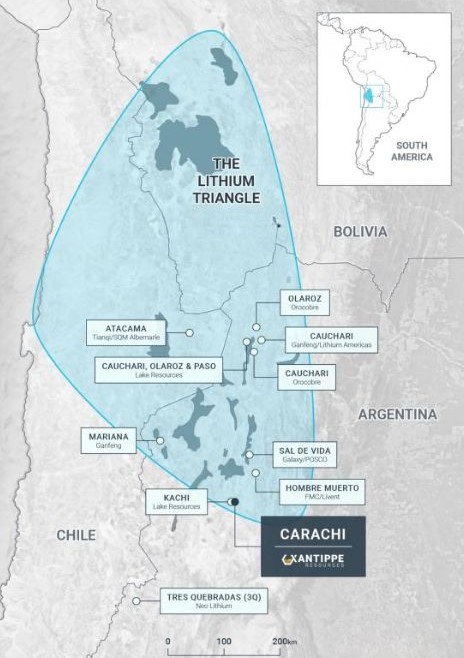
Source: au.investing
Argentina, Bolivia, and Chile are the countries known as the Lithium Triangle of the World. The Lithium Triangle is a region in the Andes mountains that straddles the borders of three South American nations:
-
Argentina
-
Bolivia
-
Chile
This area is unique because it contains high-altitude salt flats (known as salars), where lithium is extracted from brine. This method is generally more cost-effective than hard-rock mining, making these countries the most competitive players in the global market.
Lithium Triangle Stats (USGS 2026)
| Country | Reserve of Lithium | Resource Type | Significance |
| Bolivia | 23 million tons | Brine (Salar de Uyuni) | World's largest identified lithium resources. |
| Argentina | 28 million tons | Brine (Salar del Hombre Muerto) | Fast-growing production and massive resource base. |
| Chile | 13 million tons | Brine (Salar de Atacama) | Largest producer in the triangle; highest grade brine. |
Source: Data adapted from U.S. Geological Survey, Mineral Commodity Summaries, February 2026.
Lithium Reserves and Production: 2026 Data Insights
According to the latest data from the United States Geological Survey (USGS) Mineral Commodity Summaries of 2026, the global landscape of lithium is expanding rapidly.
-
Total Global Resources: The total identified lithium resources worldwide have grown significantly as exploration intensifies, now estimated at roughly 150 million tons.
-
The Triangle’s Dominance: Within this total, the Lithium Triangle countries hold a massive share of the world’s "identified resources."
-
Bolivia remains the leader in total resources, with over 23 million tons.
-
Argentina follows closely, with approximately 28 million tons.
-
Chile holds around 13 million tons, but currently leads the region in actual production due to more established infrastructure.
Also Read: Why is India looking at Lithium reserves in Argentina, Chile and Bolivia?
What are the 2026 Industry Trends regarding the Lithium Reserves and Production?
The USGS 2026 report highlights that worldwide lithium production increased by 31% in the last year alone. While production is scaling up in Australia and China, the Lithium Triangle remains the "strategic heart" of the industry. Strategic alliances and joint ventures are currently being established between these South American nations and technology companies from North America, Europe, and Asia to ensure a steady supply for the growing EV market.
Why are Argentina, Bolivia, and Chile called the Lithium Triangle of the World?
Argentina, Bolivia, and Chile are called the Lithium Triangle of the World because of the extraordinary lithium wealth of this region, which is the result of millions of years of very specific geological processes that are rare elsewhere on Earth. Several factors converge to create ideal conditions for the Lithium Triangle of the World:
1. The Role of Salt Flats (Salares): The Andes Mountains were formed by tectonic collision, creating high-altitude basins with no drainage outlets. Over millions of years, volcanic minerals — rich in lithium — dissolved into water that filled these basins. As the climate became arid, water evaporated, leaving behind extremely concentrated lithium brines just beneath the crust of dried salt. The resulting salares act as natural lithium storage tanks.
2. Concentration and Extraction Advantage: Brine-based lithium extraction is significantly cheaper than hard-rock mining. In the Lithium Triangle, lithium concentrations in brines range from 200 to 1,400 parts per million (ppm). The process involves pumping brine to the surface, spreading it in large evaporation ponds, and letting the sun do the work over 12–18 months — a cost-efficient method that makes production costs as low as US$2,000–$3,500 per ton.
| Did You Know? The Salar de Atacama in Chile sits at over 2,300 metres above sea level and receives less than 15 mm of rainfall per year — making it one of the driest places on Earth and a perfect natural lithium concentrator. |
Why is the Lithium Triangle important for the future?
As the world seeks to decarbonise, the Lithium Triangle is no longer just a mining zone—it is a critical link in the global supply chain. With 88% of global lithium consumption now driven by the battery industry, the stability and output of Argentina, Bolivia, and Chile will determine how quickly the world can transition to green energy.
Key Facts About Lithium
Lithium is the softest and lightest silvery metal on Earth. It is primarily used in rechargeable batteries, including those that power electric vehicles (EVs) and support the clean energy transition. Beyond transport, lithium-ion batteries are essential for:
-
Grid-scale energy storage for solar and wind power.
-
Portable electronics like smartphones and laptops.
-
Medical applications and specialised glass/ceramics.



Comments
All Comments (0)
Join the conversation