
Show Key Points
Picture a world where every move you make at work is timed to the millisecond. Before Silicon Valley engineers worked on improving code, Frederick Winslow Taylor, an American mechanical engineer, was obsessed with a different kind of algorithm: how people move. Taylor saw workers at the Midvale Steel Works in the late 1800s using a messy rule-of-thumb method that wasted hours of time.
He didn't just see workers; he saw a system that could be improved with science. This obsession led to the birth of Scientific Management Theory, which changed the world economy from working harder to working smarter.
In the age of AI, Taylor's ghost lives on in every productivity app on your phone. This makes the question of who is the father of scientific management more than just a historical fact; it's the story of how the modern world came to be.
Who is the Father of Scientific Management Theory?
The title, Father of Scientific Management, belongs exclusively to Frederick Winslow Taylor (1856-1915). An American inventor and engineer, Taylor published his seminal work, The Principles of Scientific Management, in 1911.
According to the Encyclopedia Britannica, Taylor’s core mission was to eliminate soldiering, the practice of workers intentionally working slower than their capacity. He believed that management's primary goal should be maximum prosperity for both the employer and the employee.
He made management a strict, measurable science by using engineering ideas on the human element. This is often called Taylorism today.
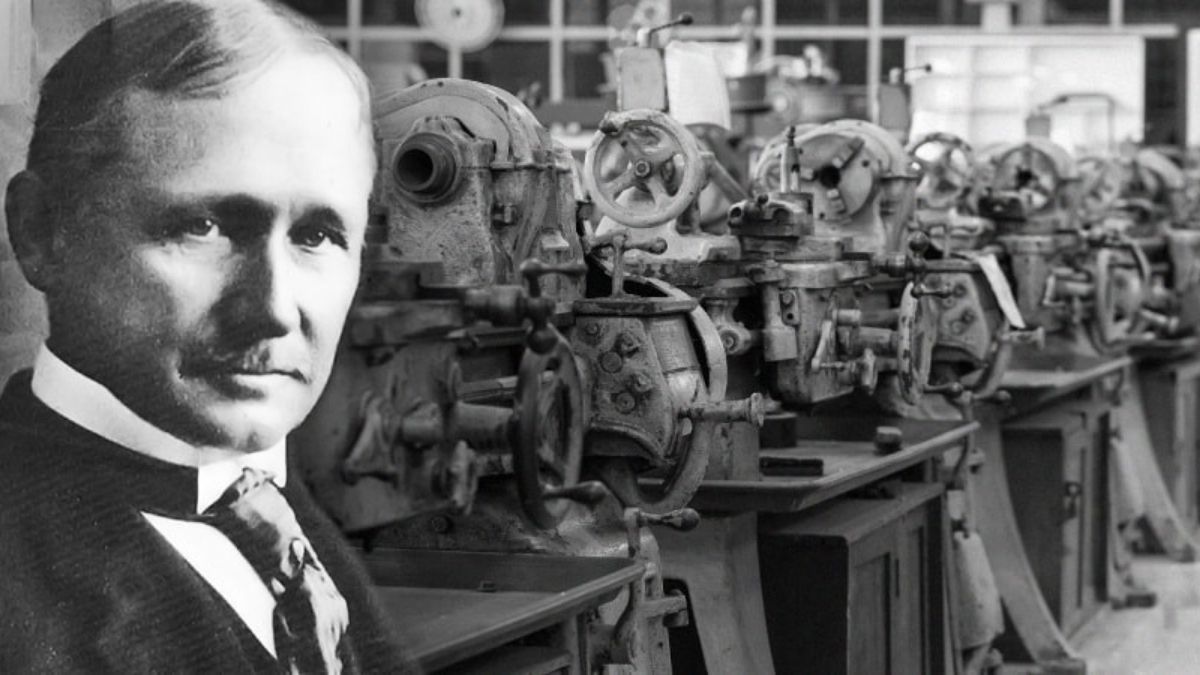
Frederick Winslow Taylor, Father of Scientific Management (Credit - qad.com)
What is Taylor’s Theory of Scientific Management?
Taylor's theory of scientific management is based on the idea that there is one best way to do any job.
Taylor said that managers should use scientific observation (like time-and-motion studies) to plan the most efficient workflow instead of letting workers do things the way they have always done them.
With this data-driven method, there is no more guesswork, and management is in charge of planning. This lets workers focus on doing their jobs with accuracy.
The 4 Core Principles of Scientific Management
To master scientific management theory by FW Taylor, you must understand these four pillars cited by the Management Study Guide:
-
Science, Not Rule of Thumb: Every task should be studied scientifically to replace old-school, habitual methods with standardized procedures.
-
Harmony, Not Discord: Managers and workers must cooperate in a state of mutual trust. Taylor believed that labor strikes were often a result of inefficient systems, not bad people.
-
Cooperation, Not Individualism: Work should be a joint effort. Management handles the planning and mental labor, while workers handle the manual execution, ensuring both sides support each other.
-
Maximum Output, Not Restricted Output: Instead of limiting production to keep prices high or save energy, the system focuses on increasing the size of the pie so both owners and workers earn more.
Also Read - What is the Scientific Name of Coriander?
While critics often argue that Taylorism treats humans like machines, the influence of the father of scientific management is undeniable. From the assembly lines of Henry Ford to the delivery algorithms of Amazon, Frederick Winslow Taylor’s legacy is the very fabric of our high-speed, 21st-century reality.



Comments
All Comments (0)
Join the conversation