Show Key Points
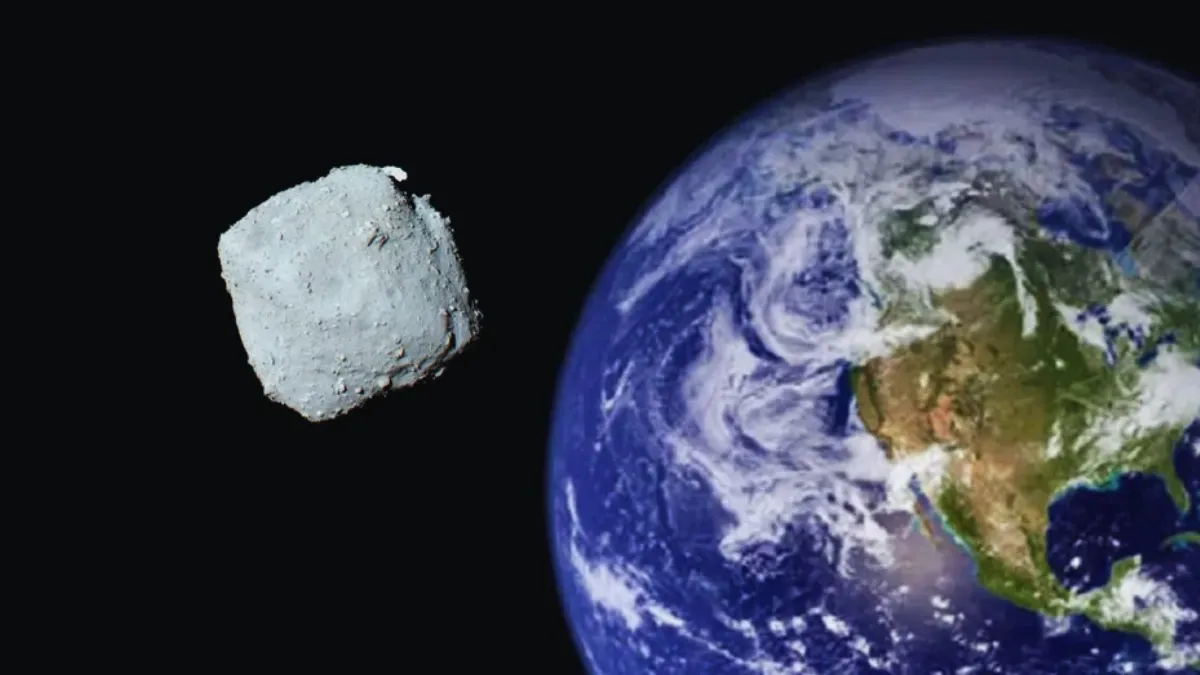
Asteroid Ryugu or Asteroid 162173 Ryugu is the most important rock in our solar system after following a successful sample-return mission by Japan’s Hayabusa2 spacecraft, scientists discovered that Ryugu is a "rubble-pile" asteroid contains organic molecules and nucleobases which are fundamental building blocks of DNA and RNA. This discovery suggests that the elements for life on Earth may have arrived from outer space.
The new discovery of nucleobases present in asteroid Ryugu gives the insights on the Humans Origin was life a "homegrown" Earth event, or did the seeds of life arrive from the stars? We are closer to the answer than ever before by studying pristine samples brought back to Earth from diamond-shaped asteroid Ryugu, scientists are finding clues that date back to the very birth of our solar system.
What is Asteroid Ryugu?
Asteroid Ryugu is also known as Asteroid 162173 Ryugu is a near-Earth object classified as a C-type (carbonaceous) asteroid. C-type asteroids are like "time capsules" because they contain primitive material that hasn't changed much since the solar system formed about 4.5 billion years ago.
The Scientist has given its name ‘Ryugu’ which comes from Japaneses Mythology referring to ‘’Dragon Palace’’ at the bottom of the sea where a fisherman brought back a mysterious box of secrets.

Image Source: Mascot/Jaxa
Asteroid Ryugu Mission:
The Asteroid Ryugu Mission is also known as Hayabusa 2 which was launched in 2014 by the Japan Aerospace Exploration Agency (JAXA).
The Japanese spacecraft reached Ryugu in 2018 where it spent a year and a half surveying and deployed small rovers on its surface.
The spacecraft collected dust and rock samples from the Ryugu, successfully returning back to Earth in December 2020. It provided scientists with "clean" samples not contaminated by Earth's atmosphere.
Asteroid Ryugu Location:
Ryugu is an Apollo-class asteroid, meaning its orbit crosses Earth’s path. It orbits the Sun between Earth and Mars classified as a ‘Potentially Hazardous Asteroid’ due to its proximity to Sun and Earth.
There is no immediate threat of it hitting Earth in the next several centuries.

Source: JAXA
Asteroid Ryugu Size:
Ryugu is relatively small but significant. The asteroid is around 900 meters (about 3,000 feet) in diameter—roughly the size of two and a half Eiffel Towers stacked together. It has a distinct "spinning top" or diamond shape, which is common for asteroids that spin quickly.
Asteroid Ryugu Surface:
The surface of Ryugu is dark, porous, and covered in rocks and boulders. Scientists describe it as a "rubble pile"—not a solid rock but a collection of loose fragments held together by gravity.
-
Color: It is one of the darkest objects in the solar system, reflecting very little sunlight.
-
Composition: It is rich in hydrated minerals (minerals containing water) and carbon.

Image Source: JAXA
Asteroid Ryugu and Origin of Life:
The presence of organic molecules on Ryugu supports the theory of Panspermia or Space Delivery. It suggests that billions of years ago, asteroids crashing into the Earth might have delivered the water and organic compounds necessary for the first biological life forms to evolve on the Earth 's surface.
Asteroid Ryugu Nucleobases: All Five Fundamental Nucleobases of DNA and RNA
In a 2026 study, scientists have confirmed that all five fundamental nucleobases of DNA and RNA in the Ryugu.
All Five molecular letters of genetic code such as adenine, guanine, cytosine, thymine, and uracil are present in pristine samples from Ryugu where adenine and guanine (known as purines), as well as cytosine, thymine and uracil (known as pyrimidines).
-
Genetic Blueprint: These nitrogen-rich molecules combine with sugars and phosphates to create DNA and RNA, the essential instructions for all living organisms.
-
Space-Born Chemistry: The discovery of Five all letters and niacin (Vitamin B3) uncontaminated samples proves that the chemical blueprints for life existed in space long before they reached Earth.
-
Pristine Evidence:samples were collected directly in space by Hayabusa2, providing the clearest evidence yet that life's building blocks are widespread throughout the Solar System.
Asteroid Ryugu Images:
JAXA has released images of Ryugu showing a landscape littered with jagged boulders. The images reveal a surface that looks like a dark, desolate gravel pit, frozen in time.

Asteroid Ryugu Distance:
The distance between Earth and Ryugu constantly changes as both orbit the Sun; however the average distance is about 9 million kilometers (5.6 million miles) away from the earth.

Source: Tokyo Science Gallery
Asteroid Ryugu Gravity
In the future the Ryugu and Earth can get closer or further away depending on the following factors:
-
Microgravity Environment: Ryugu is a "rubble pile" with gravity roughly 1/80,000th of Earth's, meaning even a gentle jump could launch you into space.
-
Low Escape Velocity: With an escape velocity of only 0.38 m/s, the pull is so weak that objects can easily drift away from its surface.
-
Innovative Exploration: Due to the low gravity, the MINERVA-II rovers used internal motors to "hop" rather than drive, staying airborne for 15 minutes per jump.
-
Structural Variations: Gravity is slightly stronger at the poles than the equator, a result of the asteroid's rapid rotation shaping its distinct "spinning top" ridge.
The significance of Ryugu lies in its role as a biological messenger. It confirms that the ingredients for life are widespread in the universe and provides a roadmap for how we might defend Earth from similar "rubble pile" asteroids in the future.
Also Read: What is Floating LiDAR Buoy System? Check Its Purpose, Working and Significance





Comments
All Comments (0)
Join the conversation