The move has seen Gujarat become the second Indian state after Uttarakhand to approve a Uniform Civil Code (UCC) Bill in a major legislative move towards the ongoing national debate on reform of personal law in India. On March 24, 2026, after a seven-hour long debate, the Gujarat Legislative Assembly approved the Gujarat Uniform Civil Code Bill, 2026.
The bill aims at providing a unified legal status on marriage, divorce, succession, and cohabiting relationship (live-ins) to all the religious groups, other than Scheduled Tribes (STs) and some community groups enjoying protected customary rights.
The UCC Bill 2026 has Important Provisions
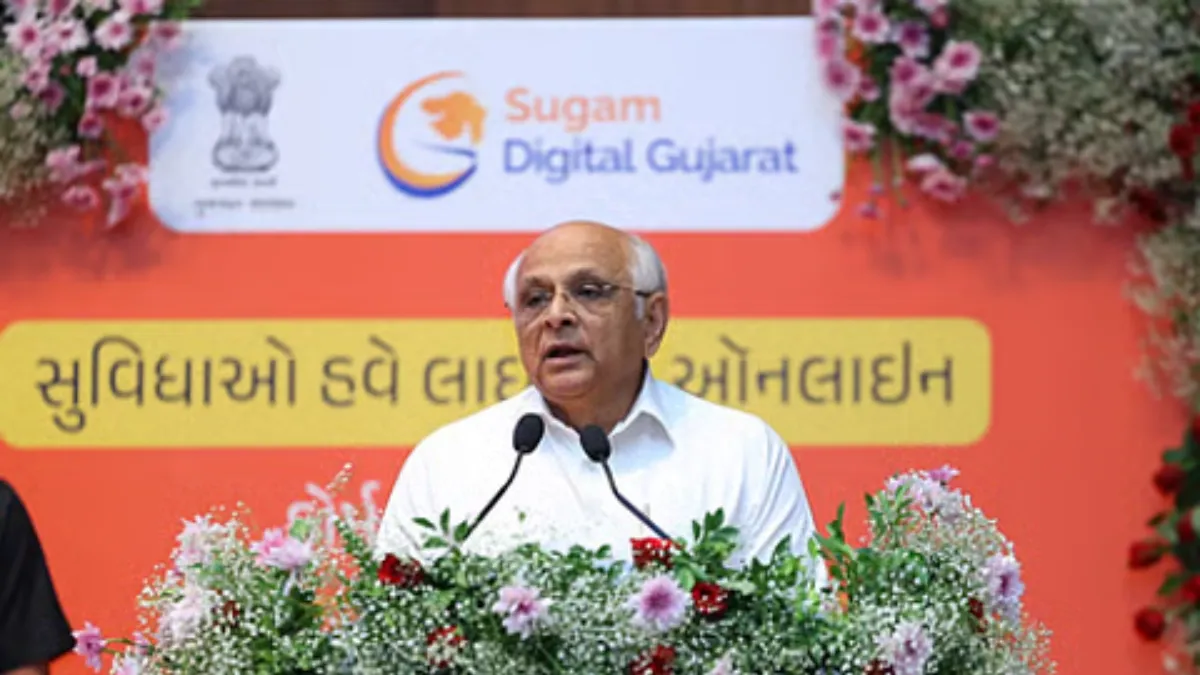
The 209-page bill was introduced by Chief Minister Bhupendra Patel, and seeks to streamline personal laws which previously were under the jurisdiction of religion-based laws like the Hindu Marriage Act, Muslim Personal Law, and others.
It requires that marriages and divorces be registered compulsory, and that penalties of up to ₹10,000 are imposed in case they fail to do so. The law is also anti-polygamous and permits only court-approved divorce, and it outlaws the custom of halala in some quarters.
The bill provides tougher legal penalties against forced and fraudulent marriages and offenders could serve sentences of up to 7 years. It also allows unconditional remarriage upon divorce meaning that people are not bound by religious or social standards. The act stretches to succession and heritage to afford women and children equal rights in all societies.
UCC Bill on Live-In Relationships
An observable aspect of UCC Bill is formalization and regulation of live-in relationships- a first in Gujarat. Live-in couples have to be registered and any dissolution has to be given a notice, just as in a marriage and a divorce.
Kids born of such a union are regarded as legitimate and women left behind by their partners in live-in relationships may now claim maintenance in accordance with the new law.
It is hoped that this provision will enhance the legal safeguards around vulnerable members of the population, especially women, and deal with problems of abandonment and financial insecurity in informal relationships.
The relocation coincides with the wider trend in the country to update the personal laws and provide gender justice in relation to emerging social parameters.
Exceptions, Constitutional History, and Lawmaking
Scheduled Tribes (STs) are not subject to the UCC Bill since it acknowledges that they have their own unique customs and traditions that are safeguarded by the Constitution.
It was based on the recommendations of the state-appointed committee of retired Supreme Court judge Justice Ranjana Desai, who allegedly received approximately 20 lakh suggestions from people, who drafted the bill.
The government focused on being inclusive and reformative, and the opposition leaders highlighted that it could be unconstitutional and also overlap with basic rights.
The bill passed in Gujarat runs parallel to Article 44 on the Directive Principles of the State Policy, which has advanced the idea of having a Uniform Civil Code in the country so as to harmonize the law and to bring equality between the genders.
The action taken by the state is based on the enactment of the Uniform Civil Code (UCC) Act, 2024, enacted by the state of Uttarakhand in January 2025 and awaiting the Presidential signature.
The enactment in Gujarat is a major stride in the national debate on the adoption of a UCC in India, and other states will be watching the legal and social consequences before looking at doing the same.
Legal experts, women activists and civil society organizations will closely monitor the implementation of the bill since it may affect the future amendments of personal law at the national level.



Comments
All Comments (0)
Join the conversation