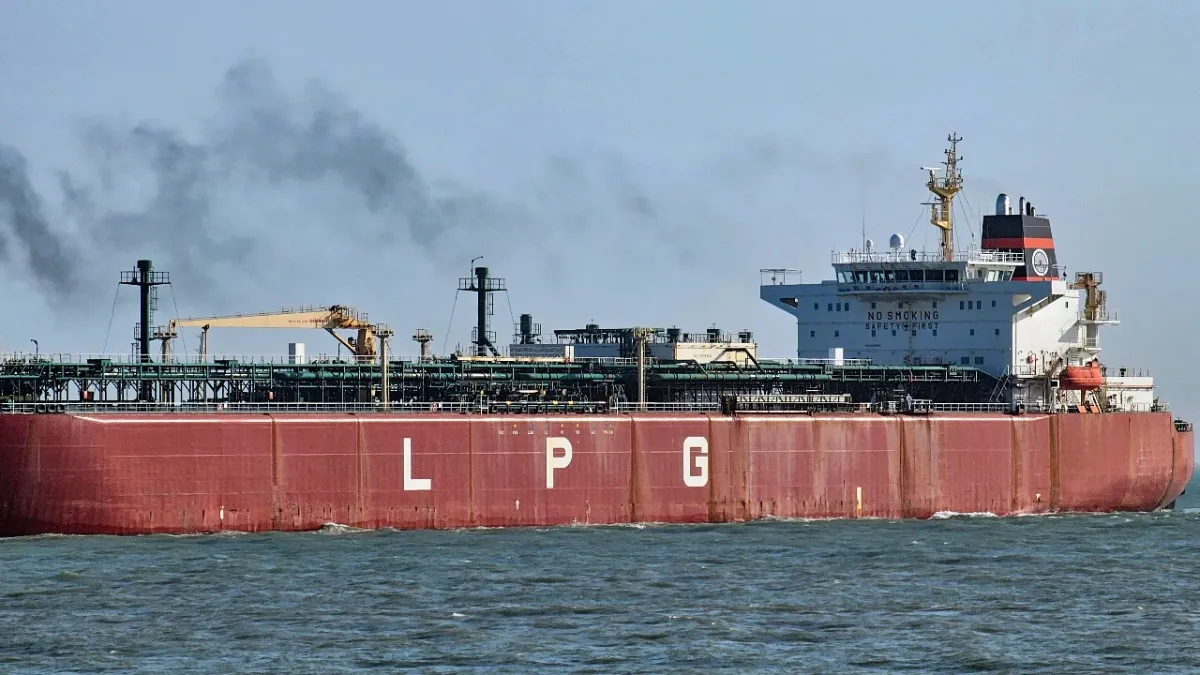
India has confirmed that five India‑flagged liquefied petroleum gas (LPG)‑loaded tankers remain stuck on the western side of the Strait of Hormuz, as regional tensions and security advisories continue to churn the Persian‑Gulf–bound shipping lanes.
The situation has brought India’s energy‑security dependence on the Hormuz chokepoint into sharp focus, at a time when over 20 Indian‑flagged vessels carrying crude, LNG, and LPG are either stranded or delayed in the region.
Why Hormuz Matters for India?
The Strait of Hormuz is a small sea passage between the Gulf of Oman and the Persian Gulf, where about a fifth of world oil and a large part of LPG flows runs. To India, a major importer of LPG and large quantities of crude and LNG oil in the Middle East, free access to Hormuz is vital.
Military action, high-risk areas, and any interruption caused by insurance-related delays can easily spill over to home supply systems and fuel costs.
In early March 2026, the Directorate General of Shipping in India announced that some 22 Indian-flagged vessels such as crude oil carriers, LNG tankers and LPG carriers were grounded in the Persian Gulf because of closure or partial closure of the Strait.
Five India-flagged LPG-carrying tankers are also specially awaiting safe-transit clearance, with a large share of the planned LPG imports to India in the month.
The Stuck of 5 LPG Tankers
These five LPG-flagged tankers belong to a bigger group of 20-22 Indian-flagged tankers, all of which carry more than 1.6-1.7 million tonnes of crude, hundreds of thousands of tonnes of LPG and tens of thousands of tonnes of LNG.
Although the national oil companies of India have stocks of the buffers, a protracted block may compel refiners and distributors to reduce allocation, particularly in the run up to peak domestic-cooking-fuel demand.
Two India flagged LPG carriers, the Pine Gas and Jag Vasant, have already transited the Strait without harm and are now heading towards India, with some 92,600 metric tonnes of LPG each on board.
Pine Gas will arrive at New Mangalore and Jag Vasant will arrive at Kandla, which will offer India some relief in the LPG supply line. But the other five LPG tankers are still waiting to pass safely, something that shows the vulnerability of logistics of seaborne energy.
Official Covid-19 News and Governmental Response
Special Secretary in the Ministry of Ports, Shipping and Waterways, Rajesh Kumar Sinha has made it clear that Indian flagged vessels do not require special Iranian permission to pass through Strait of Hormuz.
In lieu of this, clearance is being organized via navigational-safety avenues, such as the International Maritime Organization and local navies, such that ships pass without entering into risky and war-like areas.
The ministry is also constantly in communication with oil marketing companies, including Indian Oil Corporation, the rest of PSU refiners, individual LPG importers, and ship-owners to keep track of inventories and reroute cargoes where possible.
It is also issuing shipping advisories to shun certain high-risk pockets and the government has requested ship operators to keep in touch with Indian embassies and Indian consulates in the area to safeguard the interests of Indian seafarers.
Seafarers Welfare
It is estimated that there are around 540-600 Indian seafarers on board the group of grounded Indian flagged ships, which include the five LPG tankers. The Ministry of Shipping and bodies associated with labour have instructed ship-owners and ship-managers to provide continuous wages, medical benefits and contact with families during this long stay at anchor.
Nevertheless, unions and international labour groups have sounded warning bells over the increased stress and fatigue on crews, and the need to clear or safely reroute more quickly to avoid extended immobilisation.
The first objective in the short term is ensuring the safe passage of the remaining five India flagged LPG tankers without evoking new insurance or security cost premiums.
The Hormuz logjam, in the long run, is a next-to-you-keel salvo that India needs to integrate energy-security doctrine that includes not only strategic stockpiles, but also robust shipping and alternative-supply channels.



-1774447541216_t.webp)
Comments
All Comments (0)
Join the conversation