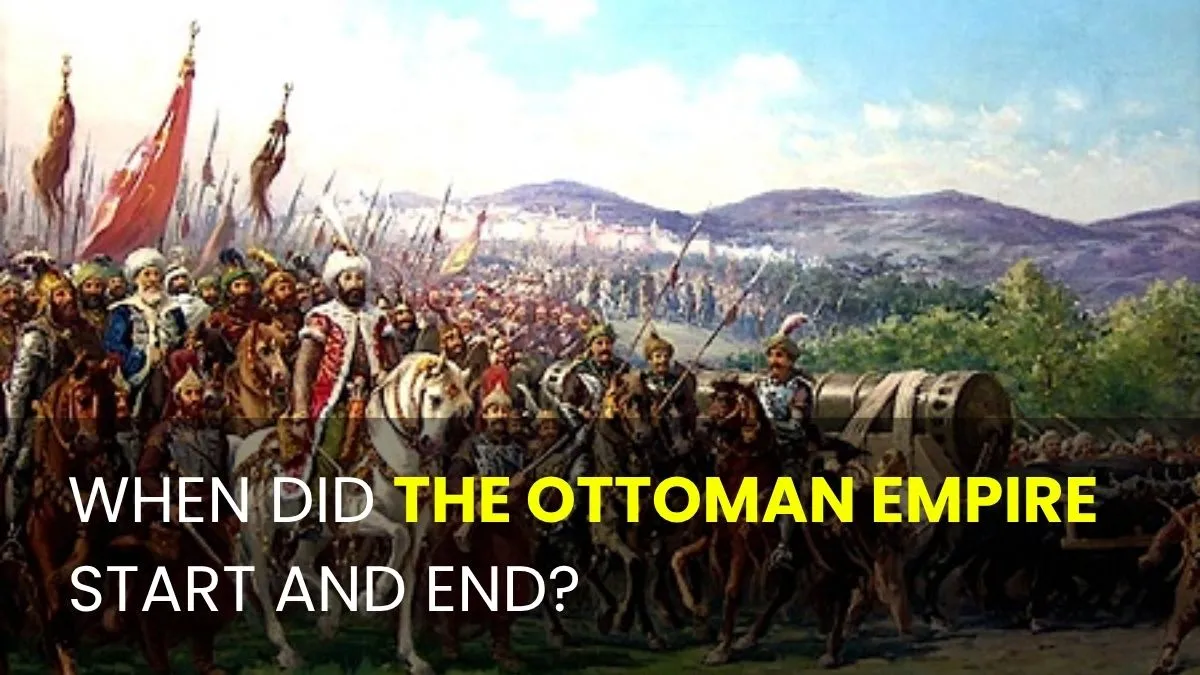
The Ottoman Empire spanned more than 600 years. The history is laden with the legacy of the empire in the Middle East and Southeast Europe. Replaced by the Republic of Turkey, the empire was one of the most powerful in the world during the 15th and 16th centuries. A quick storytime.
Where did the Ottoman Empire start?
During the 13th century, the region of Anatolia (most of the Asian part of modern-day Turkey) was ruled by the Byzantine Empire and the Seljuk Turks. Around 1299 by Turkoman tribal leader Osman I, when he declared independence from the Seljuk Turks. And the Ottoman Empire was founded.
End of Byzantine Empire and Capitals of Ottoman Empire
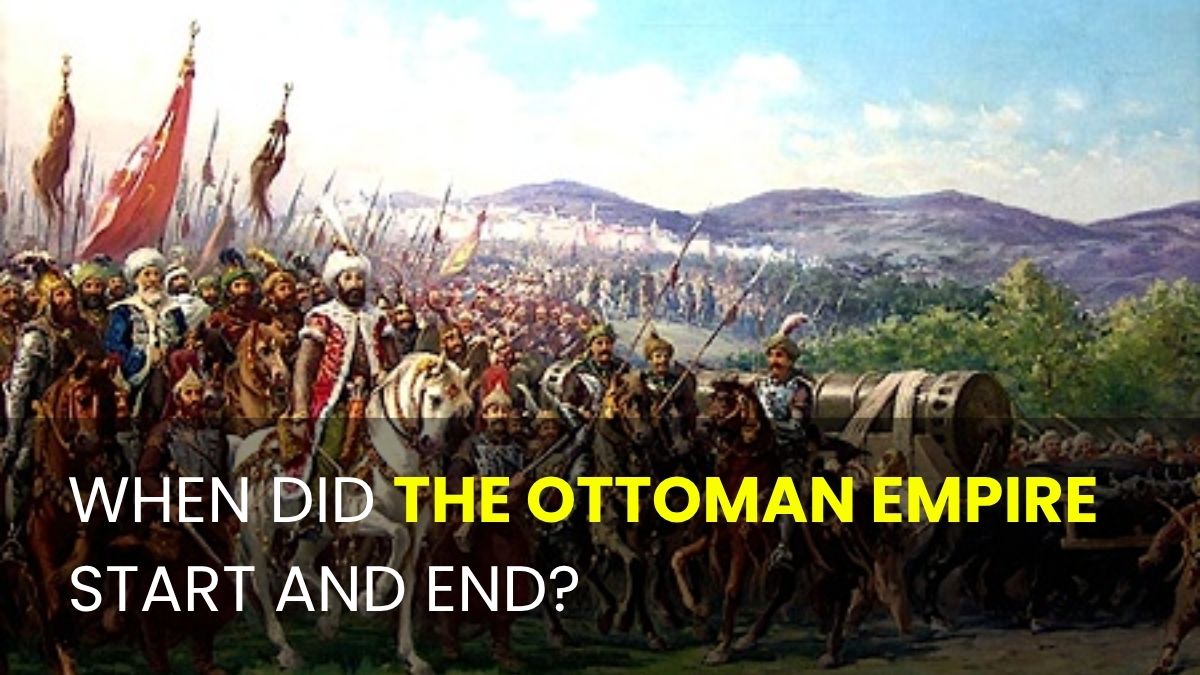
What began as a small principality in Anatolia under Osman I rapidly started to become an influential empire when, in 1326, the Ottoman Turks captured nearby Bursa from Byzantine control and moved their capital to Bursa and later ended the Byzantine Empire with the conquest of Constantinople (modern-day Istanbul) in 1453.
Age of Expansion
With the conquering of Constantinople, the empire expanded its reach further into Europe, the Middle East, and northern Africa. Under the rule of Sultan Selim I, the Ottomans conquered Egypt, Mesopotamia, western Arabia, the Levant, and much of the North African coast (except Morocco).
The Ottoman Empire reached its peak in the mid-16th century under the reign of Suleiman the Magnificent. Prominent conquests included the capture of Belgrade in 1521, defeating Hungary in the Battle of Mohács in 1526, siege of Vienna in 1529, and the capture of Baghdad from the Persians in 1535.
But during the late 18th and early 19th century, the Ottomans suffered military defeats. In 1683, the failed Siege of Vienna and Napolean's invasion of Egypt in 1798 marked the beginning of the slow decline of the Ottoman empire.
Reforms, Modernisation, and Decline
The Ottomans launched the Tanzimat, reforms aimed at the modernising the Ottoman Empire. The best known of those reforms are the Hatt-i-Serif of Gulhane and the Hatt-i-Humayun. But by the late 18th and early 19th century, the empire had lost much of its territory, such as Greek after the Greek War of Independence (1822-1827), Crimea (1783) and most of Balkan territories (1878) along with other key territories during various conflicts with Russia.
Once a powerful empire, it had become known as the 'Sick Man of Europe'. But that was not the end. In 1908, the Young Turk movement within the Ottoman Empire seeking to modernising the state, restoring constitutional government and end absolute power of the Sultan accelerated the empire's involvement in the Balkan Wars (during which the empire lost almost all its remaining European territories) and World War I.
In 1913, the most influential organisation within the Young Turk movement known as the Committee of Union and Progress (CUP) took full control of the government and the Ottoman Empire entered World War I with the aim to regain its lost territories, but it led to the empire's defeat and dissolution as well as the end of the Young Turk era in 1918.
Between 1919 and 1923, Mustafa Kemal Ataturk deposed the last Ottoman Sultan Mehmed VI, and the Republic of Turkey was established in 1923. That marked the end of one of the longest-lasting empires in history, the Ottoman Empire that ruled for over 600 years.
Timeline of the Ottoman Empire (Year-wise)
1299: Osman I declares independence from the Seljuk Turks, Ottoman Empire is founded
1326: Bursa falls to Ottoman control and becomes the capital
1354: Ottomans cross into Europe
1361: Adrianople becomes the new capital
1389: Battle of Kosovo
1453: Mehmed II captures Constantinople, ending the Byzantine Empire
1512-1520: Reign of Selim I, expansion into the Middle East and North Africa
1517: Conquest of Egypt and Syria
1520-1566: Reign of Suleiman the Magnificent
1521: Capture of Belgrade
1522: Capture of Rhodes
1526: Battle of Mohács
1529: First Ottoman Seige of Vienna
1538: Battle of Preveza
1551: Siege of Tripoli
1683: Second Siege of Vienna
1826: The Auspicious Event; Mahmud II removes Janissary corps to build modern army
1839-1876: The Tanzimat period
1876: Proclamation of the first Ottoman Constitution
1908: Young Turk Revolution
1912-1913: Balkan Wars
1914: Empire enters World War I
1922: The Grand National Assembly of Turkey abolishes the Sultante, officially ending the Ottoman Empire
1923: The Republic of Turkey is established on October 29 with Mustafa Kemal Ataturk as its first president.
Also Read: With Which Country India Has Signed A 20-Year LNG Deal?



Comments
All Comments (0)
Join the conversation