Important Banking Terms for SBI PO, IBPS PO & Other Bank Exams 2026: Check Simple Meanings
Learn some of the important banking terms for the SBI PO, IBPS PO and other important bank exams. Check the simple meanings, examples, and why these terms are important for Banking Awareness Preparation.

Banking Awareness is an important part of the syllabus from which the questions are asked in big exams like SBI PO, IBPS PO, SBI Clerk, IBPS Clerk, etc. Many of these questions are based on the common banking terms which are used regularly in the banking sector, and the aspirants preparing for the banking exam should know these terms. Learning these terms will not only help the aspirants gain scores in the exam but will also help them understand how banks work. This article explains some important banking terms in very simple terms in very simple words. These meanings are easy to understand and remember, and useful for Banking Awareness preparation.
What are Banking Terms?
Banking terms are words that are commonly used in banks and financial services. They explain different banking activities such as deposits, loans, interest, payments and digital banking. Knowing these terms will help the candidates answer Banking Awareness questions quickly and accurately in competitive exams.
10 Important Banking Terms with Simple Meaning For SBI PO, IBPS PO & Other Bank Exams
Given below are some of the important banking terms with simple meanings for exams like SBI PO, IBPS PO and Other Bank Exams 2026:-
| Terms | Meaning |
| Savings Account | It is a bank account where people keep their money safe and also earn interest on this account. |
| Fixed Deposit | This is where people keep money in a bank for a fixed period of time to earn a higher rate of interest. |
| EMI (Equated Monthly Instalment) | This is a fixed monthly payment which is made to the bank to repay a loan which has been taken out by the customer. |
| NEFT | NEFT is a system which is used to transfer money electronically from one bank account to another |
| Repo Rate | It is the interest rate at which the Reserve Bank of India (RBI) lends short-term money to commercial banks. |
| Cash Reserve Ratio | It is the minimum percentage of total deposits that banks must keep as cash with the RBI. |
| Statutory Liquidity Ratio | Statutory Liquidity Ratio (SLR) is the minimum percentage of deposits that banks must maintain in safe assets like cash, gold, or approved government securities before lending. |
| RTGS | It is a fund transfer system that is used mainly for large-value money transfers like Rs. 2,00,000. It stands for Real-Time Gross Settlement |
| Reverse Reop Rate | It is the interest rate at which the RBI pays banks when they deposit their excess money with the Central Bank. |
| Bank Rate | Bank Rate is the standard interest rate at which the RBI Charges commercial banks for long-term loans. |
Why Are Banking Terms Important for the Banking Exams 2026?
Questions from Banking Awareness are regularly asked in SBI PO, IBPS PO and other banking exams. Understanding these banking terms helps candidates answer both direct and concept-based questions. Learning and reading about these banking terms every day can improve their score and make current affairs easier to understand. It also helps during the interview stage, where basic knowledge is often tested.
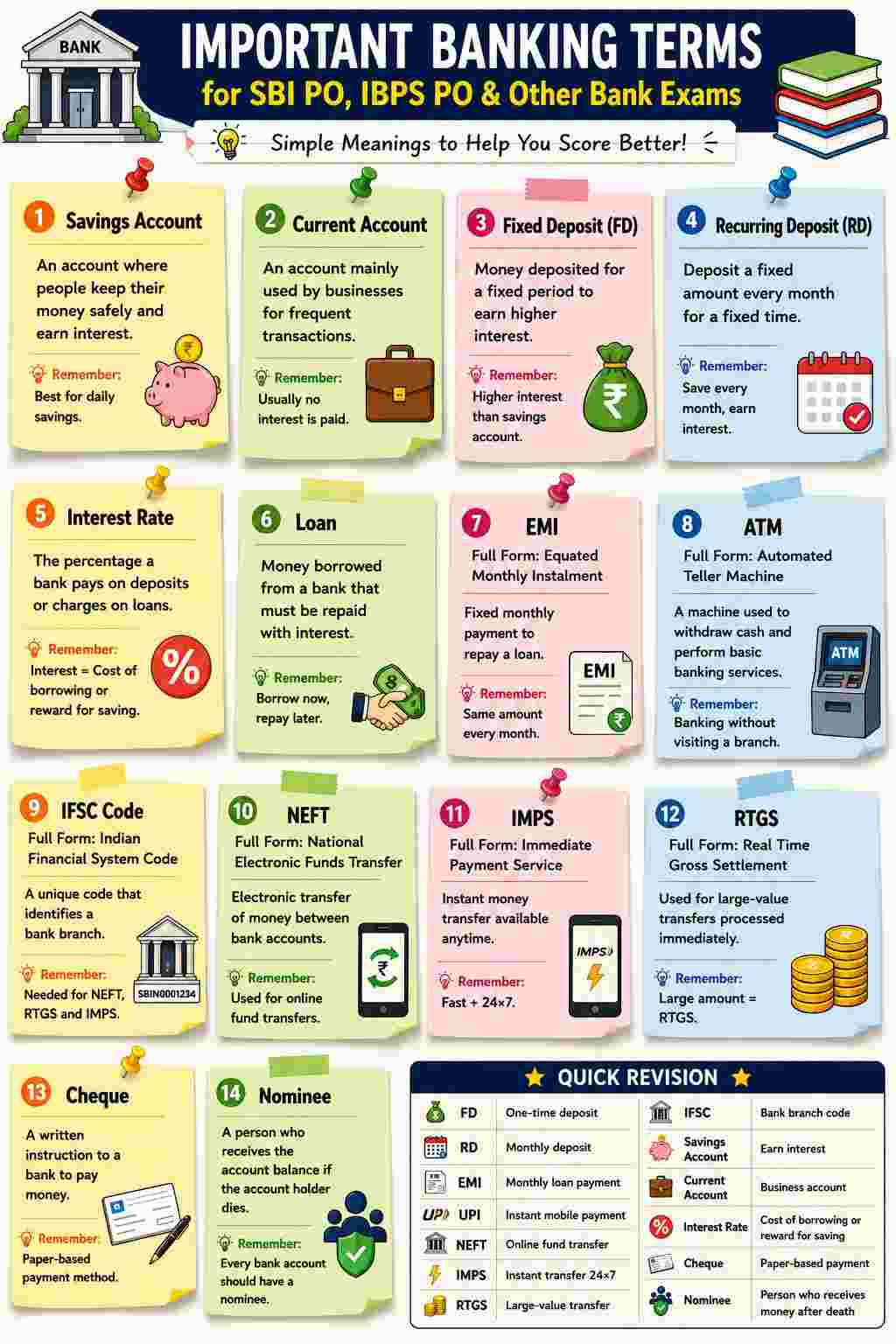
Banking terms are the foundation of Banking Awareness for competitive exams. A clear understanding of these basic concepts can help the candidate perform better in the banking recruitment exams.

Pratyasha is a Communications Professional with over 2.2 years of experience in the education sector. Having worked with top names like Arihant Publications and Jagran Josh, she specializes in board exam results, education news, and government job updates. She also brings a unique perspective as a former Subject Matter Expert for nearly a year. Currently, she is a key part of the Exam Prep and Sarkari Naukri team at Jagran Josh. Pratyasha holds an Honours degree in Ancient Indian History, Culture, and Archaeology, and loves reading and traveling in her free time.