UK Government Caps Student Loan Interest at 6% to Halt Spiraling Debt


In a move to protect graduates from escalating debt compounding, the UK Department for Education has announced a temporary 6% interest rate cap on Plan 2 and Postgraduate (Plan 3) student loans. Setting in from September 1, 2026, for the 2026/27 academic year, the emergency measure overrides the standard RPI+3% formula, which was projected to push rates above 6.2% due to global economic pressures.
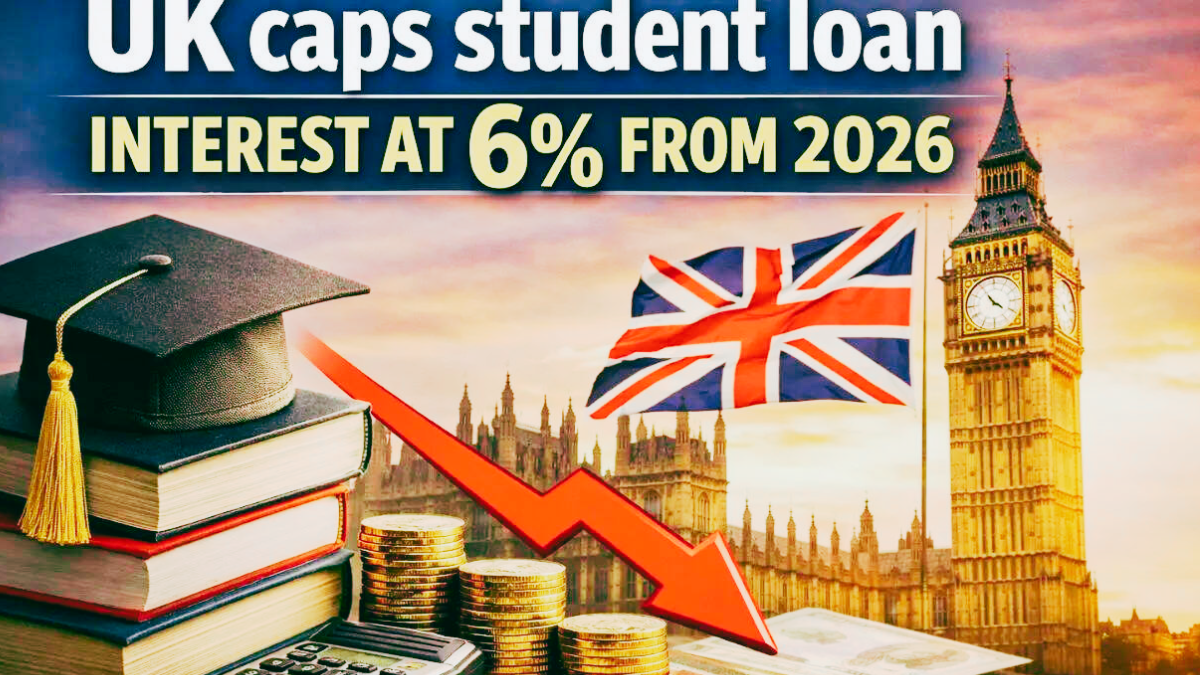
The UK government has announced that it will freeze the interest rate on its student loans at 6% for those taking out loans for undergraduate courses. The shift is designed to lower the rate students pay as long as inflation is high, and to provide more stable repayment terms.
In the past student loan interest has been tied to inflation (RPI) and it was possible to go above 6%, making the real cost of repayments more for both existing and new loan takers.
The 6% cap restricts rates from rising above this, which means that people who are already paying rates will see their repayments lower, and new graduates will see the cost of their repayments lowered.
Who will benefit from the UK Student Loan Cap?
Existing borrowers with an interest rate that was soon to be over 6% will be relieved.
New undergraduate students will be more sure of the highest amount of interest that can accrue.
People with lower incomes could benefit from prevailing income-contingent repayment provisions.
The cap is not on the interest rate, but rather the income contingent repayment thresholds or the term of the repayment. Unpaid balances may be written off after the standard write-off period (varies by plan and start year) and borrowers continue to repay based on income after they earn past the repayment threshold.
What Would be the Impact on Monthly Payments?
Reduced interest means that the outstanding loan balance won't increase as quickly, therefore, higher incomes may result in lower monthly payments and lower incomes may result in slower growth of the outstanding loan balance.
Actual changes will vary based on individual loan plan, income and loan start date.
Growth in inflation and fears of students facing unanticipated interest rates are among the reasons officials give. The cap is only temporary and will be based on current levels of inflation; further adjustments may occur as economic changes. This cap is not for commercial education loans, but rather for government student loans.
Kirti Sharma is a content writing professional with 3 years of experience in the EdTech Industry and Digital Content. She graduated with a Bachelor of Arts and worked with companies like ThoughtPartners Global, Infinite Group, and MIM-Essay. Apart from writing, she's a baking enthusiast and home baker. As a Content Writer at Jagran New Media, she writes for the General Knowledge section of JagranJosh.com.


Comments
All Comments (0)
Join the conversation