THE World University Rankings 2027: 3 Asian Universities Make Top 15 For First Time


THE World University Rankings 2027 feature three Asian universities in the top 15 for the first time, with Tsinghua University, Peking University and NUS securing global positions.
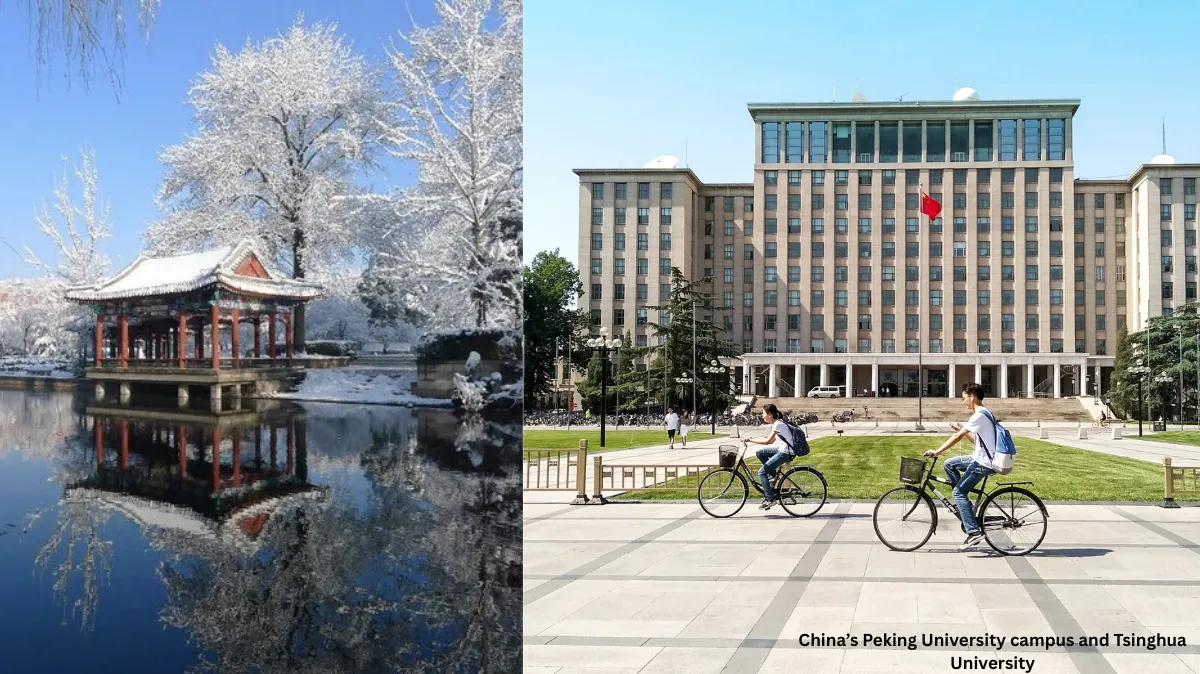
Three Asian universities have secured places in the top 15 for the first time in THE World University Rankings 2027, released on September 30, 2026. This year, the rankings assessed 2,297 universities across 118 countries and territories. The strong showing by Asian universities has placed them ahead of a leading university from mainland Europe.
3 Asian Universities Make Top 15
China’s Tsinghua University is the highest-ranked Asian university this year, securing 11th place globally and moving ahead of Switzerland’s ETH Zurich. Tsinghua had remained at 12th place for three consecutive years before moving up one position this year.
The university’s rise was supported by an increase in its international academic staff and students. However, its performance was affected by the international co-authorship metric, which measures the proportion of a university’s research publications that include at least one international co-author.
The Times Higher Education rankings highlighted a similar factor for Peking University, which secured 13th place this year and became the second Chinese university in the top 15.
The third Asian university in the top 15 is Singapore’s National University of Singapore (NUS), which has been ranked 15th globally.
UK, US Dominate Top 10 Rankings
The United Kingdom and the United States continue to have a strong presence in the top 10 of the THE World University Rankings 2027. Three universities from the UK and seven from the US feature among the top 10 institutions globally.
The top rank globally was secured by University of Oxford, UK for the 11th consecutive time. Oxford was followed by MIT at 2nd rank, Princeton and Stanford University- both of which share the 3rd rank.
Government Funding
Simon Marginson, professor of higher education at the University of Bristol, said that rising higher education systems are driven by annual increases in government funding.
“The iron law of higher education, especially in research, is that stellar performance is only sustainable with funding and especially public funding,” he said. He added that private funding “often has strings attached which blocks optimal performance.”
Albania And Malawi Represented For The First Time
A total of 2,297 universities from 118 countries and territories were assessed this year, compared with 2,191 institutions in the previous edition.
Albania and Malawi have been included in the rankings for the first time. The University of Tirana was placed in the 2,001+ band, while Malawi’s Kamuzu University of Health Sciences secured a place in the 1,201–1,400 band.
Sahil Behl is an education journalist at Jagran with over a year of experience in journalism. Prior to joining Jagran, he worked as a Sub-Editor in NDTV’s Education department, where he was responsible for writing and editing education-related content as well as managing the department’s social media presence. At Jagran, he covers a wide range of education topics, including board examinations, school updates, admissions, and job notifications, while leveraging his editorial expertise and strong understanding of digital content strategy. Sahil holds a Bachelor’s degree in Business Administration and has also completed an eight-month certification program in Data Science. Passionate about emerging technologies, particularly artificial intelligence, he closely tracks their growing role in journalism and explores how they are transforming shaping the future of the media industry.