

Show Key Points
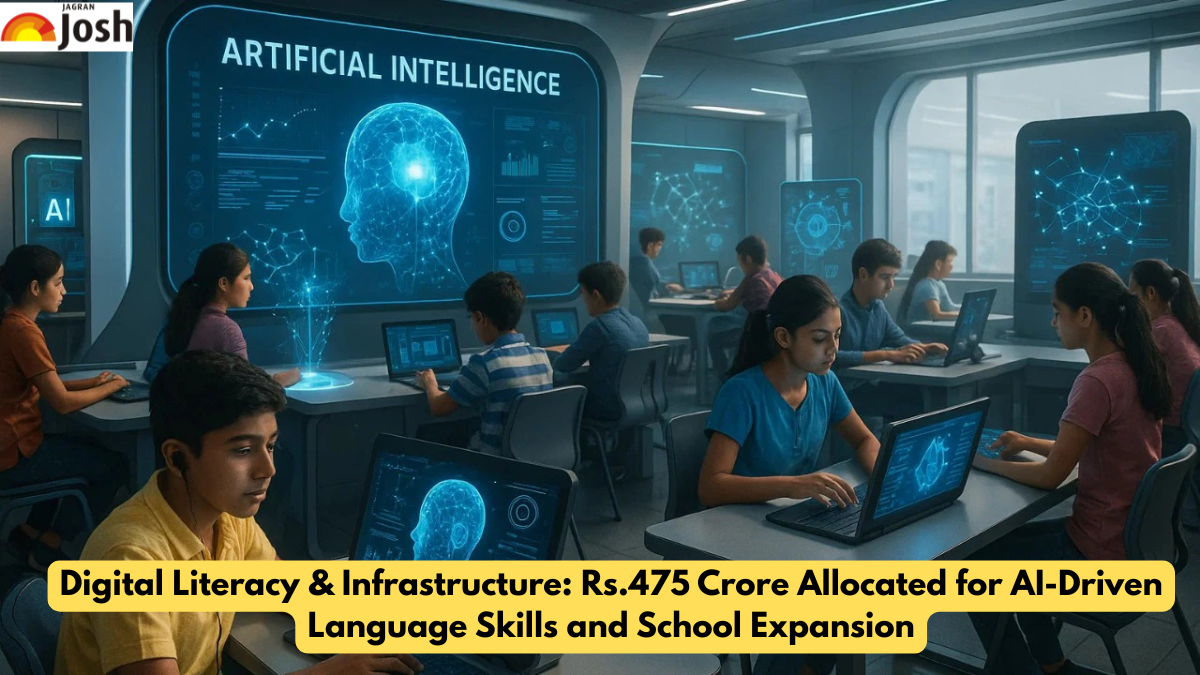
Delhi Education Budget 2026: Chief Minister Rekha Gupta presented a revolutionary plan for the city's education system in the Delhi Budget, which was unveiled on March 24, 2026. The plan prioritized cognitive development above rote memorization. The Dr. A.P.J. Abdul Kalam Language Labs program, an ambitious AI-enabled project intended to transform how students acquire listening, speaking, reading, and writing (LSRW) abilities, is at the vanguard of these innovations.
The initiative will greatly expand after a successful pilot in 100 government schools, aiming to reach about 60,000 children in Classes 6, 9, and 11. These high-tech labs will provide structured instruction in primary Indian languages like Hindi and Sanskrit, while simultaneously offering global exposure through foreign languages such as French, German, and Spanish.
Beyond digital literacy, the budget introduces a fundamental restructuring of early childhood education to align with the National Education Policy (NEP). Starting in the 2026-27 academic cycle, the Directorate of Education will formalize a three-year pre-primary stage for children aged 3 to 5. This shift culminates in a new age mandate effective from 2028-29, where a minimum entry age of six-plus will be strictly enforced for Class 1. By integrating sophisticated AI tools with a robust foundational framework, Delhi aims to bridge long-standing gaps in public schooling, ensuring that the next generation is equipped with both linguistic versatility and a strong developmental start.
Key Pillars of the Initiative
| Focus Area | Objective |
| AI Integration | Enhancing LSRW (Listening, Speaking, Reading, Writing) skills through personalized AI tools. |
| New Infrastructure | Allocating a significant portion of the ₹475 crore budget to construct modern school buildings. |
| Capacity Building | Expanding existing facilities to accommodate more students and reduce classroom overcrowding. |
| Early Literacy | Using speech-recognition AI to help children master phonetics and vocabulary in real-time. |
Key Highlights of the Delhi Education Budget 2026-27
-
Model School Expansion: Seventy-five CM SHRI Schools serve as future-oriented benchmarks for equitable, high-quality education across the capital’s diverse academic landscape.
-
Infrastructure Investment: A dedicated ₹475 crore allocation targets new school buildings and expanding existing facilities to accommodate 45 lakh students.
-
Institutional Ambitions: Large-scale projects include an integrated education city in Narela alongside new specialized National Law and Sports universities.
-
Competency-Based Learning: Classroom focus shifts from rote memorization toward critical thinking, conceptual clarity, and the practical application of student knowledge.
-
Updated Student Subsidies: The government authorized higher yearly uniform subsidies for students in different grade levels, ranging from ₹1,250 to ₹1,700.
-
Budgetary Trends: Education's overall budget share decreased to 19.04 percent this fiscal year, despite the entire outlay reaching ₹19,148 crore.


Comments
All Comments (0)
Join the conversation